
Basil walnut pesto is a homemade sauce that swaps traditional pine nuts for walnuts, making it still nutty but a little less intense and without the pine-nut price tag. The whole thing comes together in about 10 minutes in a food processor.

Want To Save This Recipe For Later?
Pesto has its roots in Genoa, Italy, where pesto alla Genovese was traditionally made with basil, garlic, olive oil, cheese, and pine nuts using a mortar and pestle. These days, most of us rely on a food processor, which keeps things quick without sacrificing the sauce’s character. That flexibility is part of what makes pesto such a staple. It works with pasta, sandwiches, soups, and vegetables, and it freezes well, so a batch made now can stretch into easy meals later on.
Key Ingredients and Substitutions
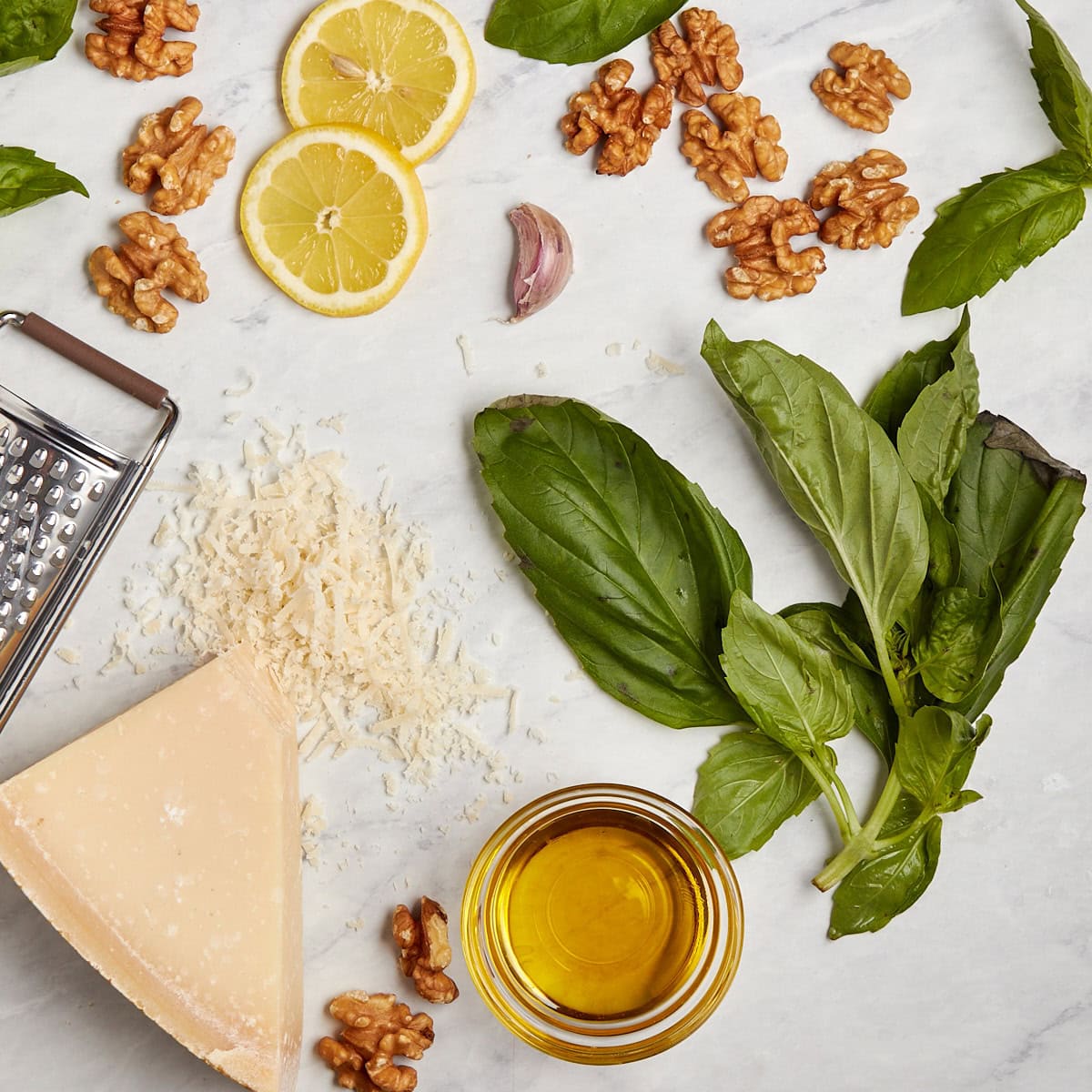
With just a handful of ingredients, this walnut pesto delivers big flavor without a long shopping list.
The complete ingredient list and measurements are listed in the printable recipe below.
- Basil: Fresh basil is the star here. You want bright green leaves without any dark spots or wilting. Gently pack the leaves into your measuring cup rather than cramming them in. If you have access to different basil varieties, try a little flavor twist.
- Walnuts: Toasting the walnuts brings out their natural oils and slightly deepens the flavor, but raw walnuts work fine if you’re short on time. Just know that toasting takes about 5 minutes and makes only a slight difference.
- Garlic: Fresh garlic cloves add that sharp, pungent bite that makes pesto taste alive. Two cloves will give you a noticeable garlic flavor without overwhelming the basil.
- Parmigiano-Reggiano: The real stuff, not the pre-grated kind in the green can. Parmigiano-Reggiano has a nutty, salty complexity that you can’t replicate with domestic Parmesan. Buy a wedge and grate it yourself.
- Olive Oil: Use a high-quality extra virgin olive oil, since it’s such a big part of the flavor. You don’t need the most expensive bottle in the store.
- Lemon Juice: Fresh lemon juice adds brightness and prevents the basil from oxidizing and turning dark. The acid also balances the richness of the oil and cheese. Don’t substitute bottled lemon juice since it can taste flat.
How to Make Basil Walnut Pesto
Here are the quick, step-by-step instructions with visuals; you can find the full instructions, including the exact ingredients, in the recipe card below.
Pro tip: When using the pesto with pasta, reserve a few tablespoons of pasta cooking water before draining. The starchy water helps the pesto coat the pasta more evenly, creating a silky sauce rather than a clumpy one.
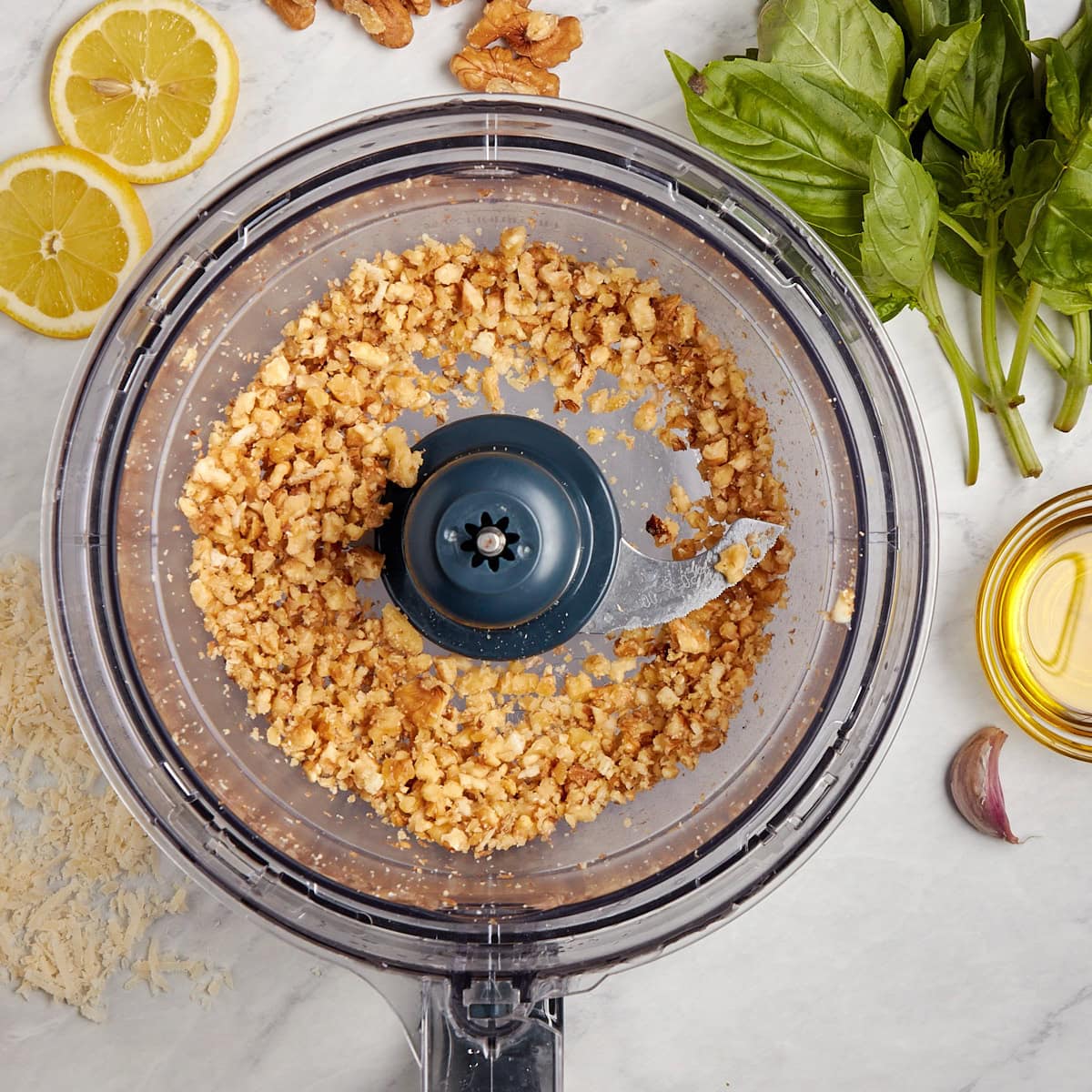
1. Process the Walnuts and Garlic: Add the walnuts and chopped garlic to your food processor and pulse until they’re coarsely chopped, about 10 seconds. You want small pieces but not walnut dust. This step breaks down the harder ingredients first, so everything blends evenly later.
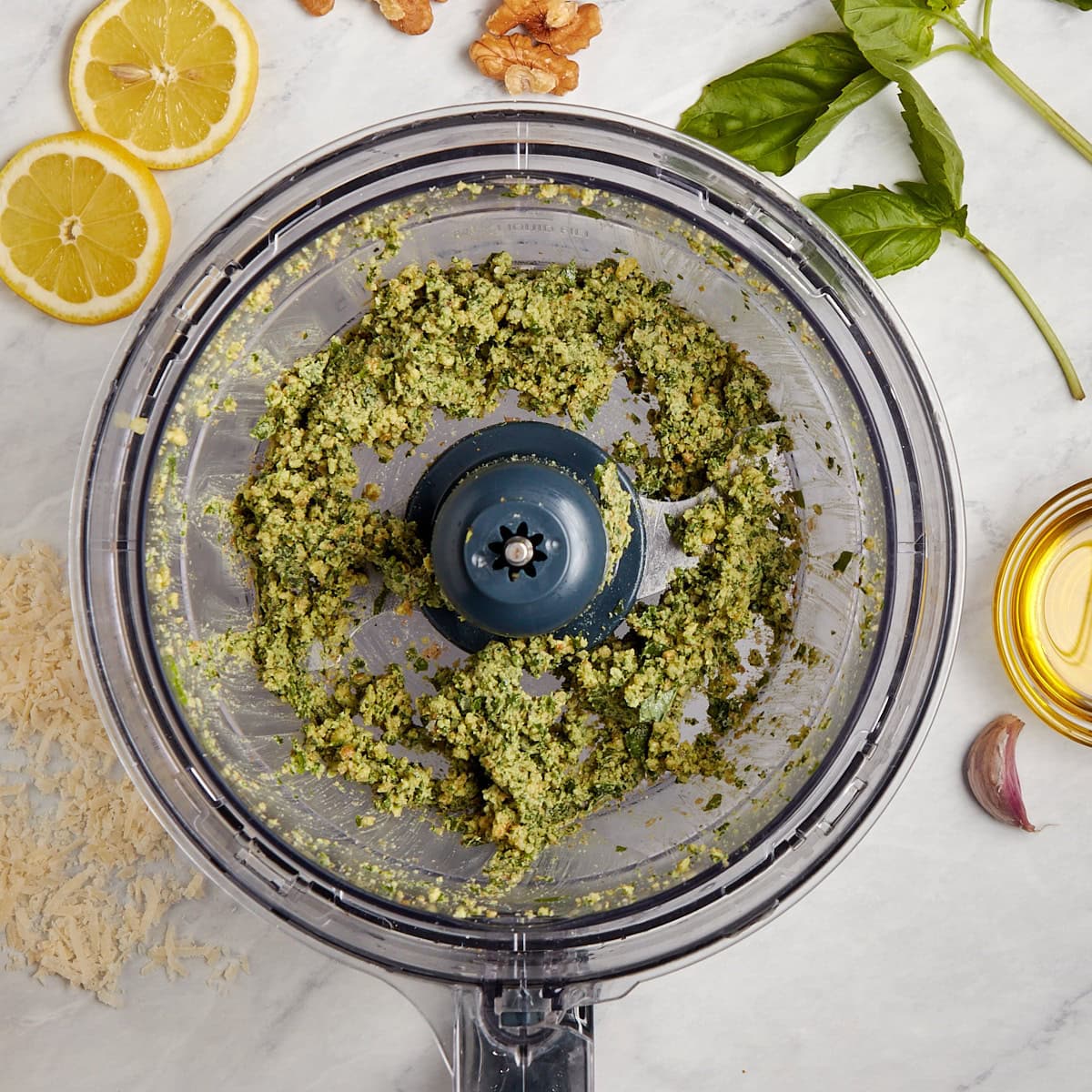
2. Add the Basil and Seasonings: Toss in the basil leaves, lemon juice, salt, and pepper. Process until the mixture looks like a thick paste, about 1 minute. You might need to stop and scrape down the sides once or twice. The basil should be finely chopped, but you’ll still see texture.
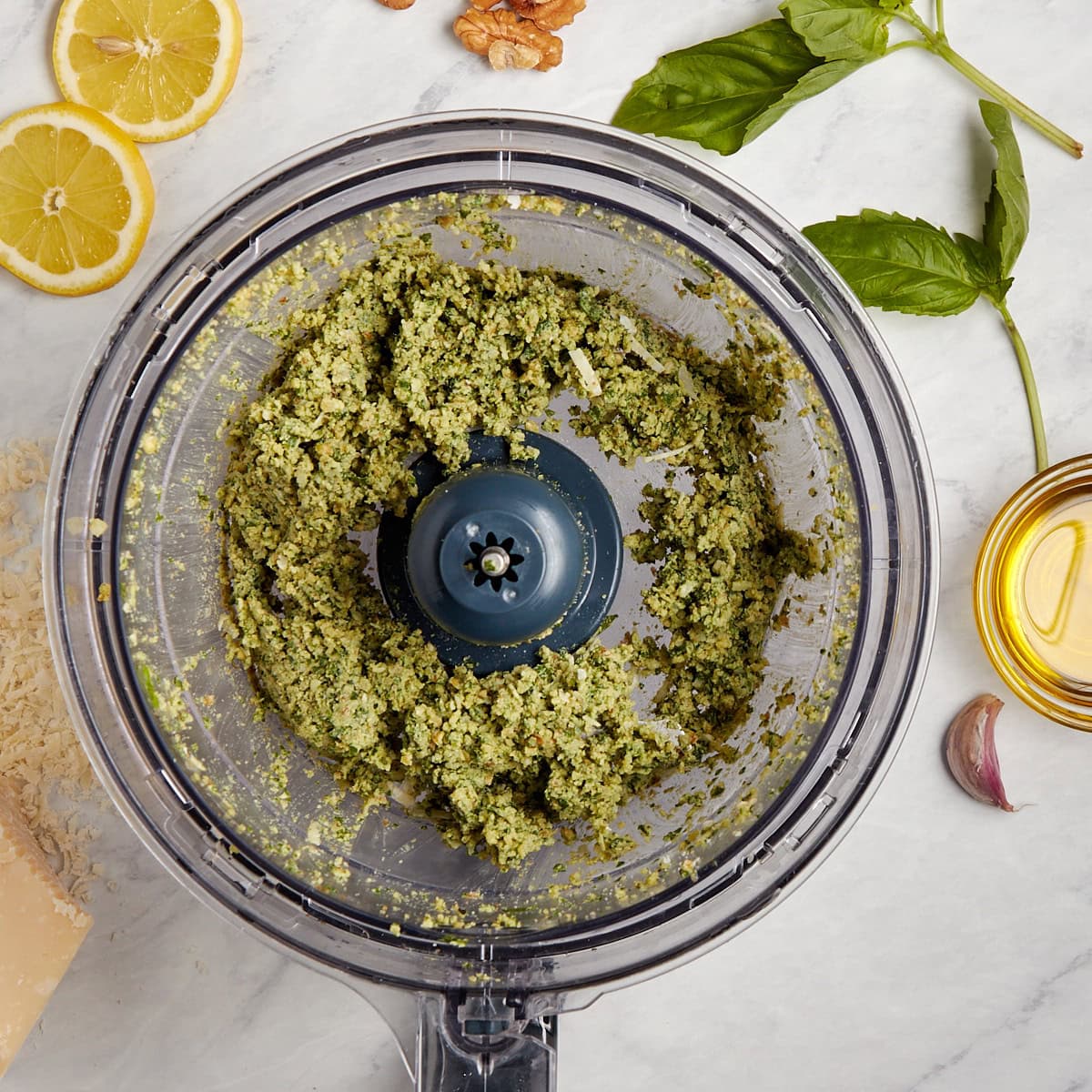
3. Mix in the Cheese: Add the grated Parmigiano-Reggiano and pulse just until combined, about 10-15 seconds. Don’t overprocess at this stage, or the cheese will get gummy, and the pesto will turn gluey instead of staying loose and “saucy.”
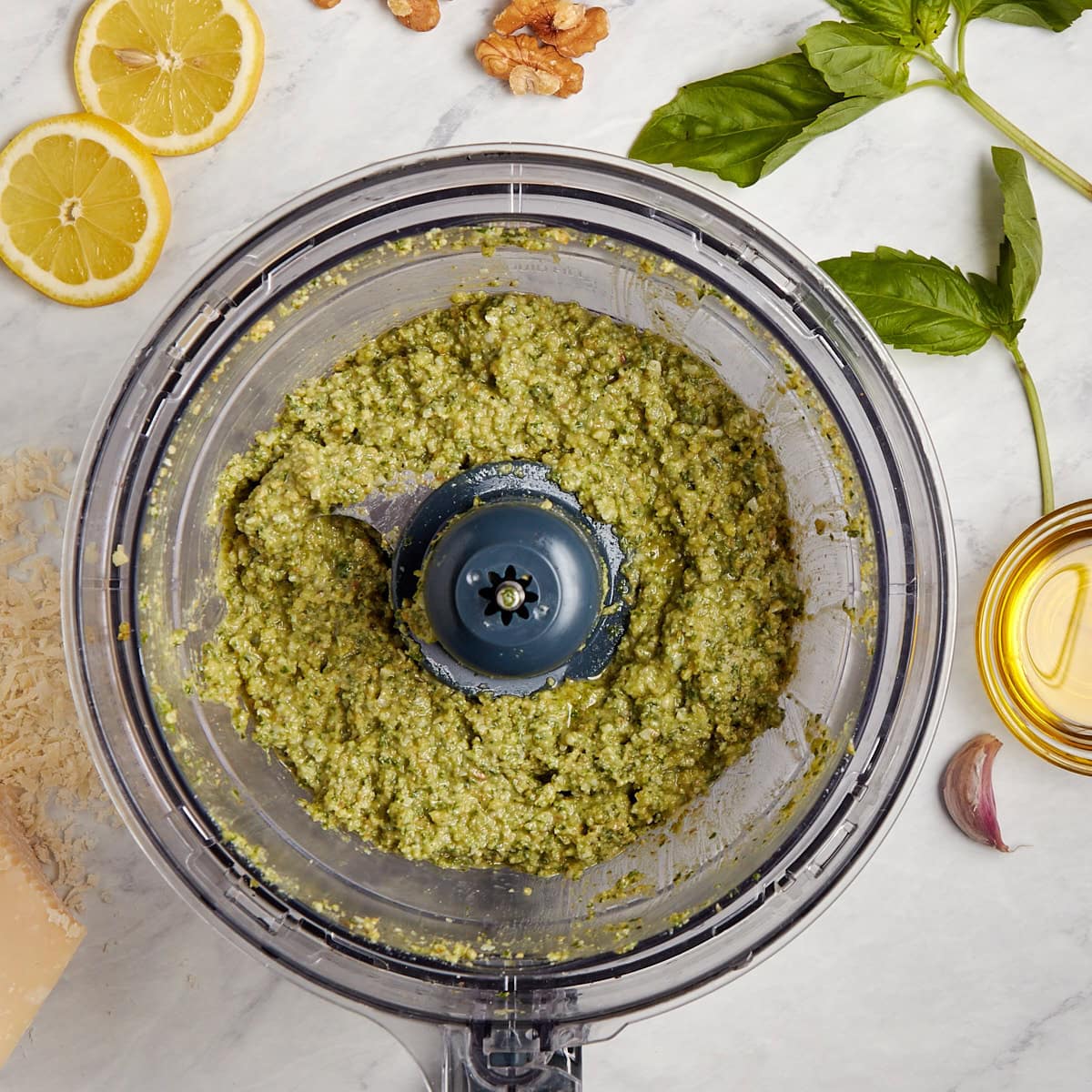
4. Stream in the Olive Oil: With the processor running, slowly pour the olive oil through the feed tube. Keep processing until everything is thoroughly blended and the pesto reaches your desired consistency. Some people like it thick and chunky, others prefer it smooth and pourable. Stop when it looks right to you.
How to Use Basil Walnut Pesto
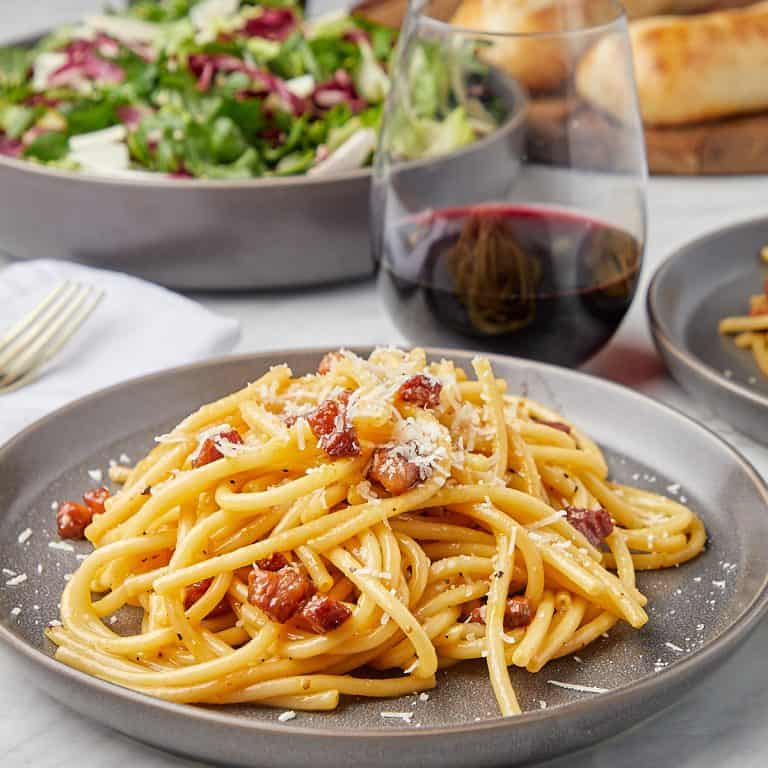
This pesto is one of those versatile sauces that works in dozens of ways. The most obvious use is tossing it with hot pasta. The heat from the pasta loosens the pesto, helping it coat every strand.
Sandwiches get a major upgrade with a schmear of walnut pesto. Try it on our caprese panini made with fresh mozzarella and tomatoes. It also makes an excellent base for chicken pesto flatbread. Just spread it on the dough before adding your toppings and baking.
We also love drizzling it over this balsamic tomato burrata dip.
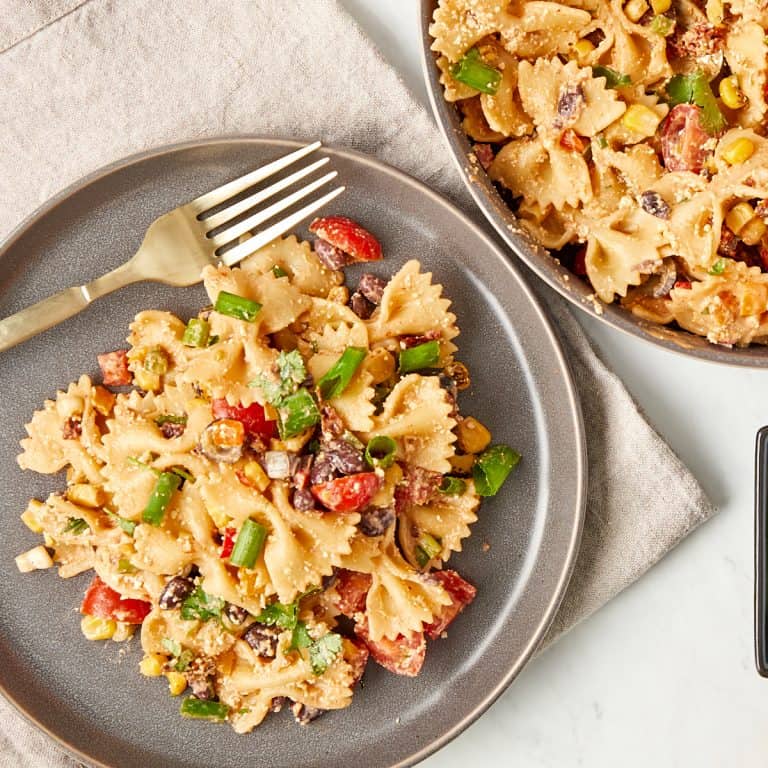
Salads benefit from pesto, too. Mix it into our caprese pesto pasta salad for a double hit of basil flavor.
You can also use it as a marinade for chicken or fish before grilling.
Make-Ahead and Storage
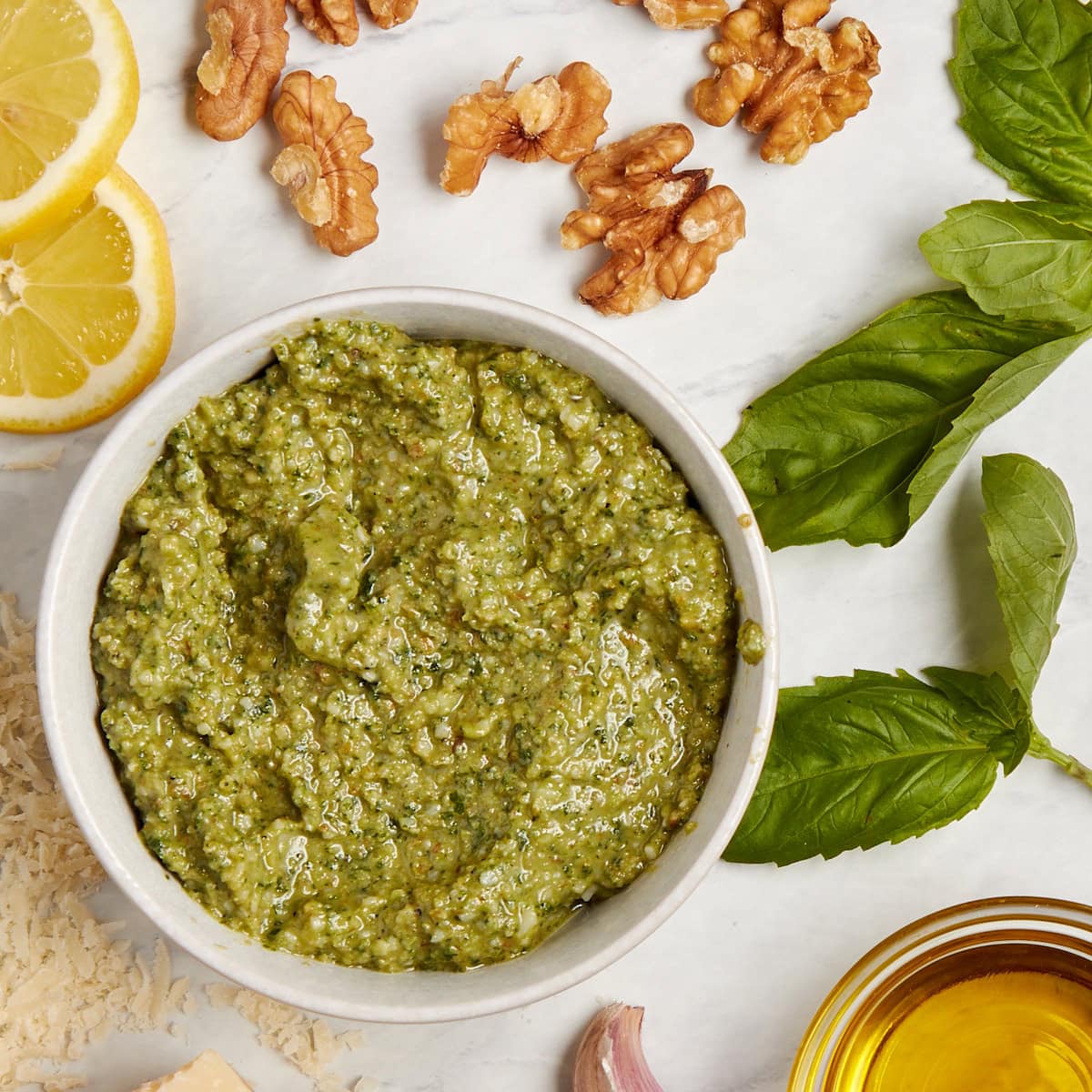
Make-Ahead: Pesto is one of those things that actually holds up well when made ahead. You can prepare it up to a week before you need it. The flavors will meld together and mellow slightly, which some people prefer. Just make sure to keep that protective layer of olive oil on top and the lid sealed tight.
How to Store: Keep the pesto in an airtight jar in the refrigerator for up to 1 week. Pour a thin layer of olive oil over the surface before sealing to prevent oxidation and browning. For longer storage, freeze the pesto in ice cube trays, then pop the frozen cubes into a freezer bag. Frozen pesto cubes last up to 3 months and make it easy to add just the amount you need to pasta, soups, or sauces.
Recipe Tips and Notes
- Don’t over-process the basil. The longer basil sits in contact with metal blades, the more likely it is to turn bitter and dark. Work quickly and stop as soon as everything is combined.
- Add the oil slowly. Pouring the oil in a steady stream while the processor runs creates a better emulsion. If you dump it all in at once, the pesto can separate and look greasy.
- Adjust the consistency. If your pesto is too thick, add more olive oil, a tablespoon at a time. If it’s too thin, add more basil or walnuts. There’s no wrong consistency, just whatever works for how you plan to use it.
- Prevent browning. That thin layer of olive oil on top isn’t optional if you want green pesto. Without it, the surface will oxidize and turn brown within hours. It still tastes fine, but it doesn’t look as appetizing.
Frequently Asked Questions
More Recipes to Try
Looking for more fresh sauce and pesto recipes? Try these other favorites:
- Thai Basil Pesto – A spicy twist on traditional pesto made with Thai basil, peanuts, and lime for bold Southeast Asian flavor.
- Homemade Tzatziki Sauce – Cool and creamy Greek yogurt sauce with cucumber, garlic, and fresh herbs.
- Hollandaise Sauce – Rich and buttery classic French sauce perfect for eggs Benedict or asparagus.
Let’s Connect! If you make this recipe or any other recipe on Casual Epicure, please don’t forget to rate the recipe and leave a comment below. It helps others who are considering making our recipes and we love hearing about your cooking experiences. And if you snapped some shots, share them on Instagram, and be sure to tag @casual.epicure so we can feature them in our stories.
Basil Walnut Pesto
Want To Save This Recipe For Later?
Equipment
- Food Processor
Ingredients
- 2 cups fresh basil leaves, packed
- ½ cup walnuts, toasted if desired
- 2 cloves garlic, chopped
- ½ cup Parmigiano-Reggiano, grated
- ½ cup extra virgin olive oil
- 2 teaspoons lemon juice
- ½ teaspoon kosher salt
- ¼ teaspoon ground black pepper
Instructions
- Place the walnuts and garlic in the bowl of a food processor fitted with a steel blade. Process until coarsely chopped, about 10 seconds.
- Add the basil leaves, lemon juice, salt, and pepper. Process until the mixture resembles a paste, about 1 minute.
- Add the Parmigiano-Reggiano and pulse until just combined, about 10-15 seconds.
- With the processor running, slowly pour the olive oil through the feed tube and process until the pesto is thoroughly blended.
- Use immediately or store in a tightly sealed jar covered with a thin layer of olive oil to prevent oxidation. Keep refrigerated for about 1 week.