
Lemon bars are a staple at bake sales, on holiday cookie trays, and potlucks, and for good reason. An all-butter shortbread crust holds up a thick layer of lemon filling that gets its sharp, tart edge from real lemon juice, not the sweetened stuff in a store-bought version. Chill the whole pan before slicing, and you get clean, neat squares instead of a mess on the cutting board.

Want To Save This Recipe For Later?
Lemon bars can look deceptively simple. We use six ingredients in our recipe, plus powdered sugar for dusting, but a few small choices along the way make the difference between a good batch and a great one. The hardest part might be waiting those three hours when your kitchen smells like fresh lemons.
My nana’s lemon meringue pie was a childhood favorite, and these bars have all the same flavors minus the meringue. Though if you want to pile some on top, I won’t stop you.
Key Ingredients and Substitutions
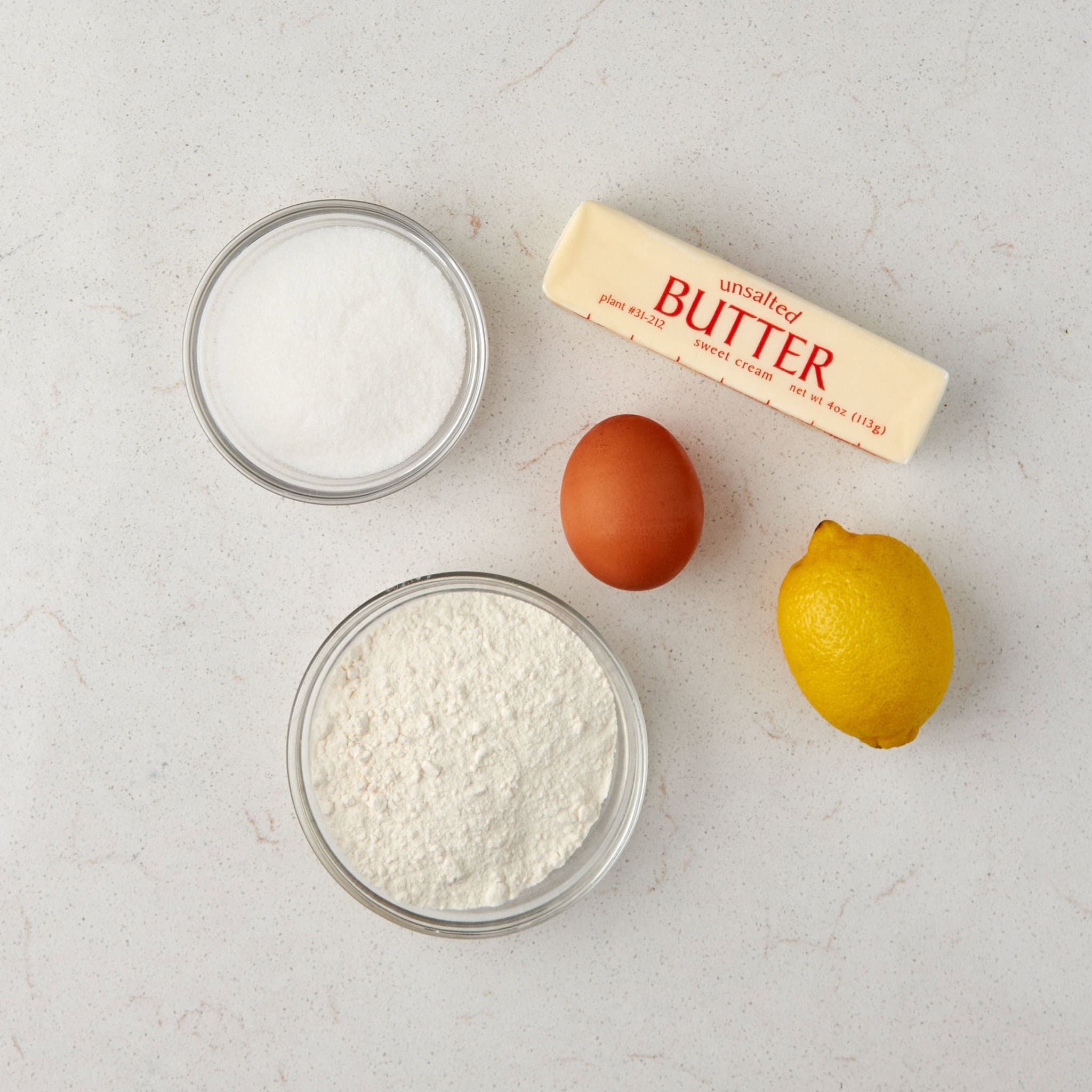
The complete ingredient list and measurements are listed in the printable recipe below.
- Fresh Lemons: Freshly squeezed juice and grated zest give these bars their bright, tangy flavor. Zest the lemons before juicing since it’s much easier to remove the zest from whole lemons. I don’t recommend bottled lemon juice since it doesn’t taste nearly as fresh. I developed this recipe with regular lemons, which give the filling its bright, tart flavor, but Meyer lemons work too. Since Meyer lemons are naturally sweeter and less acidic, they’ll give the filling a slightly softer citrus flavor.
- Granulated Sugar: The amount of sugar in this recipe is balanced for regular lemons, giving the filling a bright lemon flavor without being overly tart. If you’re using Meyer lemons, you can reduce the sugar by 1 to 2 tablespoons if you prefer a slightly less sweet filling. I don’t recommend reducing it much more than that since sugar contributes to the filling’s structure as it bakes.
- Butter: Keep the butter cold until you’re ready to make the crust. Cold butter creates the tender, crumbly texture that makes a good shortbread crust. If the butter starts to soften while you’re working, pop it back into the refrigerator for a few minutes before mixing.
- Eggs: Whisk the eggs before adding them to the filling, then pour them through a fine-mesh sieve. It only takes a minute and removes the stringy bits that can keep the filling from baking up smooth. If you forgot to take the eggs out of the refrigerator, place them in a bowl of warm tap water for about 10 minutes to take the chill off.
- Powdered Sugar: Wait until just before serving to dust the bars with powdered sugar. As the bars sit, the sugar absorbs moisture from the filling and gradually dissolves into the filling, especially during refrigeration. of each pan. A loose crust won’t hold together when you remove the cheesecake from the pan.
How to Make Classic Lemon Bars
Here are the quick, step-by-step instructions with visuals; you can find the full instructions, including the exact ingredients, in the recipe card below.
Pro-tip: Bake the crust just until the edges turn a light golden color. If you wait for the center to color too, the crust will overbake once it goes back into the oven with the filling.
Preheat the oven and prep the pan. Line the pan with parchment paper, leaving several inches hanging over two sides. Skipping this step makes the bars difficult to remove cleanly, since the crust bonds directly to the metal pan as it bakes. Leave enough overhang that you can grab it easily with your fingers once the bars are chilled. Use metal clips to hold the parchment in place, then remove them before baking.
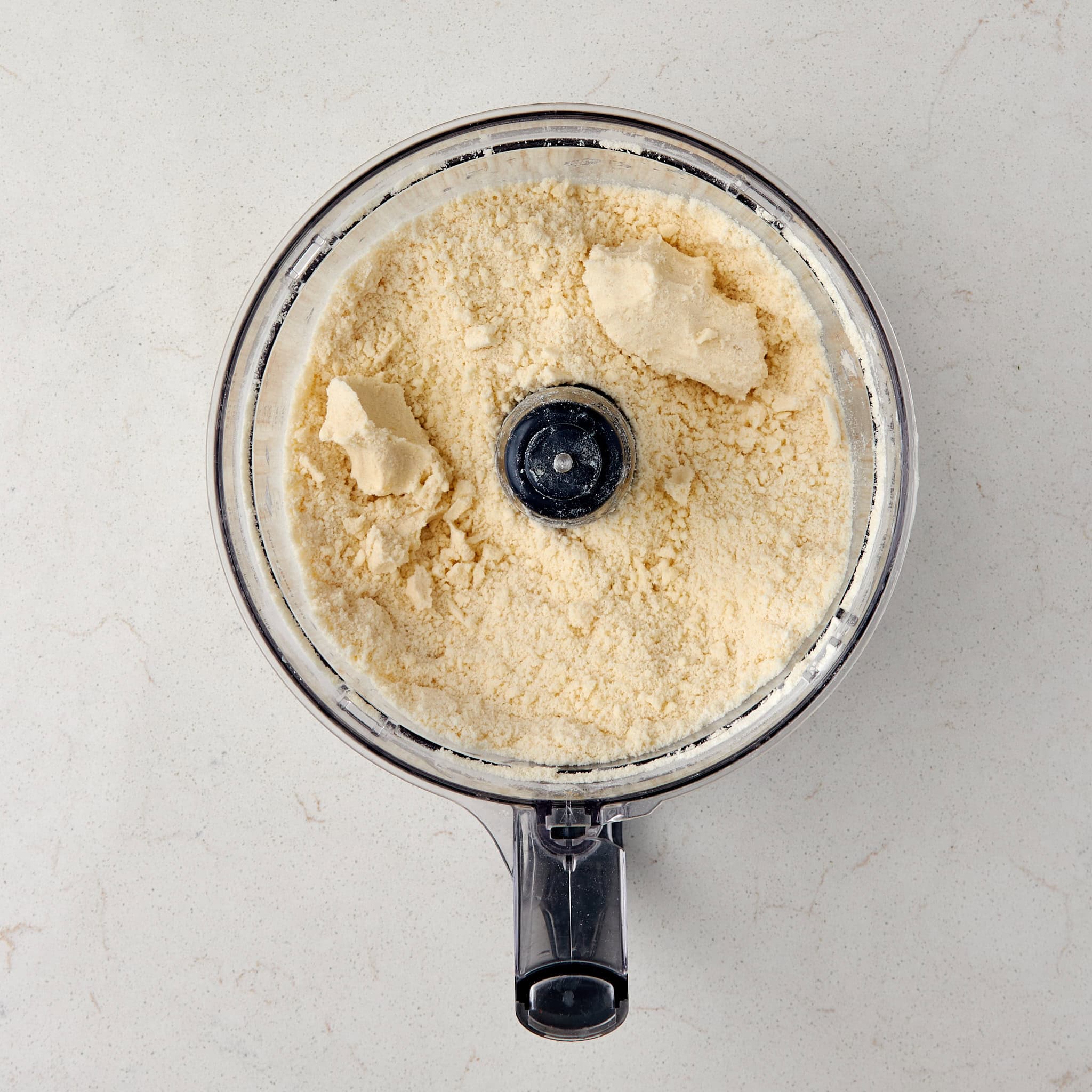
Make the shortbread dough. Pulse the cold butter into the flour mixture until it turns crumbly, with small, pea-sized pieces of butter and the mixture holding together when you pinch a bit between your fingers. If the dough turns smooth and starts pulling into a ball in the processor, it’s been overworked, and the crust will bake up dense instead of tender.
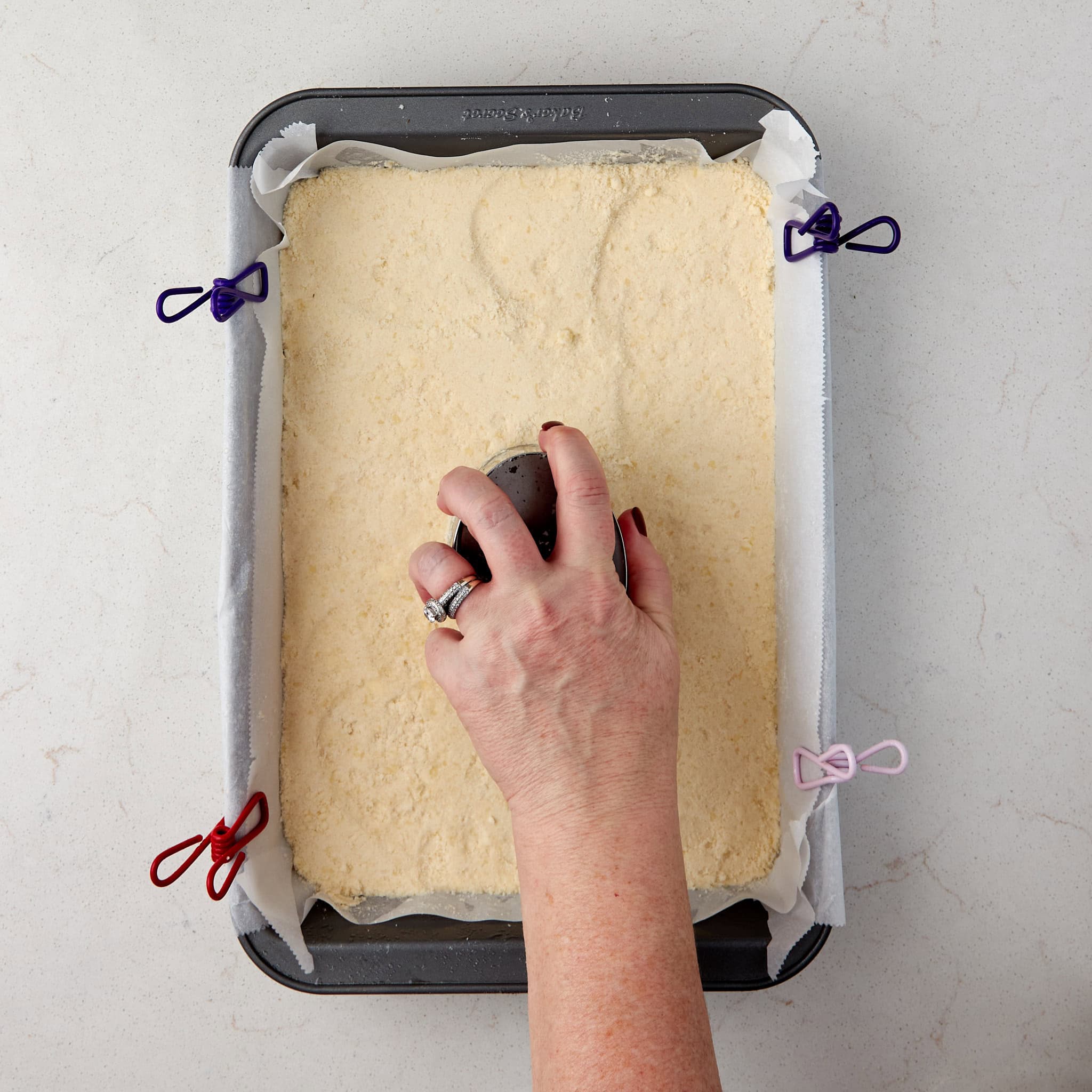
Press the crust into the pan. Press the dough evenly across the bottom of the pan, using the bottom of a measuring cup to get it level. Press firmly enough that the crust holds together, but don’t pack it so tightly that it becomes dense.
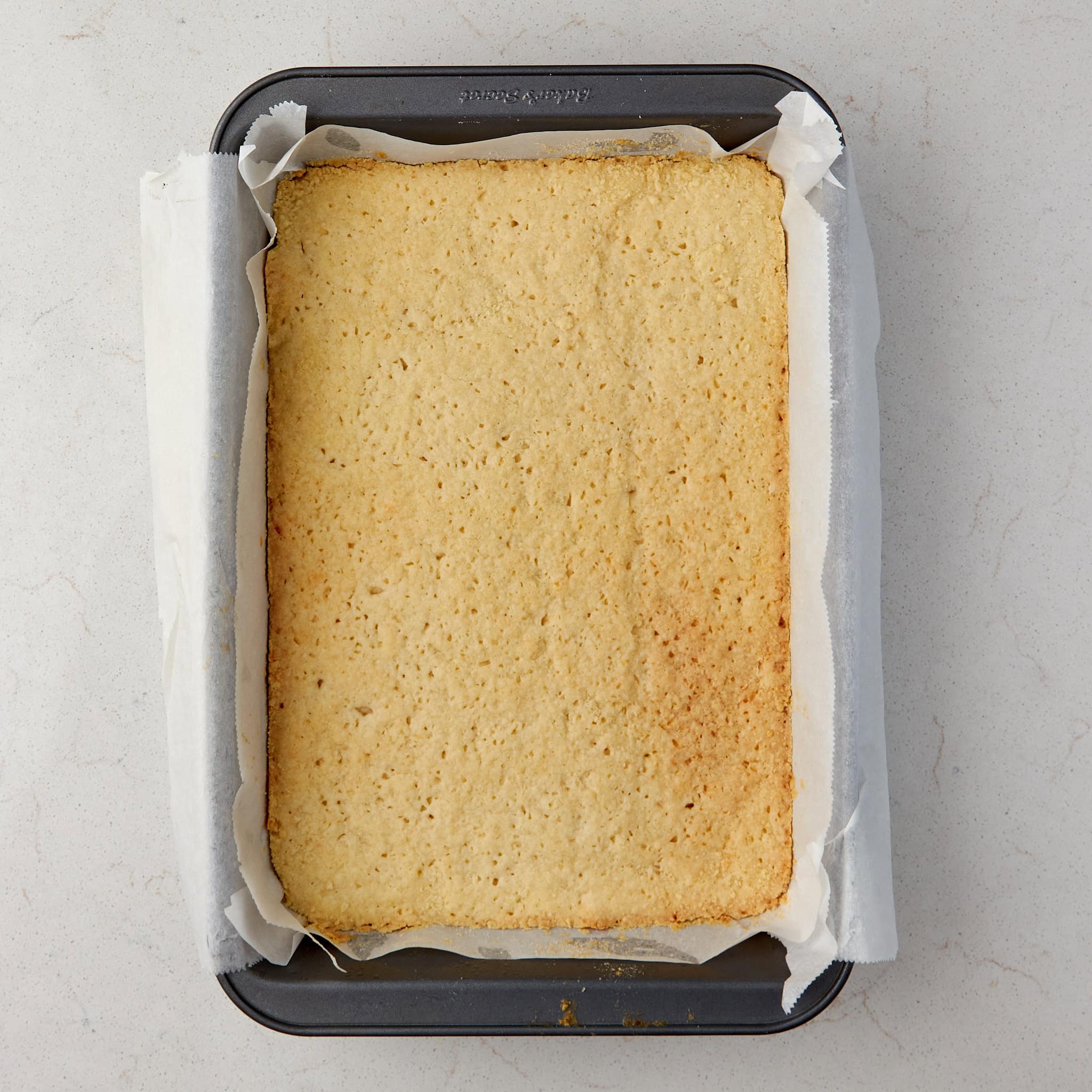
Bake the crust. Bake until the edges are lightly golden. The center will still look pale, and that’s expected since it finishes baking under the filling.
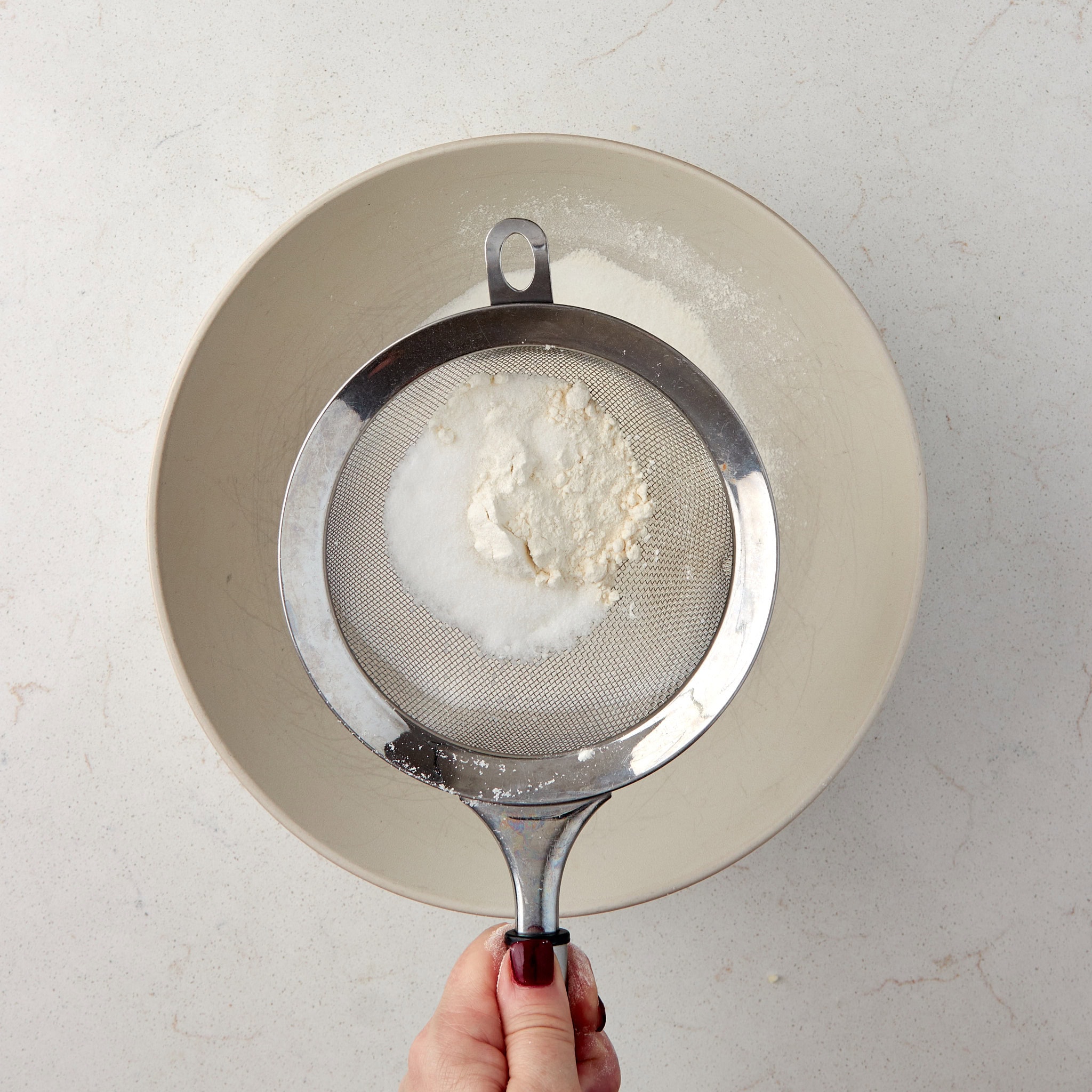
Combine the flour and sugar. Sift the sugar and flour together first, which keeps the filling smooth instead of speckled with flour clumps. Whisk the eggs, then strain them through a fine-mesh sieve into the sugar and flour mixture.
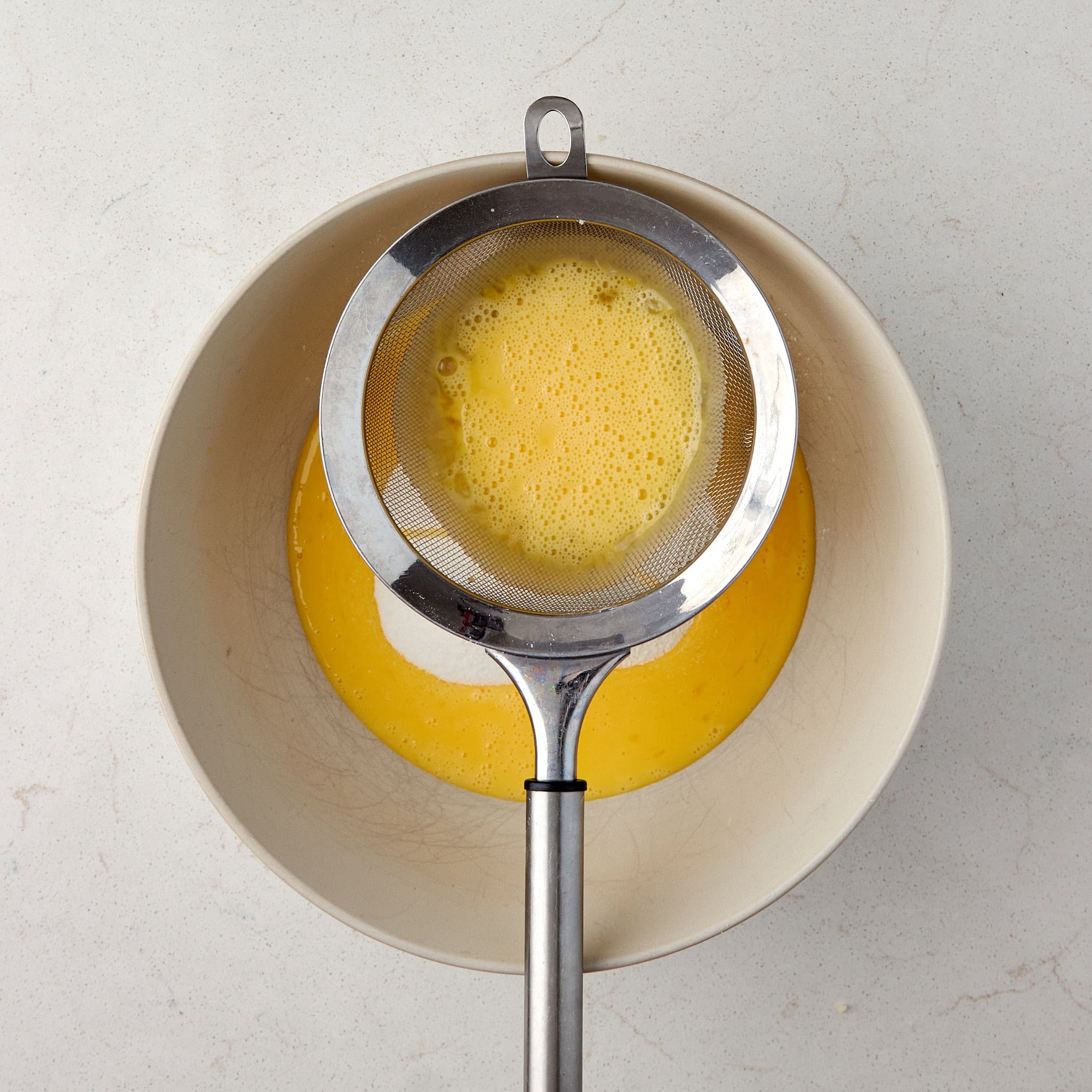
Add the eggs. In a separate bowl, whisk the eggs, then strain them through a fine-mesh sieve into the bowl with the sugar and flour mixture.
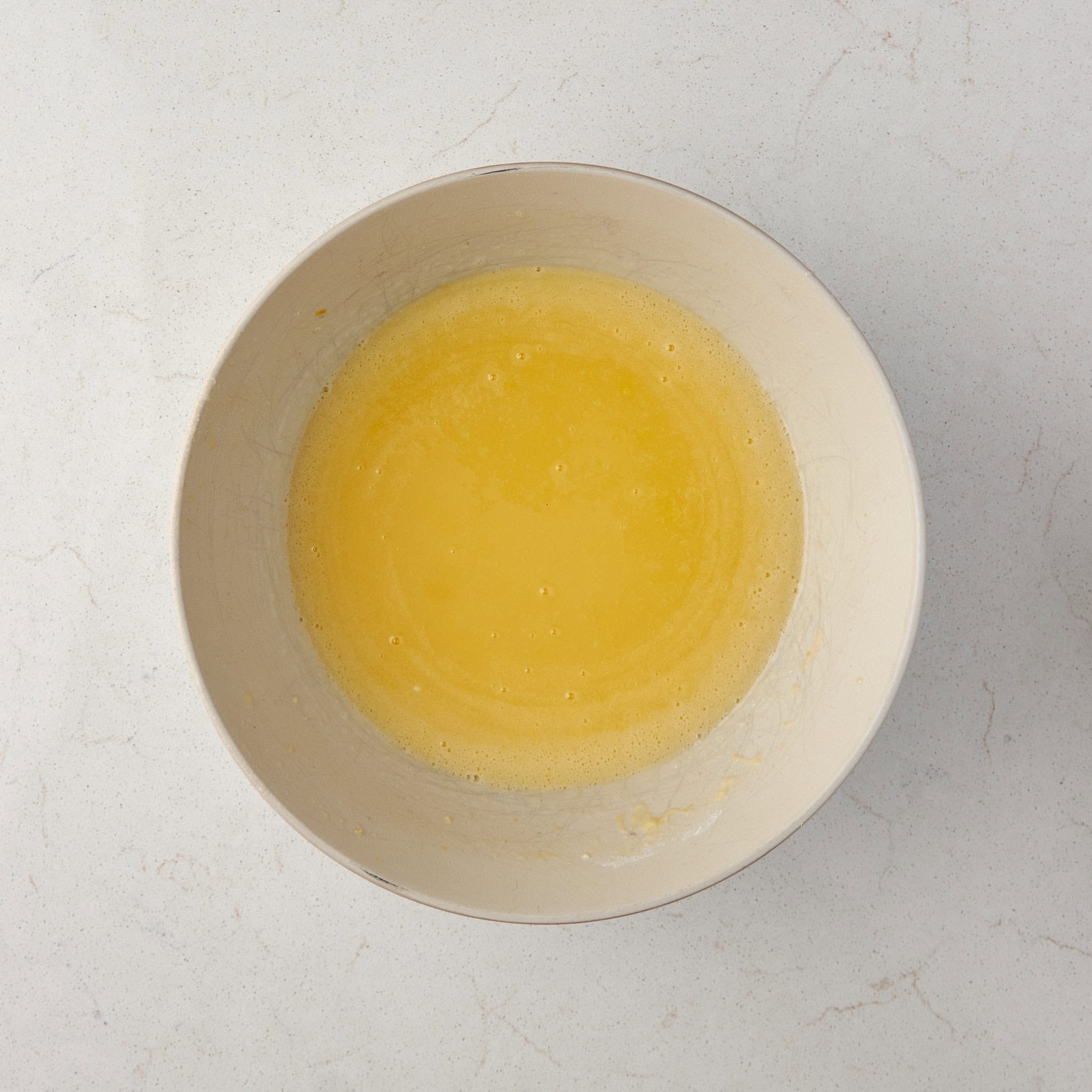
Add the lemon juice and zest. Whisk gently rather than vigorously once you add the lemon juice and zest, since too much air creates bubbles that rise to the surface and leave a mottled look on the finished bars. The filling should look smooth and pourable, with no streaks of egg white remaining, before it goes over the crust.
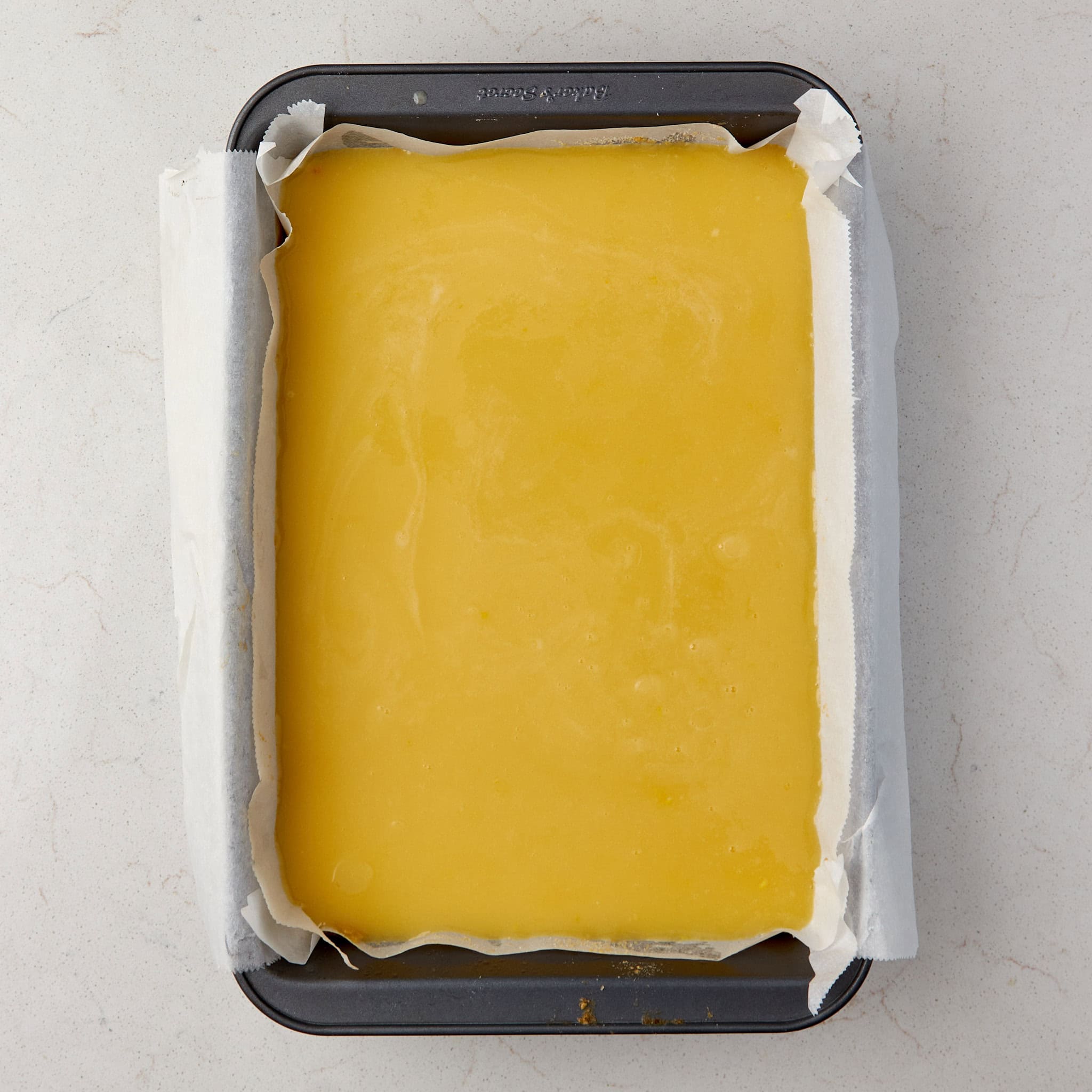
Pour the filling over the warm crust and bake. Pouring the filling onto a warm crust, rather than a fully cooled one, helps the two layers bond so the filling doesn’t separate from the crust once it’s sliced. The filling is done when the center doesn’t jiggle and no longer looks liquid when the pan is gently tapped.
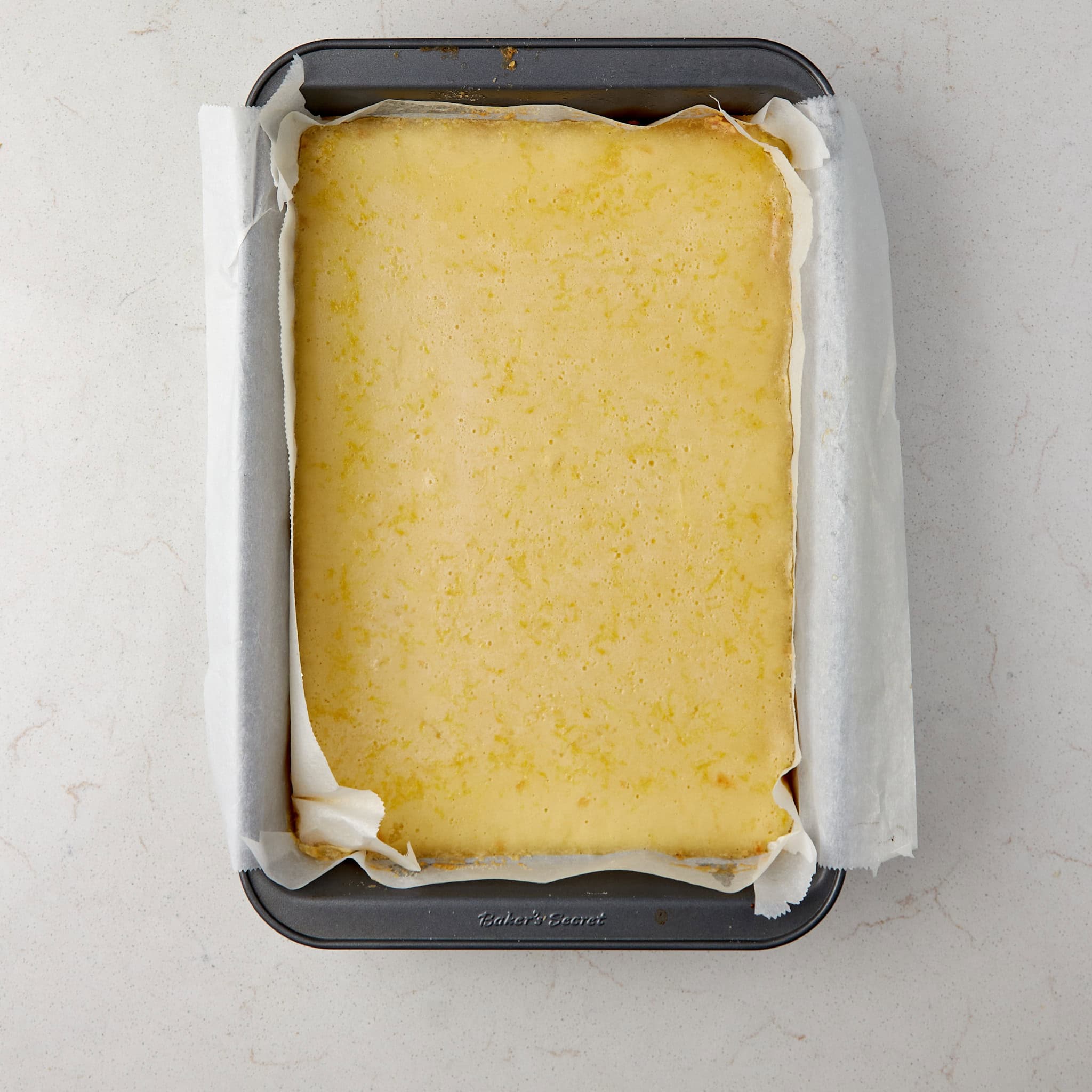
Cool completely, then chill. Let the bars cool at room temperature before moving them to the refrigerator. Chilling while still warm can cause the filling to crack as it sets, so give it time to cool down on its own first. The bars will continue to firm up as they chill, making them much easier to slice cleanly.
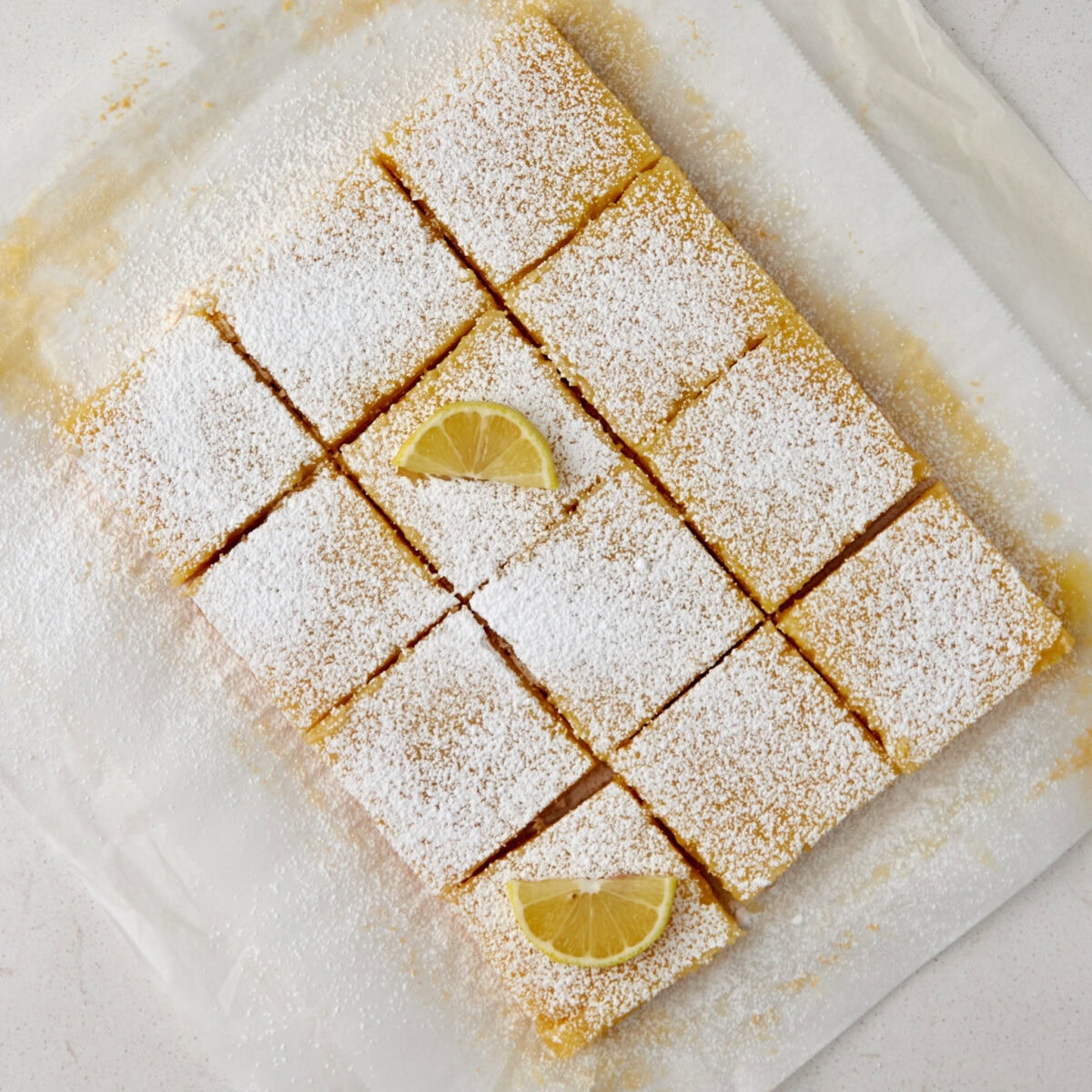
Lift, slice, and dust. Use the parchment overhang to lift the whole batch out of the pan before cutting. Wipe the knife clean between cuts so each square comes out neat instead of dragging filling across the top. Dust the bars with powdered sugar using a fine-mesh sieve or sifter, tapping it gently so the sugar falls in a light, even layer instead of clumping in one spot.
Make-Ahead and Storage
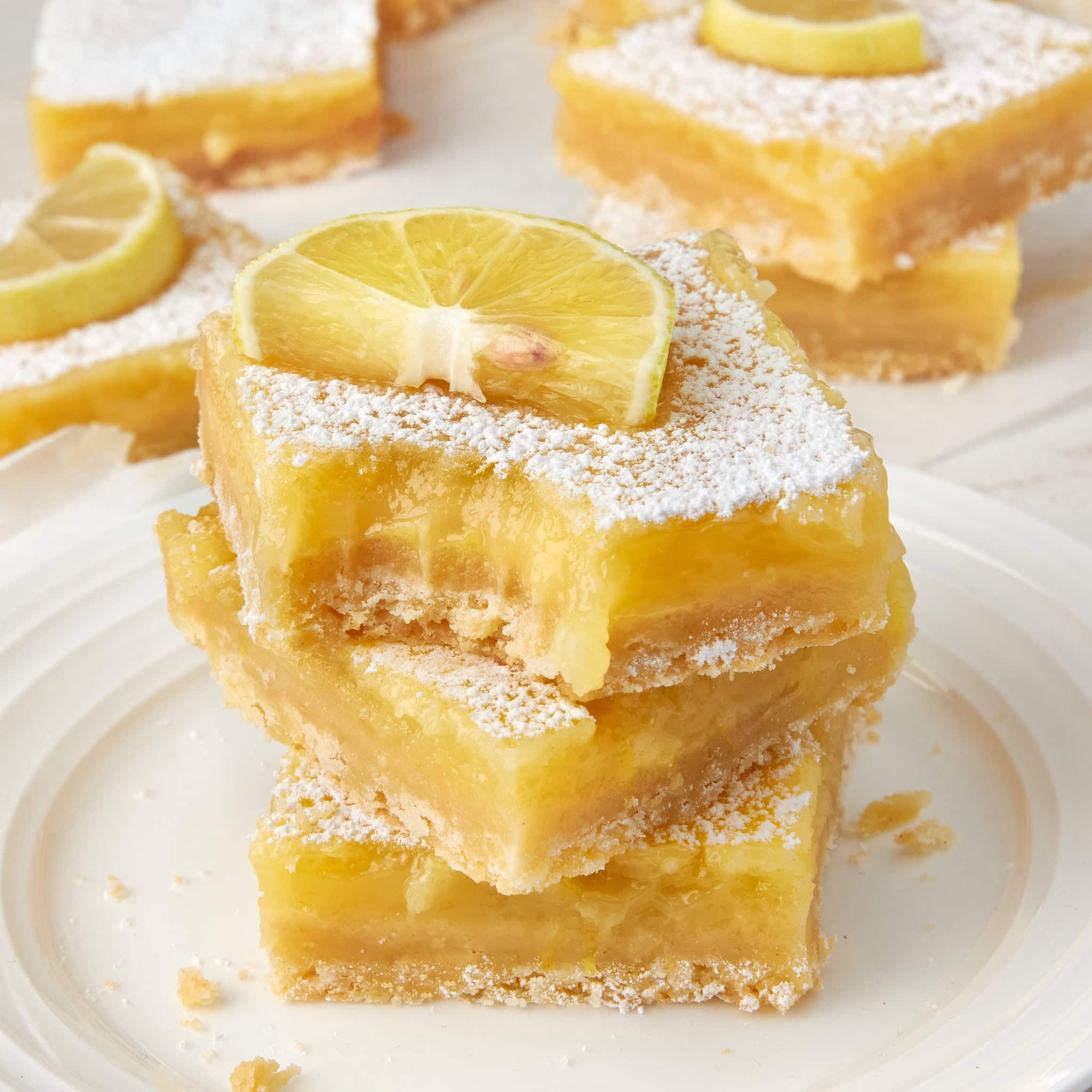
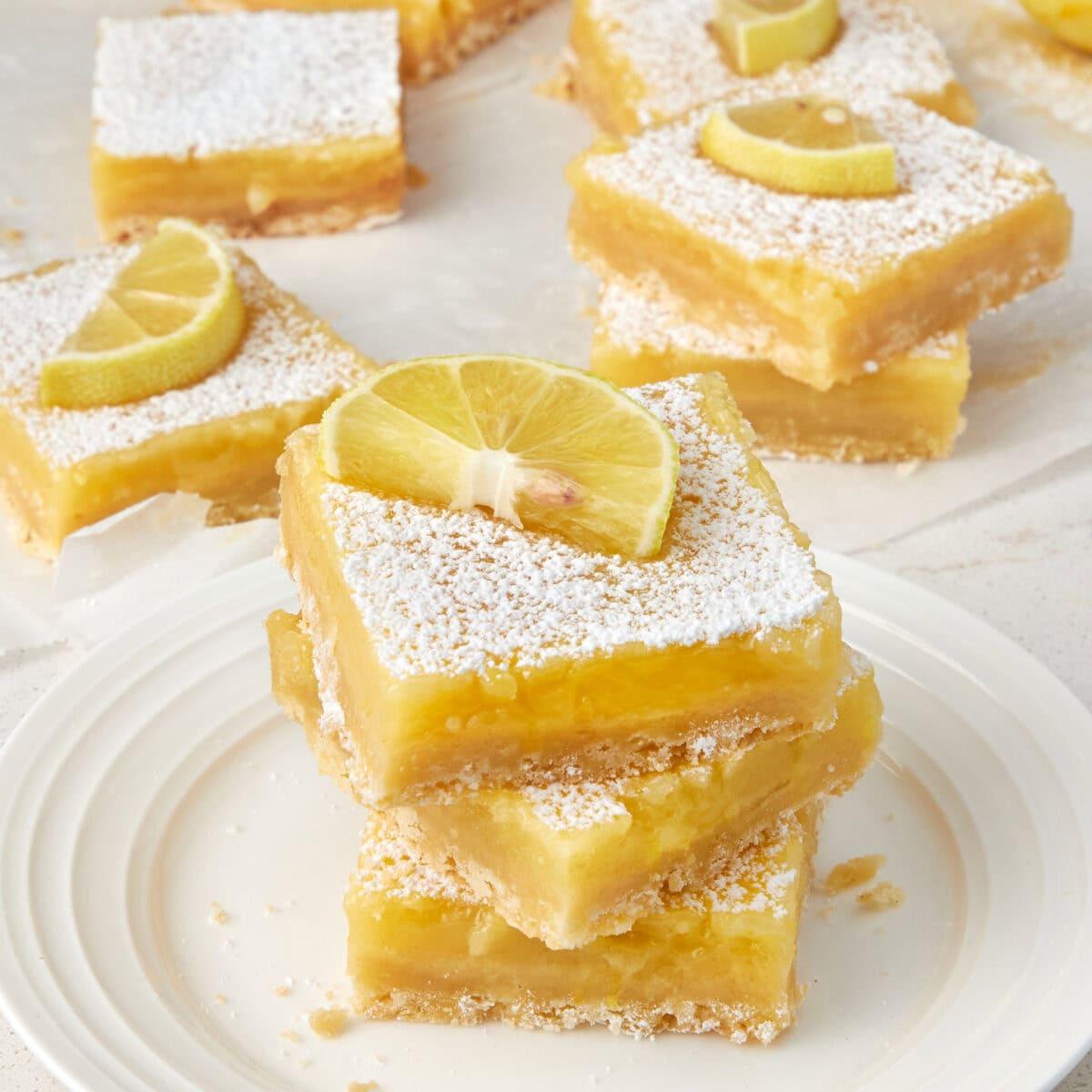
Homemade lemon bars are one of those desserts that are even better after a night in the refrigerator. The filling firms up and the bars slice more cleanly, making them a good make-ahead dessert.
Make-Ahead: These bars can be made up to 2 days in advance. Bake, cool, and chill them completely, then keep them covered in the refrigerator until you’re ready to slice and serve. Wait to dust with powdered sugar until right before serving.
How to Store: Store sliced lemon bars in an airtight container in the refrigerator for up to 5 days.
How to Freeze: Freeze the bars without the powdered sugar. Place the bars in a single layer on a baking sheet until solid, then transfer them to a freezer-safe container with parchment between the layers. They’ll keep in the freezer for up to 2 months. Thaw them in the refrigerator overnight, and dust with powdered sugar before serving.
Recipe Tips and Notes
- Use the right pan size. This recipe is built for a 9×13 pan. A smaller pan gives you a thicker filling that takes longer to set, and a larger pan spreads the filling too thin, raising the risk of a soggy crust underneath.
- Check your oven temperature. Ovens often run hotter or cooler than the dial shows, which can leave the filling underbaked and runny even after the full bake time. An oven thermometer takes the guesswork out and helps the filling set properly.
- Score the bars before cutting all the way through. Press a knife lightly into the chilled bars to mark a grid before slicing for real. This gives you evenly sized squares instead of guessing at the width as you go.
- Don’t overbake. The filling keeps cooking from residual heat after it leaves the oven. Pulling the pan when the center still has the slightest jiggle prevents the filling from overbaking and cracking as it cools.
- Let the bars chill completely before judging the texture. Lemon bars continue setting as they cool, so they may seem slightly soft when they first come out of the oven. Resist the temptation to bake them longer unless the center still looks liquid.
Frequently Asked Questions
More Dessert Recipes to Try
If you loved this bar cookie recipe, here are a few more desserts to try next.
- Chocolate Pecan Pie Bars – A buttery shortbread crust holds a rich, gooey chocolate and pecan filling for all the flavor of pecan pie in a bar you can pick up with your hands.
- Pumpkin Pie Dessert Bars – Classic pumpkin pie flavor gets the bar treatment, with a spiced filling over a buttery crust that fits right in on a holiday spread.
Let’s Connect! If you make this recipe or any other recipe on Casual Epicure, please don’t forget to rate the recipe and leave a comment below. It helps others who are considering making our recipes and we love hearing about your cooking experiences. And if you snapped some shots, share them on Instagram, and be sure to tag @casual.epicure so we can feature them in our stories.
Classic Lemon Bars with Shortbread Crust
Want To Save This Recipe For Later?
Equipment
- Food Processor
- Medium Bowl (2)
- Baking Pan (9×13)
- Fine Mesh Strainer
Ingredients
Shortbread Crust
- 2 cups all-purpose flour
- ⅓ cup granulated sugar
- ¼ teaspoon kosher salt
- 1 cup cold unsalted butter, cut into ¼ inch pieces
Lemon Filling
- 2 cups granulated sugar
- 6 tablespoons all-purpose flour
- 6 large eggs
- 1 cup fresh lemon juice, about 4 lemons
- 1 tablespoon lemon zest
- powdered sugar for dusting
Instructions
- Preheat the oven to 350°F. Line a 9×13 baking pan with parchment paper, leaving an overhang on all sides. Lightly spray with nonstick cooking spray.
- In a food processor, combine flour, sugar, and salt. Add cold butter and pulse until the mixture is crumbly and just begins to come together.
- Press the mixture evenly into the prepared pan. Bake for 13 to 15 minutes, until very lightly golden. Remove from oven.
- While the crust bakes, sift the sugar and flour together in a large bowl. In a separate bowl, whisk the eggs, then strain them through a fine-mesh sieve into the sugar and flour mixture. Whisk to combine, then whisk in the lemon juice and zest.
- Pour the filling over the warm crust. Return to the oven and bake at 325°F for 22 to 26 minutes, until the center is set and no longer jiggles when the pan is tapped.
- Cool completely at room temperature, about 2 hours. Refrigerate for at least 1 hour before slicing.
- Lift the bars from the pan using the parchment overhang. Dust with powdered sugar, slice into squares, and serve chilled. Wipe the knife clean between cuts for neat edges.