
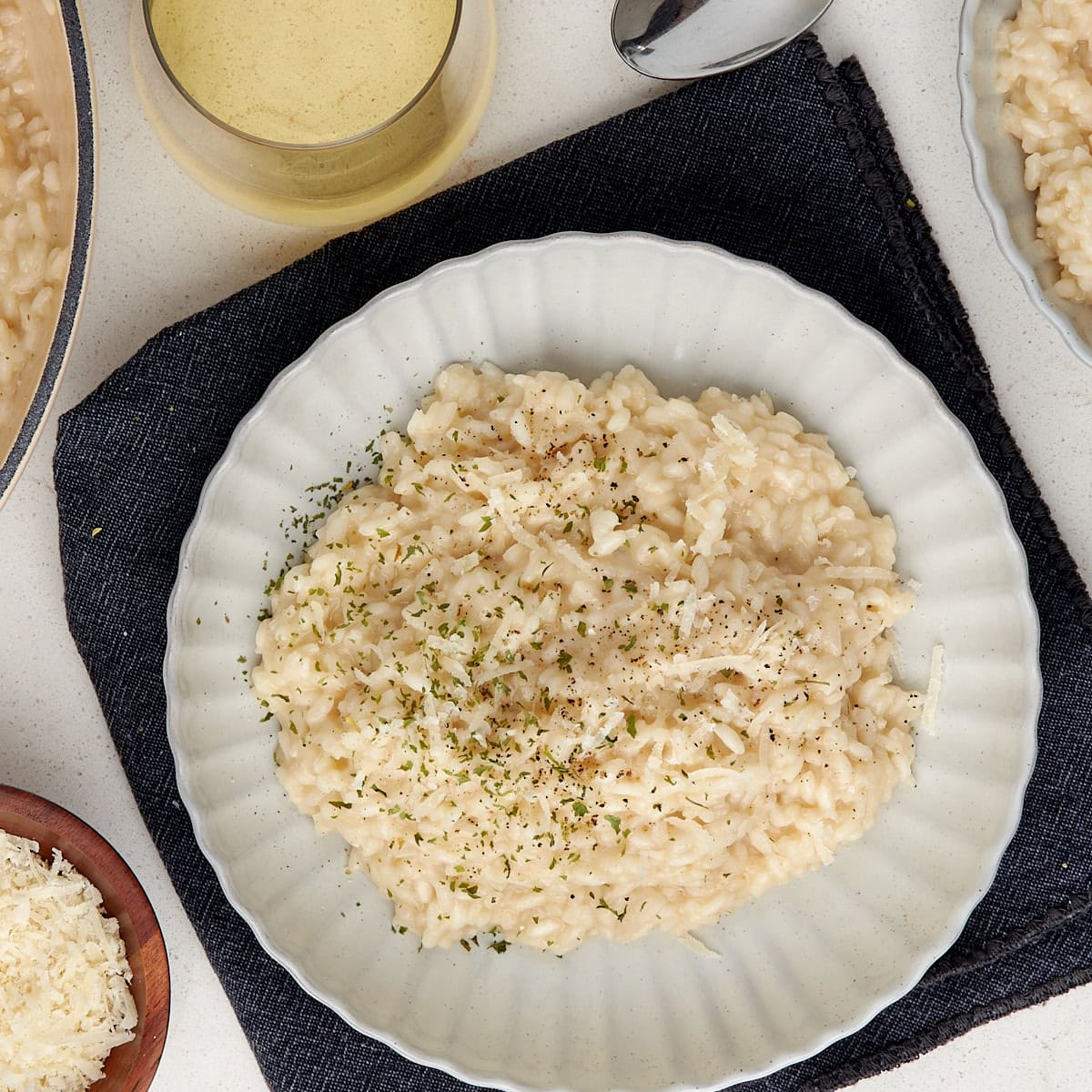
Parmesan risotto has a reputation as the dish that keeps you pinned to the stove, stirring nonstop until your arm gives out. I’m happy to report that making risotto is not like arm day at the gym. Risotto alla parmigiana is the most basic Italian risotto, the one the others are based on. It’s short-grain rice cooked slowly in warm chicken stock with shallot and dry white wine, then finished off the heat with butter and a full cup of Parmigiano Reggiano, all in about 40 minutes. We like to serve it with red-wine-braised short ribs or beef osso buco, so there’s something to catch all that braising sauce.
Want To Save This Recipe For Later?
Featured Ingredient: Arborio vs. Carnaroli Rice
Risotto needs a short-grain Italian rice with enough starch to thicken the stock into a creamy sauce. Arborio is the one you’ll find at nearly every grocery store, and it’s what most risotto recipes call for. Carnaroli is harder to track down (we found ours at a high-end grocery store), and many Italian cooks prefer it. Its grains are a little longer and firmer, so they tend to hold their shape if the risotto goes a minute or two past done.
Vialone Nano is the third rice you’ll see recommended for risotto. We only found it online, where it was pricey and sold in larger bags than we’d use, so we didn’t test it for this recipe.
Whichever rice you use, don’t rinse it. The starch on the outside of each grain is what turns the stock creamy, and rinsing washes it away.
Other Ingredients and Substitutions
The complete ingredient list and measurements are listed in the printable recipe below.
- Parmigiano Reggiano. Buy a wedge and grate it yourself right before cooking. Pre-grated Parmesan is coated with anti-caking agents that keep it from melting smoothly, and you’ll end up with clumps instead of a glossy sauce. The cheese brings plenty of salt, so taste the risotto after it goes in before adding any more.
- Chicken stock. Use low-sodium stock, and plan on 5 to 6 cups for 1½ cups of rice, though you may not use all of it. Regular stock concentrates as the rice absorbs it, and combined with a full cup of Parmigiano, the finished risotto can turn out too salty. Vegetable stock works for a meatless version.
- Dry white wine. Pick a bottle you’d happily drink, like a Pinot Grigio, Sauvignon Blanc, or unoaked Chardonnay. Skip an oaky Chardonnay, which can taste bitter once reduced, and anything labeled “cooking wine,” which is loaded with salt. To leave the wine out, replace it with an equal amount of stock and add a squeeze of lemon juice at the end for brightness.
- Shallot. A shallot is milder than an onion and softens into the rice without leaving crunchy bits behind. If you only have an onion on hand, use about ¼ cup of finely minced yellow onion.
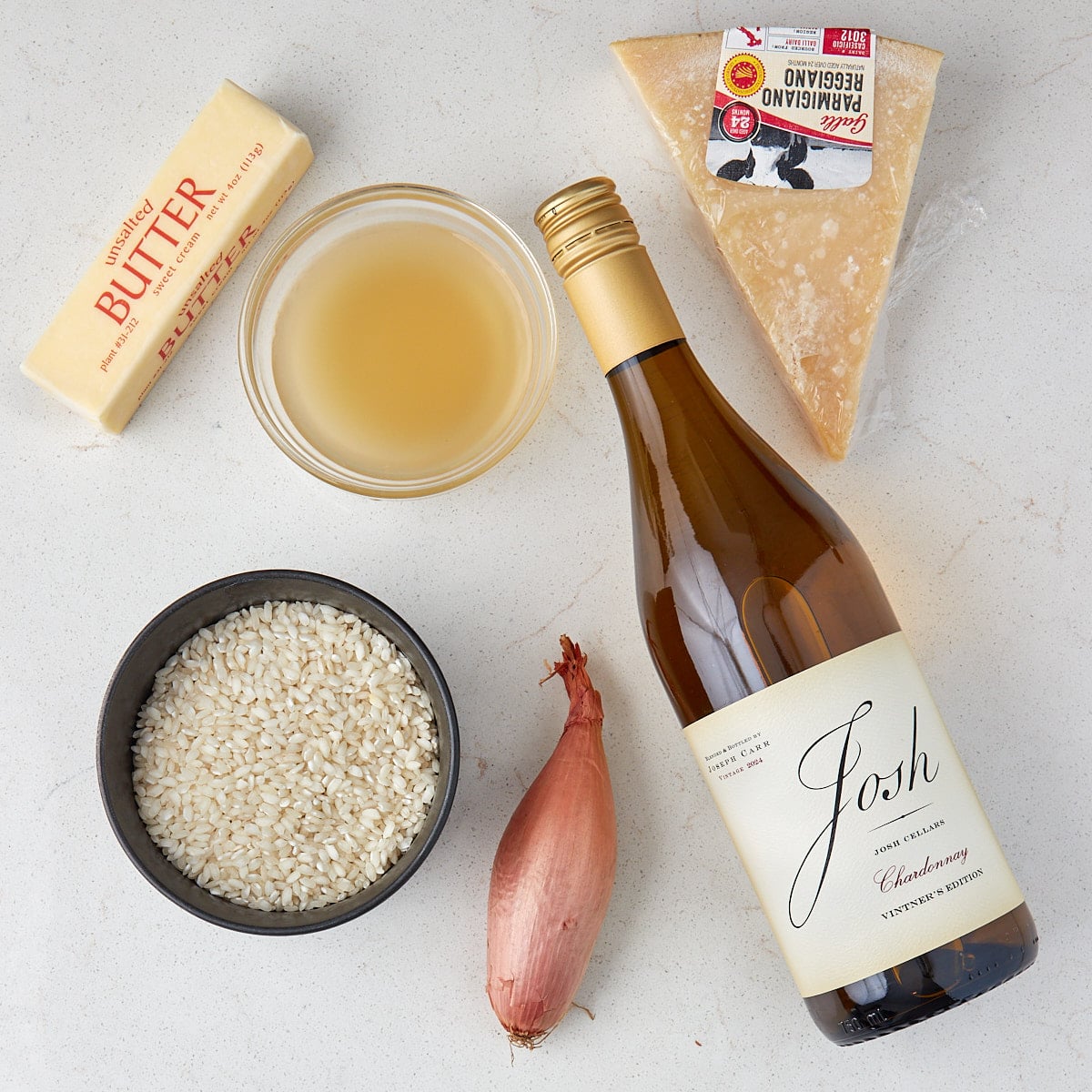
How to Make Parmesan Risotto
Here are the quick, step-by-step instructions with visuals; you can find the full instructions, including the exact ingredients, in the recipe card below.
Pro-tip: Stir often, not constantly. Plenty of recipes insist you can’t step away from risotto for a second. We stir frequently, scraping the bottom and sides of the pot each time, and it still turns out creamy. A few seconds away to check the stock or grab the cheese won’t hurt it. Walk away for too long, though, and the rice can stick to the bottom.
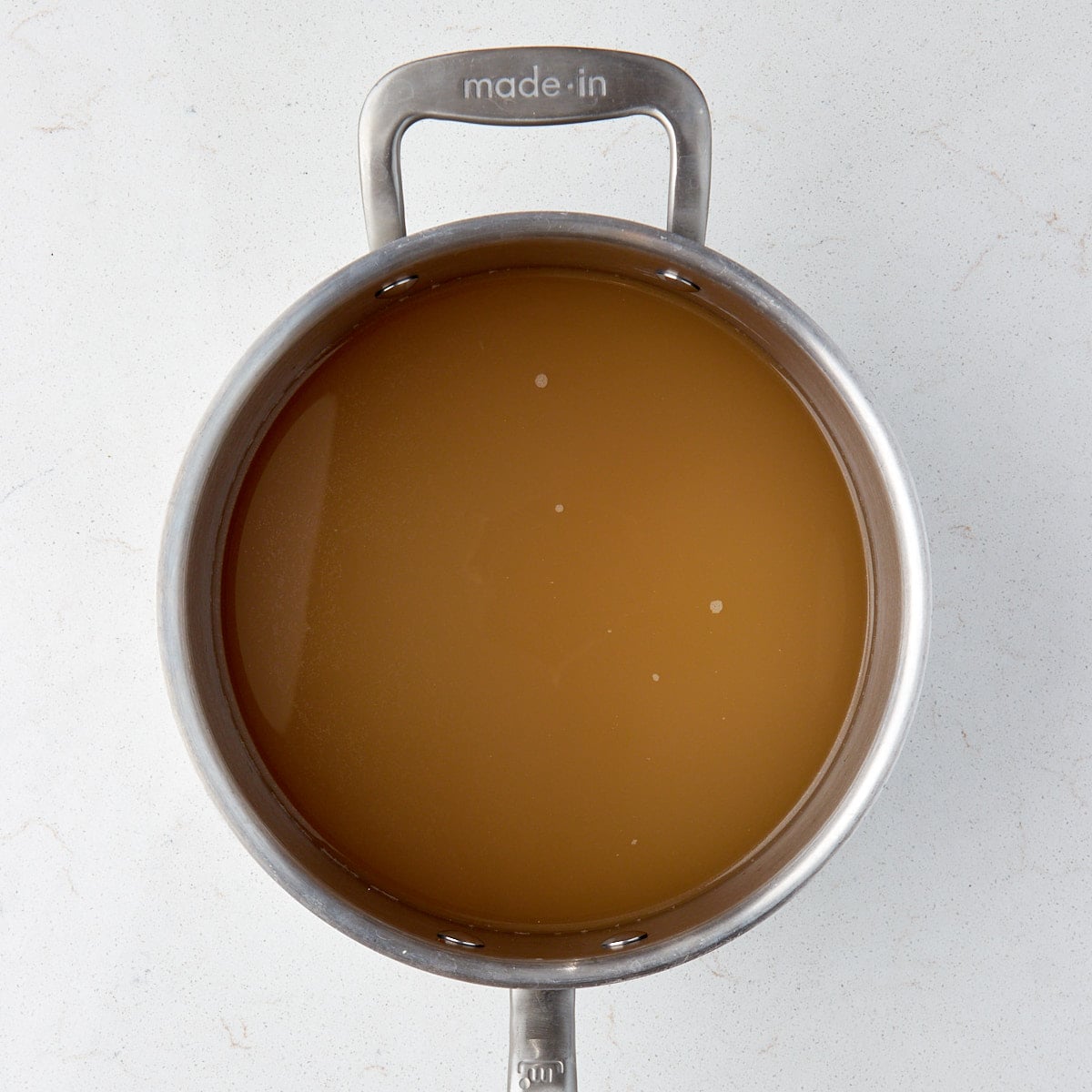
Warm the stock. Keep the stock at a bare simmer on a back burner the whole time you cook. Cold stock lowers the pot’s temperature each time you add it, stalling the rice and leaving the grains cooking unevenly. We warm it first, before the shallot goes in, so it’s ready when the rice needs it.
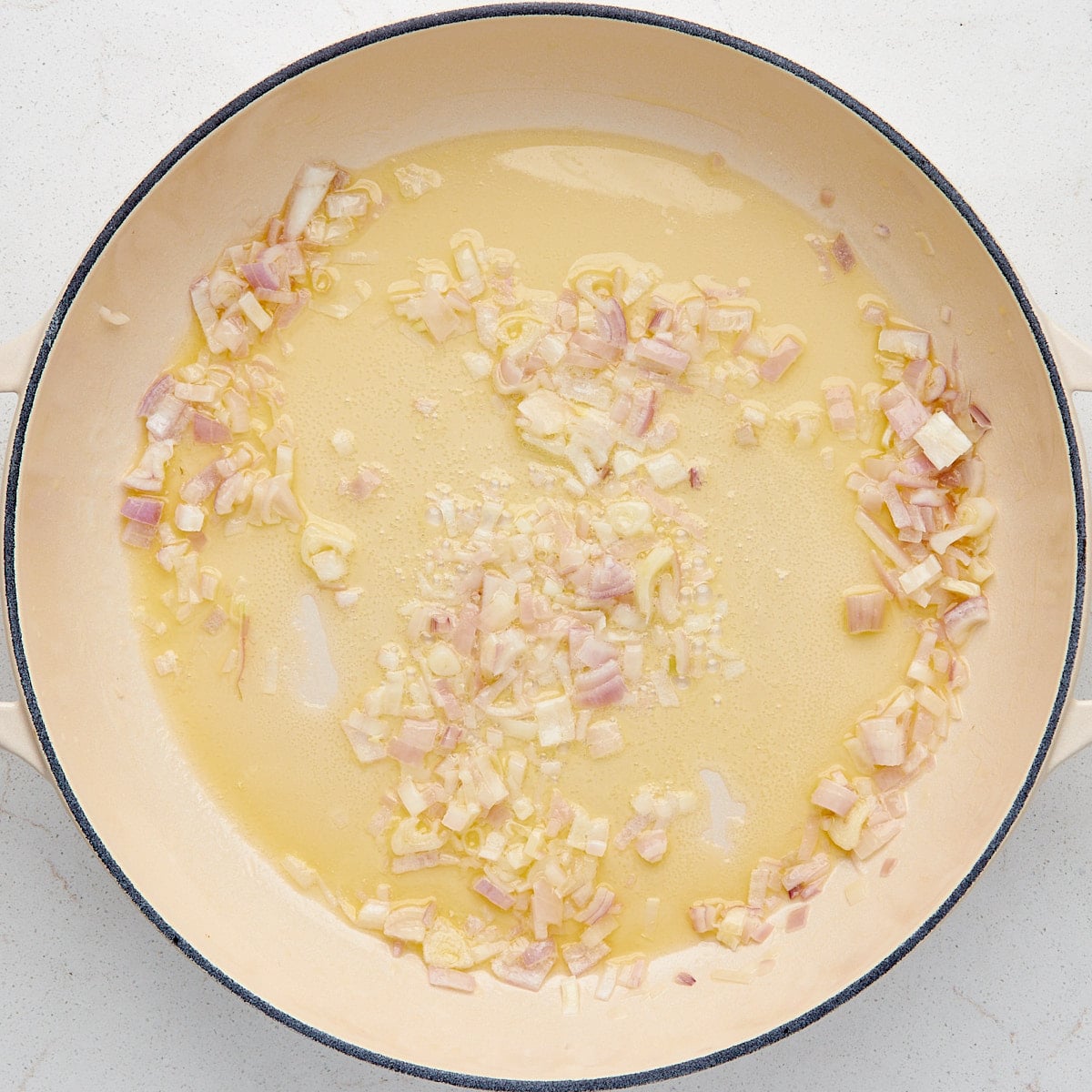
Soften the shallot. Cook the shallot in butter over medium heat until soft and translucent. If it starts to brown, lower the heat, since browned shallots add a bitter edge to a dish this mild.
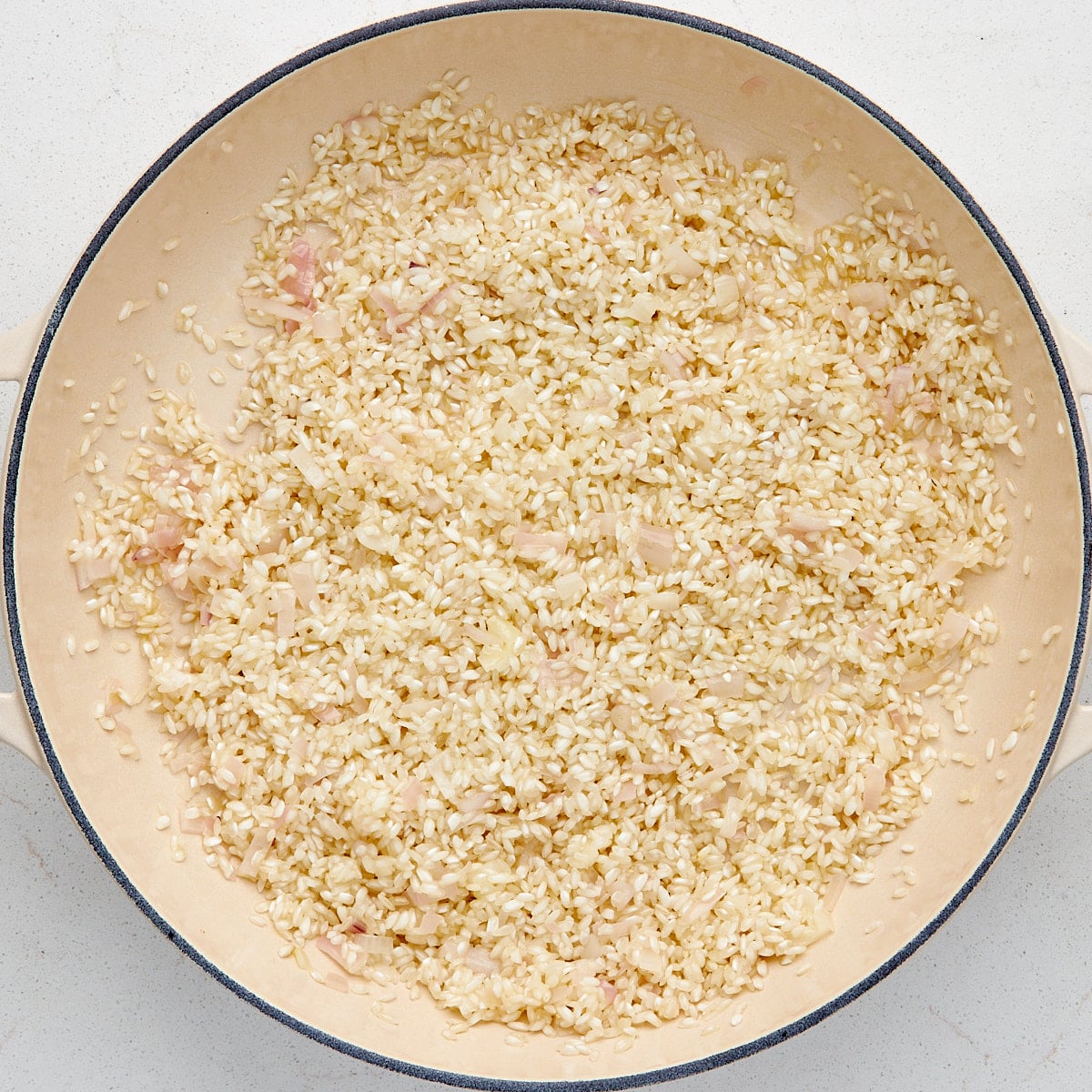
Toast the rice. Add the rice to the pot and keep it moving for a minute or two. You’re looking for glossy grains with translucent edges and an opaque white center. That quick toast coats each grain in fat and helps it hold its shape through the long simmer.
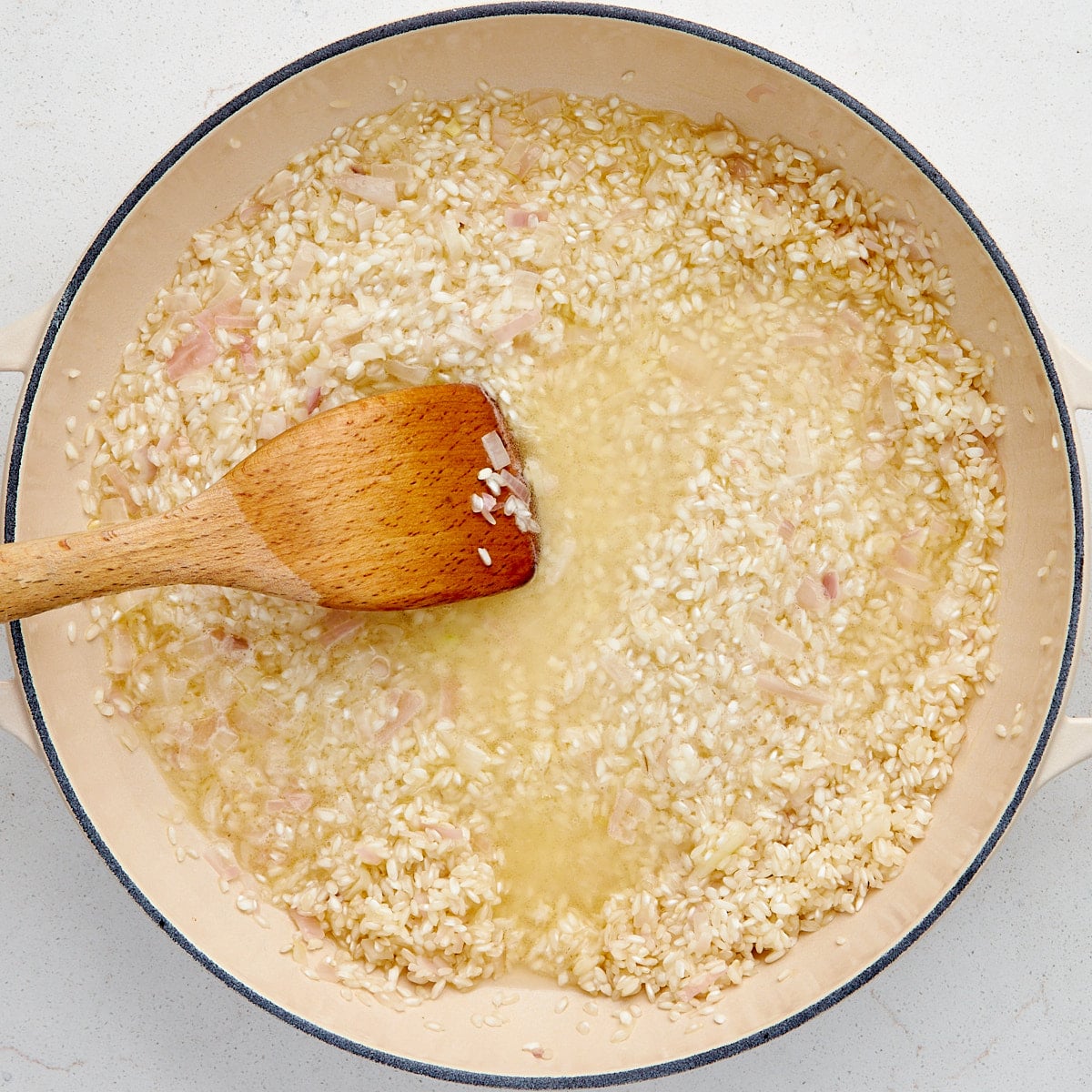
Add the wine. The wine will hiss and steam as it hits the pan. Stir until it’s absorbed, and the sharp smell of alcohol fades, about a minute or two. What stays behind is the wine’s acidity, without any boozy taste.
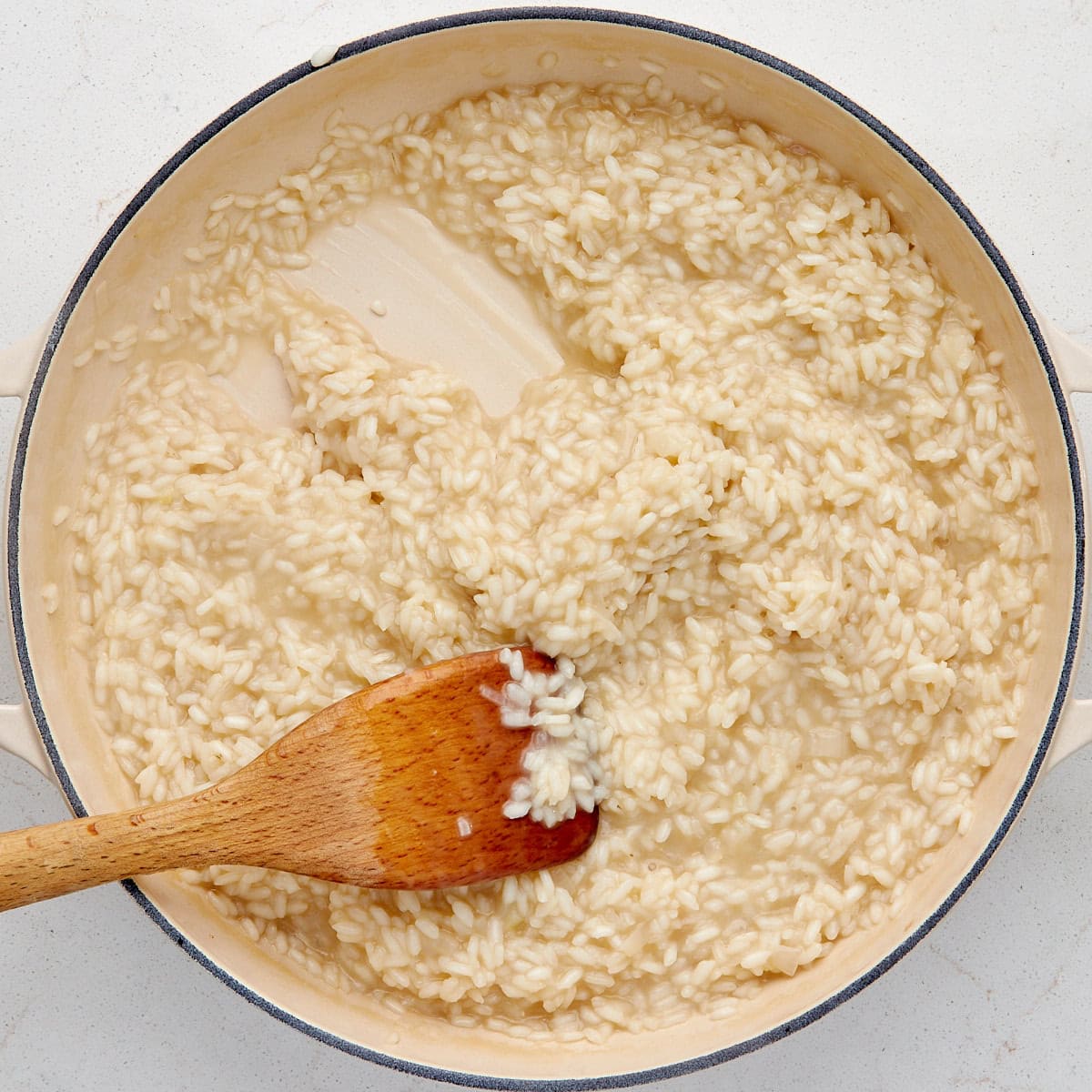
Add the stock a little at a time. Ladle in about ¾ cup of warm stock and stir frequently as the rice absorbs it. Adding the stock gradually keeps the grains rubbing against one another, and that friction pulls starch from their surfaces, thickening the liquid into a creamy sauce. To know when the pot is ready for more, drag your spoon across the bottom. A clear path that stays open for a second means it’s time for the next ladle. Liquid rushing back in means it needs another minute. Keep the heat at a steady simmer, and turn it down if the stock disappears in seconds. Start tasting at around 18 minutes. The rice is ready when it’s tender with just a slight bite in the center, usually after 20 to 25 minutes.
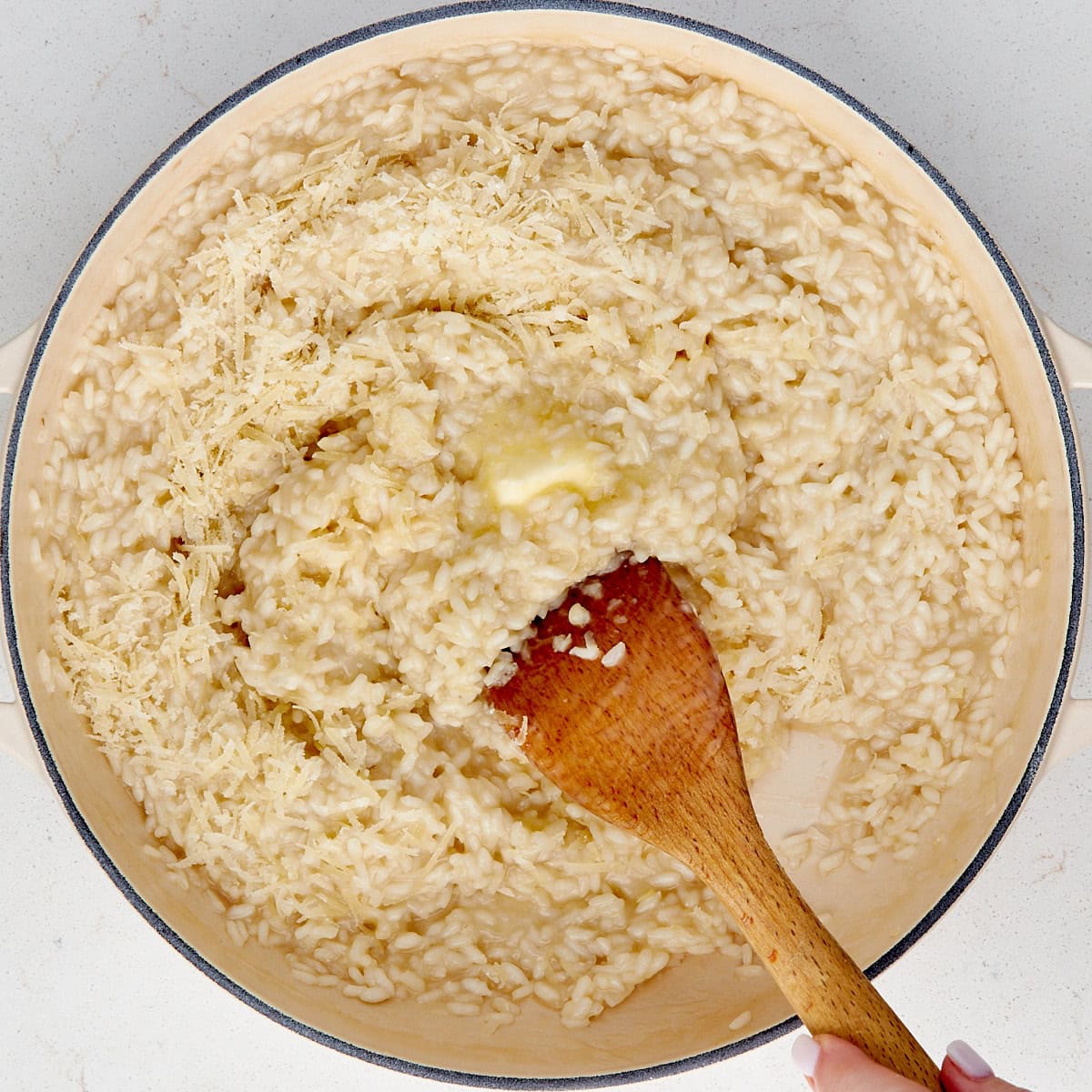
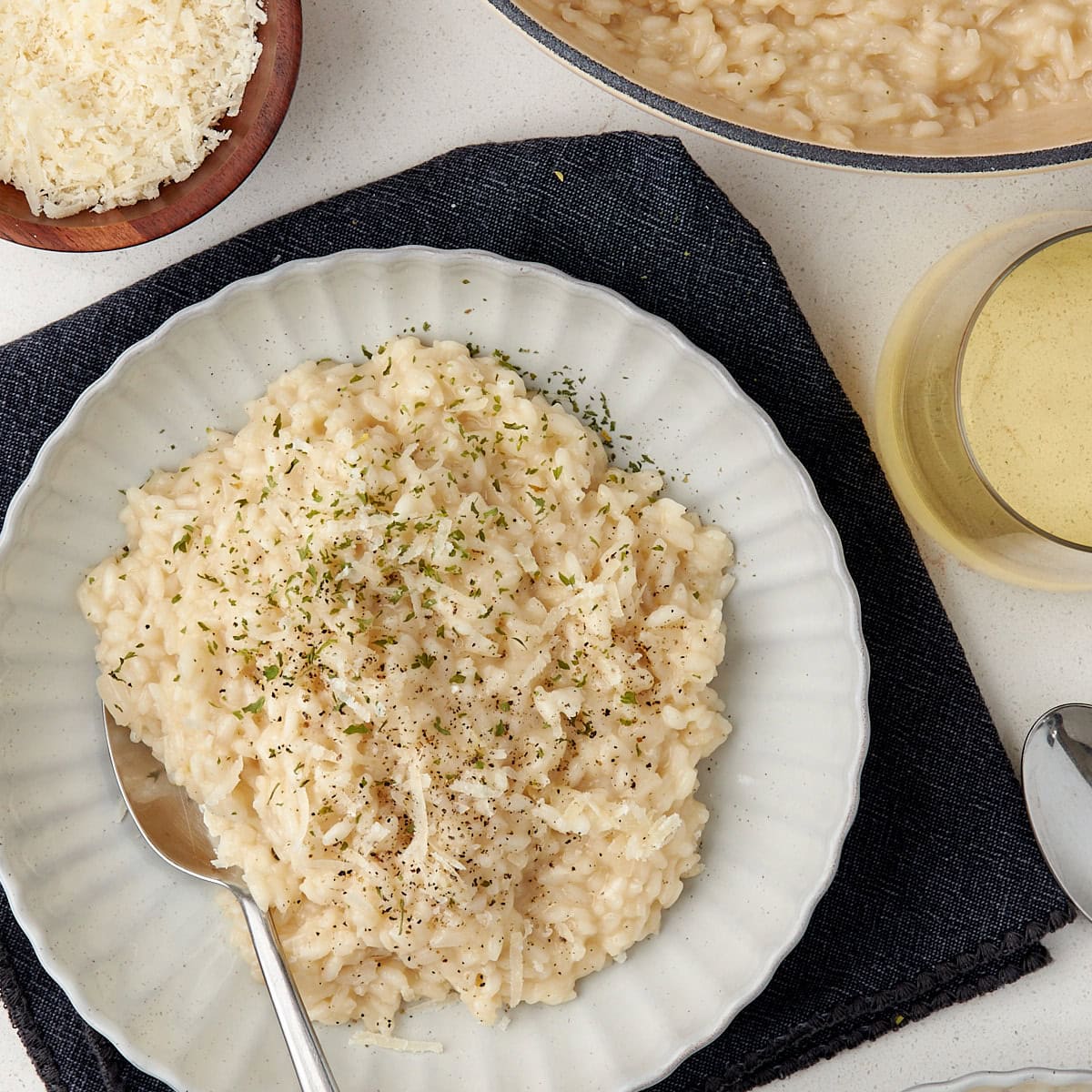
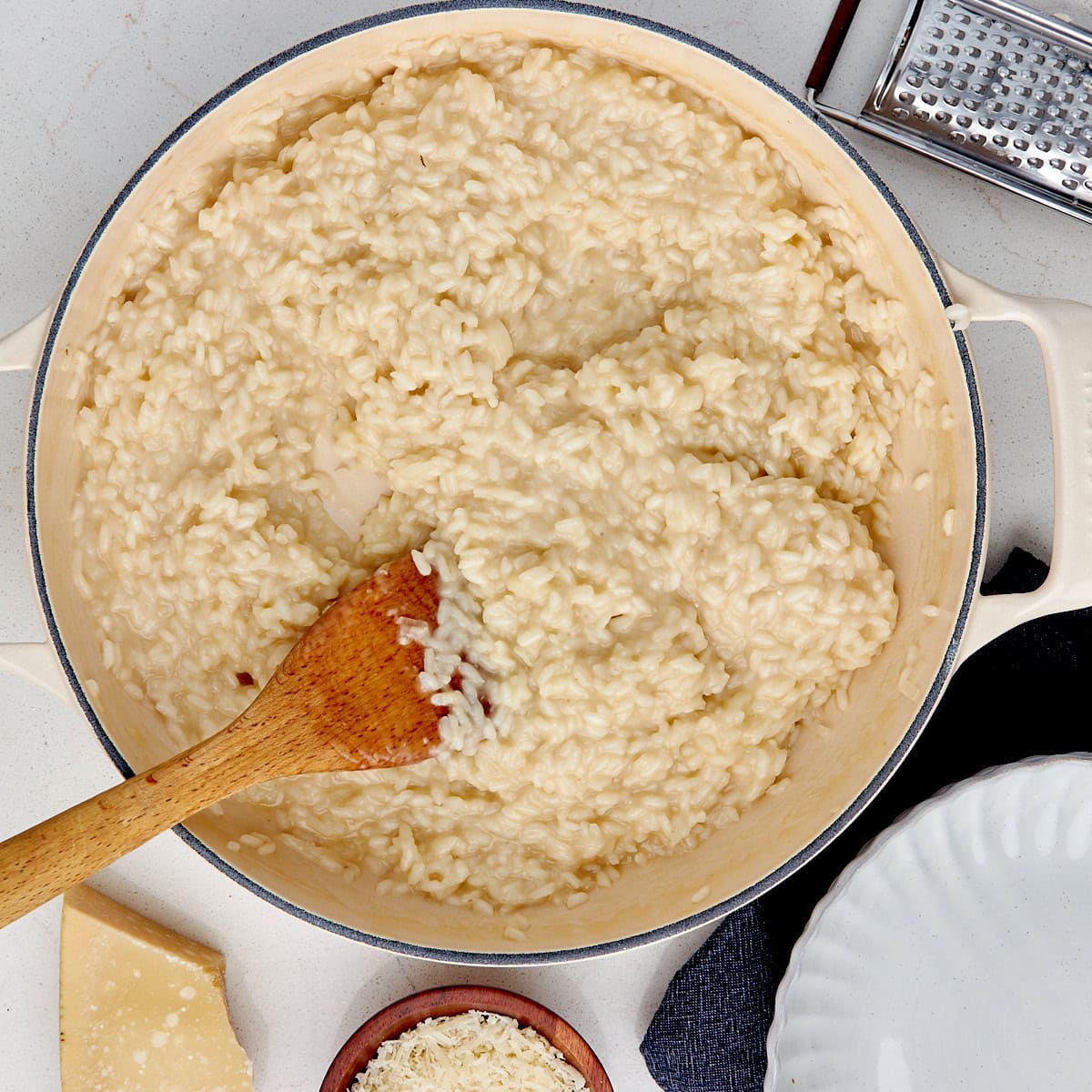
Finish off the heat. Pull the pot off the burner before adding the butter and Parmigiano, then stir hard for about a minute. This step, called mantecatura, beats the butter and cheese into the starchy liquid, giving the risotto its glossy finish. Doing it off the heat keeps the cheese from turning stringy. The finished risotto should be loose rather than stiff. Italians call this all’onda, meaning “like a wave,” and a spoonful on a plate should spread slowly rather than form a mound. If it looks tight, stir in another splash of stock, then season with salt and pepper to taste.
What to Serve with Risotto
Parmesan risotto is rich and mild, so it goes best with a main that brings bolder flavor. Braised duck leg and braised whole chicken are good options, and a spoonful of the braising liquid over the rice doesn’t hurt. When you don’t have hours for a braise, grilled marinated flank steak or breaded bone-in pork chops are on the table in a fraction of the time.
Make-Ahead and Storage
Make-Ahead: Risotto is at its best the moment it comes off the stove, so we don’t cook it ahead of time. You can mince the shallot, grate the Parmigiano, and measure out the rice and wine earlier in the day, leaving only stirring for dinnertime.
How to Store: Let leftovers cool, then refrigerate them in an airtight container within 2 hours of cooking for up to 4 days. For longer storage, freeze the risotto for up to 3 months, then thaw overnight in the refrigerator. Cold risotto firms up as it chills, and that firmer texture makes it the starting point for arancini.
How to Reheat: Warm the risotto in a saucepan over low heat, stirring in warm stock a splash at a time until it loosens up again. Whether it’s been refrigerated or frozen, reheated risotto won’t be as creamy as a fresh batch.
Recipe Tips and Notes
- Pull it a minute early. The rice keeps softening from the pot’s heat after it comes off the burner and the cheese goes in. Stop when the center still has a slight bite to keep it from turning gummy by the time it reaches the table.
- Keep hot water on standby. If the stock runs out before the rice is tender, add hot water a splash at a time. Rice that’s still crunchy with no stock left usually means the heat was too high, and the liquid boiled off before the grains could absorb it.
- Use a wide pot. A braiser or saucier lets the rice spread into a shallow layer, so it cooks evenly and absorbs the stock steadily. The rounded sides of a saucier make it easier to scrape every grain off the bottom as you stir. In a tall, narrow saucepan, the bottom layer overcooks before the top one is done.
- Warm your bowls. Risotto tightens up fast as it cools, and a cold bowl speeds that along. Fill the bowls with hot tap water as the rice finishes, then pour the water out right before serving.
More Recipes to Try
If you love risotto as much as we do, try one of these too.
- Mushroom Truffle Risotto – The same stovetop method, taken in an earthier direction with mushrooms and truffle.
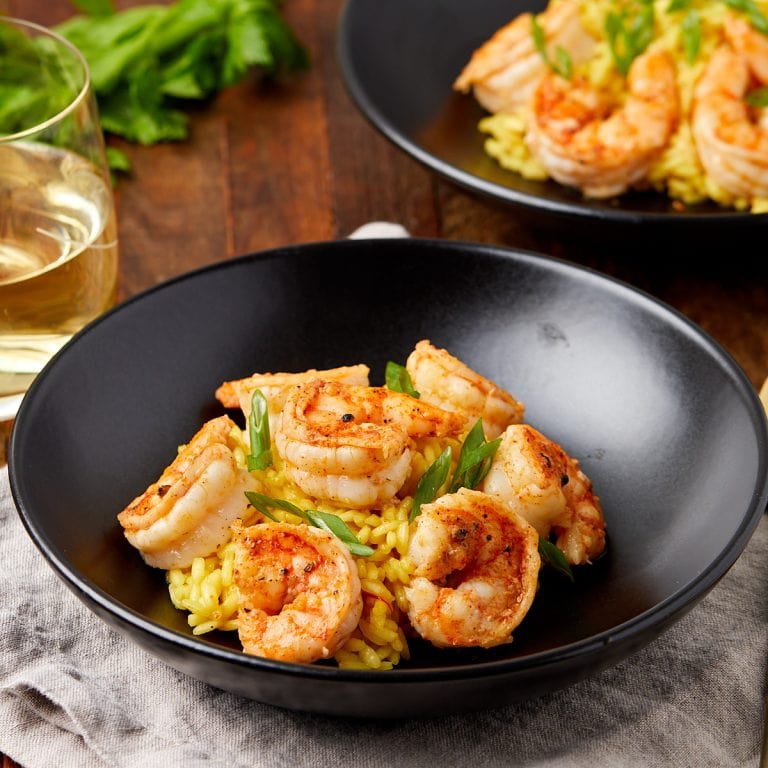
- Saffron Shrimp Risotto – A golden, saffron-tinted risotto finished with tender shrimp.
- Arancini – Turn leftover chilled risotto into crisp Italian fried rice balls with a melted mozzarella center, pan-fried in cast iron in about 45 minutes.
Let’s Connect! If you make this recipe or any other recipe on Casual Epicure, please don’t forget to rate the recipe and leave a comment below. It helps others who are considering making our recipes and we love hearing about your cooking experiences. And if you snapped some shots, share them on Instagram, and be sure to tag @casual.epicure so we can feature them in our stories.
Parmesan Risotto (Risotto alla Parmigiana)
Want To Save This Recipe For Later?
Equipment
- Braiser (3.5 Quart) (or Saucier)
- Medium Saucepan (2-3 Quarts)
Ingredients
- 6 tablespoons unsalted butter, divided (4 tablespoons reserved for finishing)
- 1 medium shallot, finely minced
- 1½ cups arborio or carnaroli rice
- ½ cup dry white wine
- 5-6 cups low-sodium chicken stock, warmed
- 1 cup freshly grated Parmigiano Reggiano, plus more for serving
- kosher salt, to taste
- freshly ground black pepper, to taste
Instructions
- In a medium saucepan, bring the chicken stock to a simmer over medium heat. Reduce heat to low and keep warm.
- In a large braiser or saucier, melt 2 tablespoons of butter over medium heat. Add the shallot and cook, stirring frequently, until softened and translucent, 2–3 minutes.
- Add the rice and stir to coat each grain in the butter. Toast the rice for 1–2 minutes, until the grains are shiny and the edges begin to look translucent.
- Add the white wine and cook, stirring constantly, until fully absorbed, about 1–2 minutes.
- Add ¾ cup of warm stock and cook, stirring frequently, until absorbed. It’s ready for the next addition when dragging your spoon across the pan leaves a clear path that shows the bottom. Continue adding stock ¾ cup at a time, waiting for that clear path before each new addition, until the rice is creamy and al dente, 20–25 minutes. When it’s done, the risotto should move like slow-flowing lava when you drag a spoon across the pan.
- Remove from heat. Stir in the remaining 4 tablespoons of butter and the Parmigiano Reggiano until fully melted and emulsified. Season to taste with salt and pepper.
- Ladle into warm bowls and serve immediately with additional Parmigiano Reggiano on the side.