
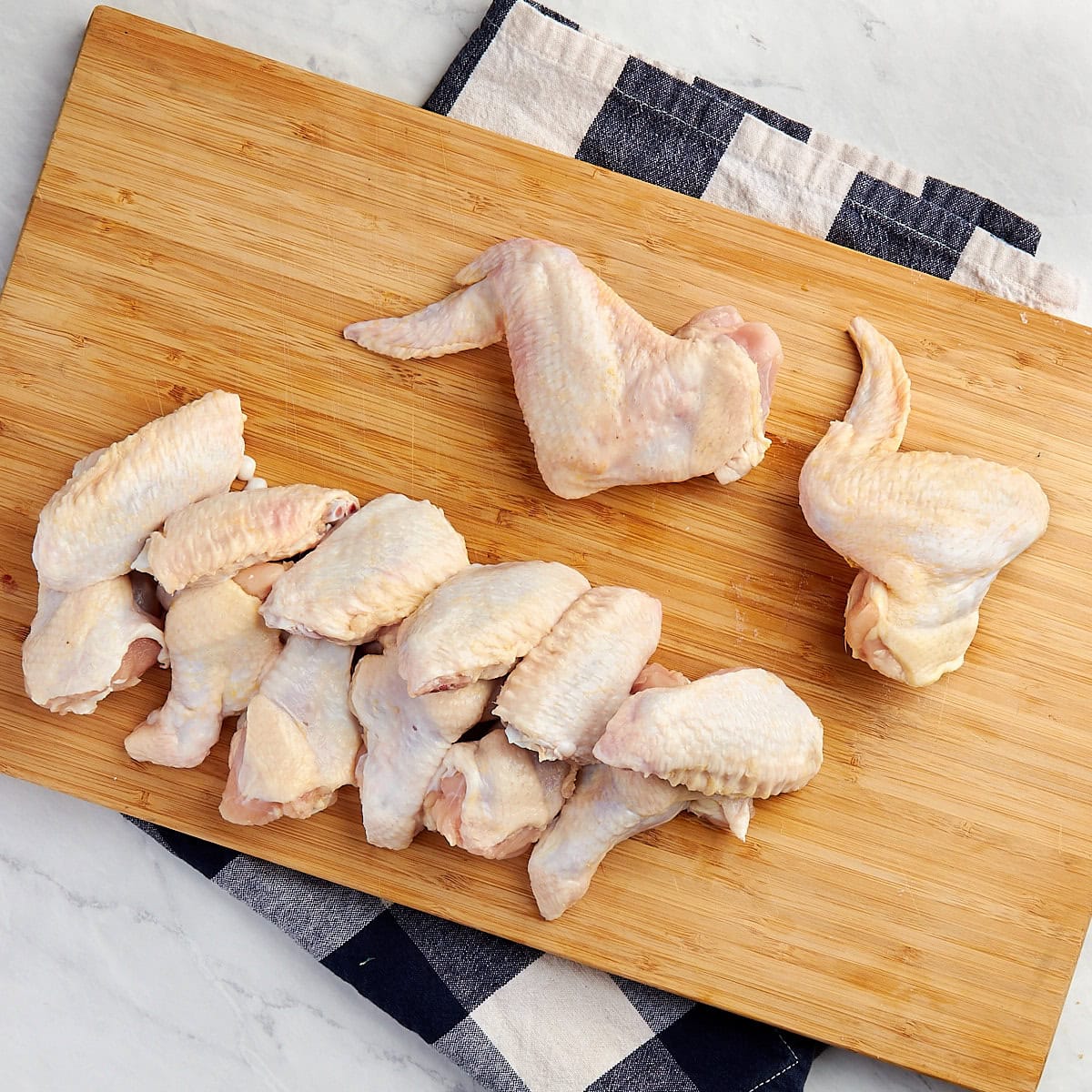
Breaking down chicken wings at home saves money compared to buying pre-cut wings and comes in handy when whole wings are the only option available at the store. We often break down whole chickens and freeze the wings until we have enough for a full recipe. Don’t worry if you’ve never tried separating chicken wings before. With a sharp knife and a little practice, you’ll be cutting up whole chicken wings like a pro in no time.
Want To Save This Recipe For Later?
If you love making wings at home, you’ll want to try our hot honey chicken wings or our spicy mango habanero wings.
What’s the Difference Between Drumettes and Flats?
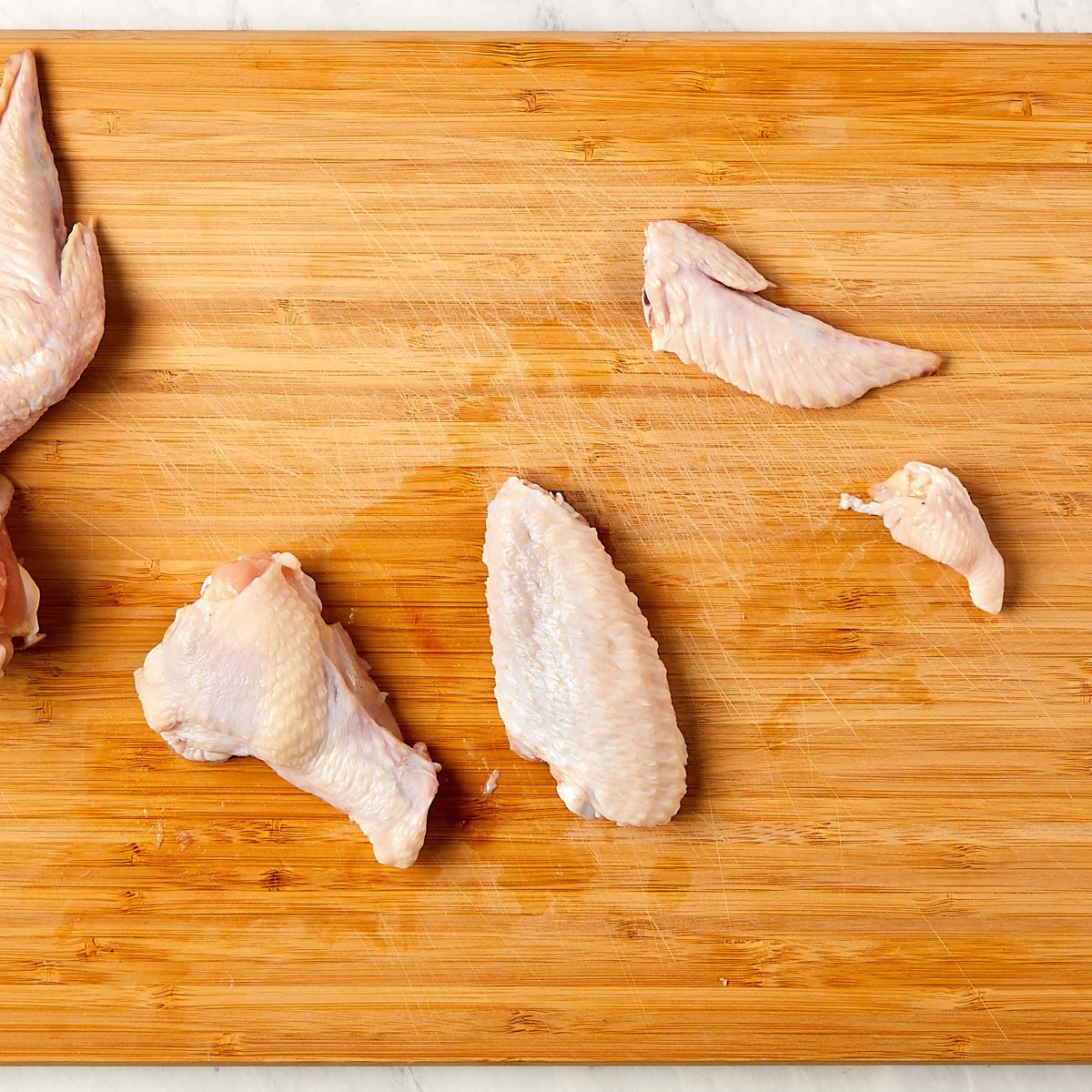
When you work with whole chicken wings, you’re actually dealing with three distinct sections: the drumette, the flat (or wingette), and the wing tip.
- Drumettes: These are the meatiest part of the wing, connecting to the chicken’s body. This is the meatiest part of the wing and is attached to the chicken’s breast. It resembles a mini drumstick and is named for its drumstick-like appearance.
- Flats (also known as wingettes): Attached to the drumette, flats are the middle section of the wing. They have two thin, parallel bones with the meat stuck in the middle. Flats have less meat than drumettes, but their skin is usually crispier.
- Wing tips: These are the pointy ends of the wings. While they don’t have enough meat to be worth eating on their own, don’t toss them out! Wing tips are perfect for adding flavor to homemade stocks and broths.
The great debate among wing lovers often centers on which is better: drumettes or flats. It really comes down to personal preference. Do you prefer more meat, or are you after that perfect crispy skin?
How To Cut Whole Chicken Wings
Here are the quick, step-by-step instructions with visuals; you can find the full instructions, including the exact ingredients, in the recipe card below.
Pro-tip: To easily locate the joints when separating chicken wings, gently bend the wing in the opposite direction it naturally folds. This will expose the joint, making it much easier to feel where to place your knife for a clean cut.
1. Prep the wings: Remove the wings from their packaging and thoroughly dry them with paper towels. This step helps you get a better grip and prevents slipping.
2. Locate the joints: Place a wing on your cutting board with the skin side down. Use your fingers to feel for two distinct joints: one between the drumette and the flat and another between the flat and the wing tip.
3. Separate the drumette: Hold the wing steady, and position your knife at the joint between the drumette and the flat. Apply firm pressure to cut through the joint, separating the drumette.
4. Remove the wing tip: Next, find the joint between the flat and the wing tip. Cut through this joint to separate the wing tip from the flat.
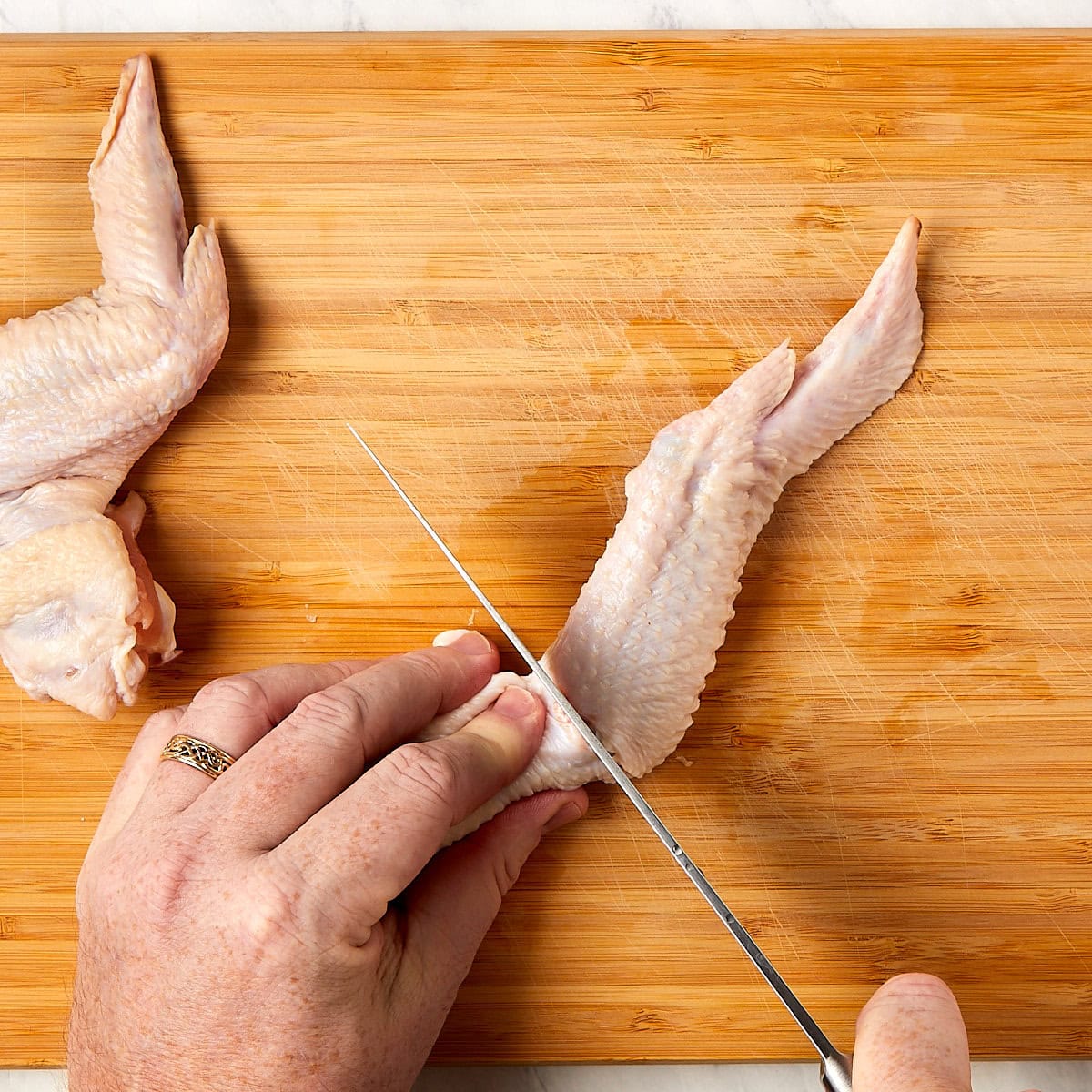
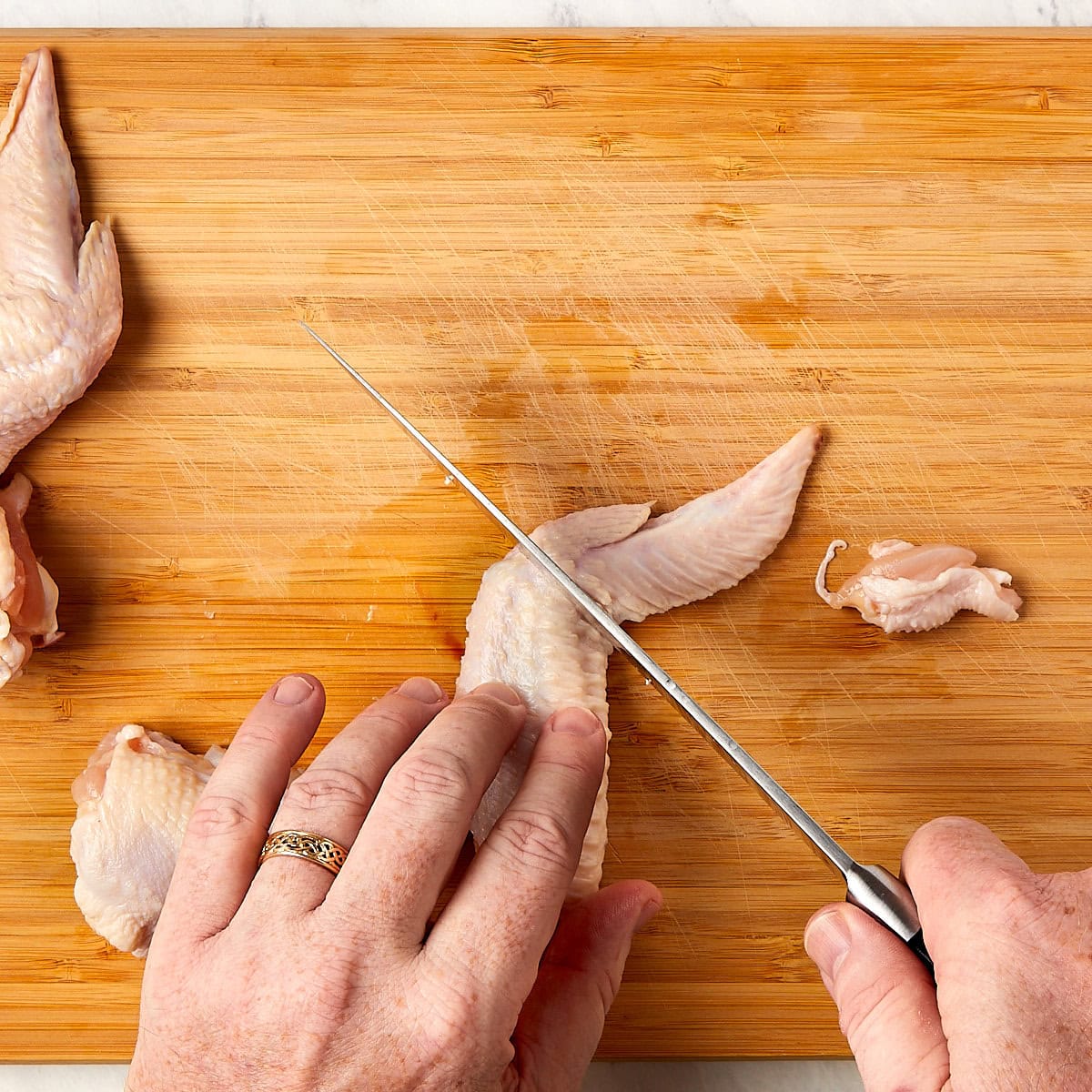
5. Sort and store: Place drumettes and flats in separate bowls. You can either discard the wing tips or save them for making stock later. If you plan on saving them, store them in a freezer bag. They’re great for combining with other chicken bones to make homemade broth.
6. Repeat: Continue this process for all your chicken wings.
Once you’ve separated all your wings, they are ready to be seasoned and cooked.
Freezing and Storage
If you’re not planning to cook your chicken wings immediately after breaking them down, here are some freezing and storage tips to keep your wings fresh and safe:
- Refrigerator Storage: If you plan to use your chicken wings within 1-2 days, store them in an airtight container in the refrigerator. Ensure the temperature is set at 40°F or lower.
- Freezer Storage: For longer-term storage, freezing is your best option. Place the separated wings in a single layer on a baking sheet and freeze until solid (about 1-2 hours). Then transfer them to freezer bags, removing as much air as possible before sealing. They can be frozen for up to 3 months.
- Thawing: When you’re ready to use frozen wings, thaw them in the refrigerator overnight. Never thaw chicken at room temperature, as this can promote bacterial growth.
- Use After Thawing: Once thawed, refrigerate wings for 1-2 days for best quality and safety.
Remember, whether refrigerating or freezing, always handle raw chicken with care to prevent cross-contamination with other foods.
Chicken Wings Recipes
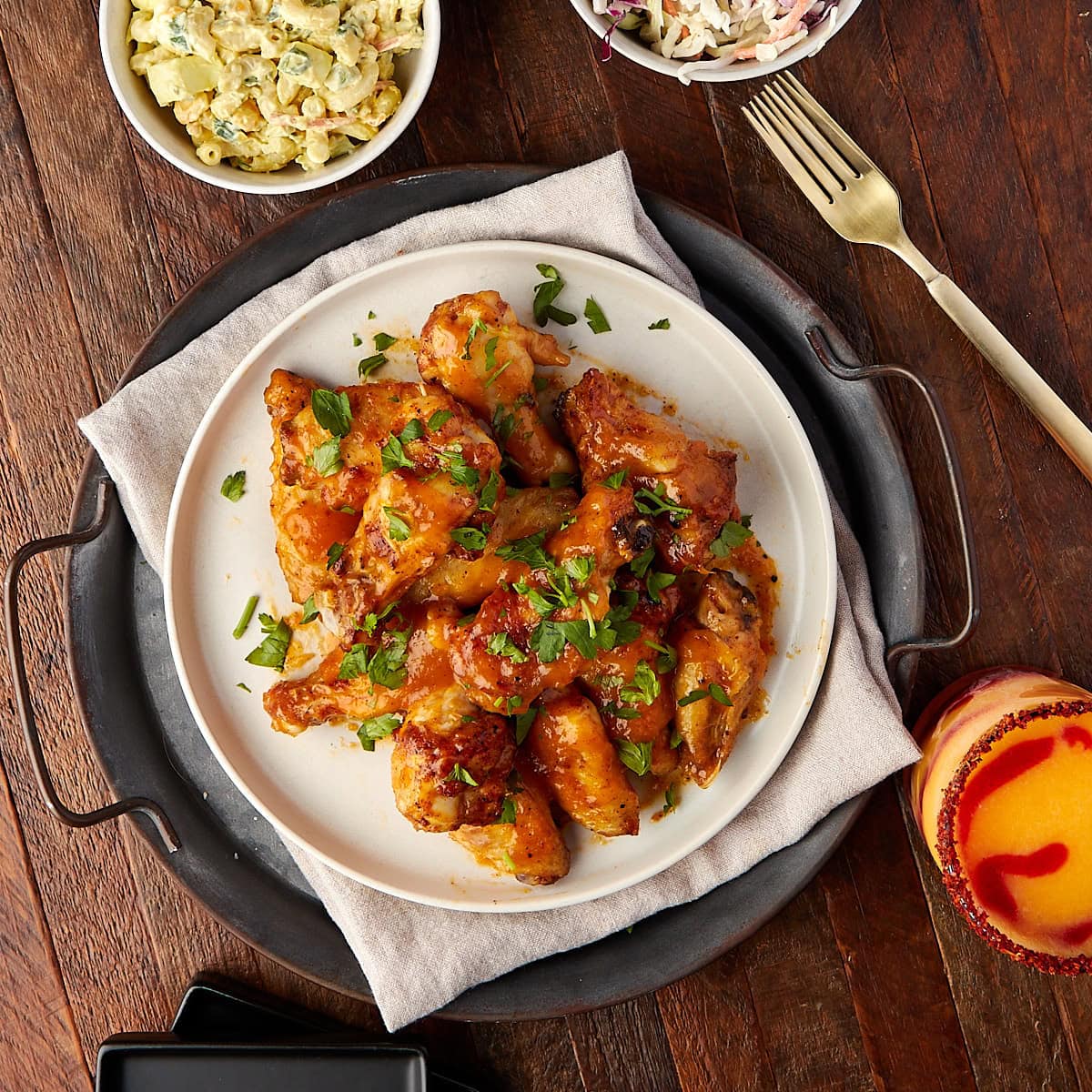
When it comes to football season, nothing beats a platter of crispy, saucy chicken wings. They’re the ultimate game-day food that’s easy to eat and packed with flavor (and not so easy to share!). We love experimenting with different flavors. Our go-to wing recipes include classic buffalo wings, hot honey chicken wings, mango habanero wings, jerk chicken wings, Asian-inspired chicken wings, and garlic parmesan wings.
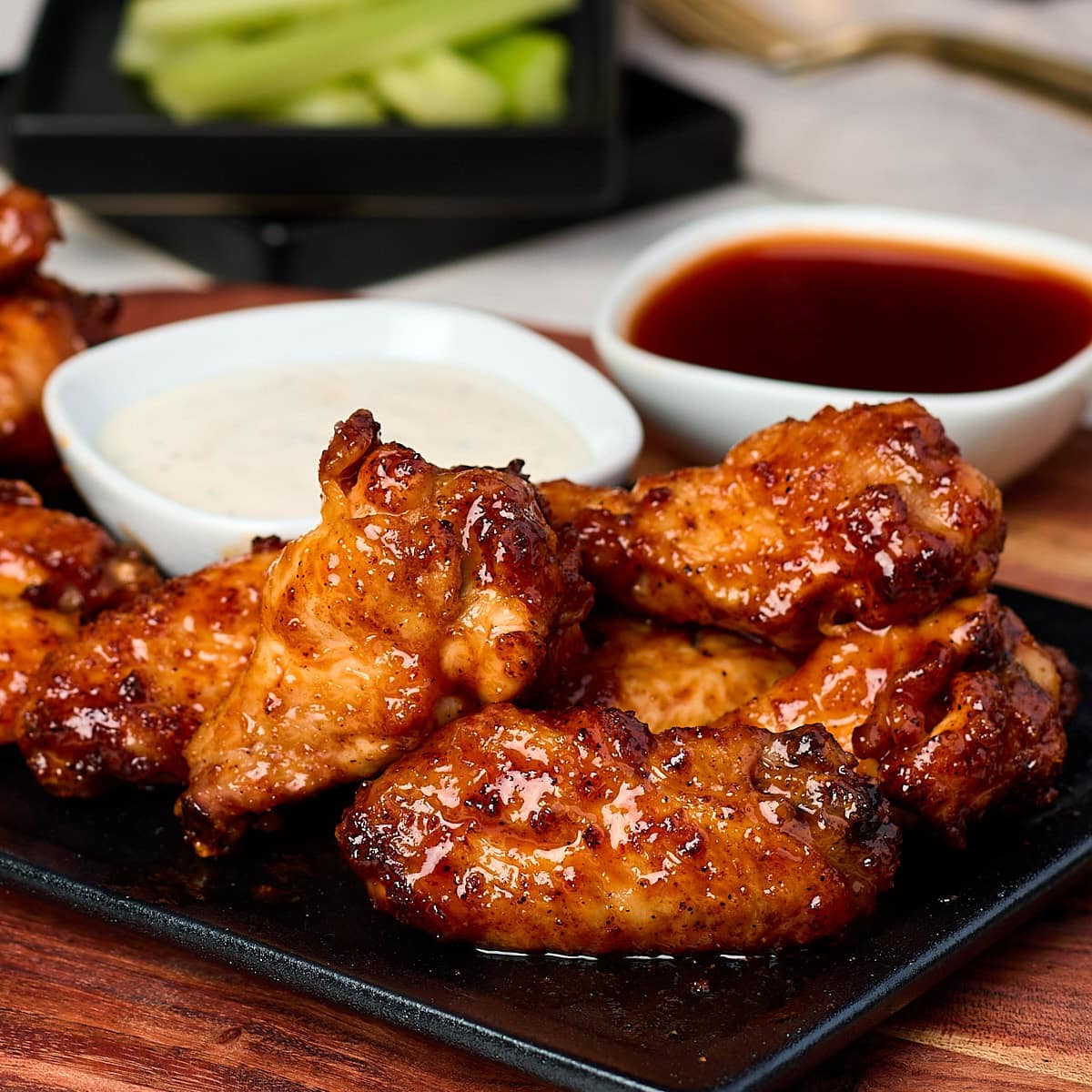
Recipe Tips and Notes
- Dry the wings: Pat the chicken wings dry with paper towels before cutting. This improves your grip, making the process safer and easier.
- Use a sharp knife: A sharp chef’s knife is key for clean cuts and safety. Dull knives require more force, which increases the risk of slips and injuries.
- Sanitize your workspace: After cutting raw chicken, thoroughly disinfect your cutting board and any surfaces that come into contact with the meat. Consider using a dedicated plastic cutting board for raw meat that can be easily sanitized in the dishwasher.
Frequently Asked Questions
Tasty Wing Recipes To Try
Looking for chicken wing recipes? Try these other favorites:
- Jamaican Jerk Spiced Chicken Wings – First coated with 15 herbs and spices for a spicy kick, then cooked on a wood-fired grill for the perfect layer of smokiness.
- Hot Honey Chicken Wings – Inspired by the bold flavors of Nashville hot chicken, these wings will become your new favorite.
- Mango Habanero Chicken Wings – The perfect blend of sweet heat and are perfect for game day, parties, or anytime you are craving a spicy-sweet treat that’ll have everyone reaching for more.
Let’s Connect! If you make this recipe or any other recipe on Casual Epicure, please don’t forget to rate the recipe and leave a comment below. It helps others who are considering making our recipes and we love hearing about your cooking experiences. And if you snapped some shots, share them on Instagram, and be sure to tag @casual.epicure so we can feature them in our stories.
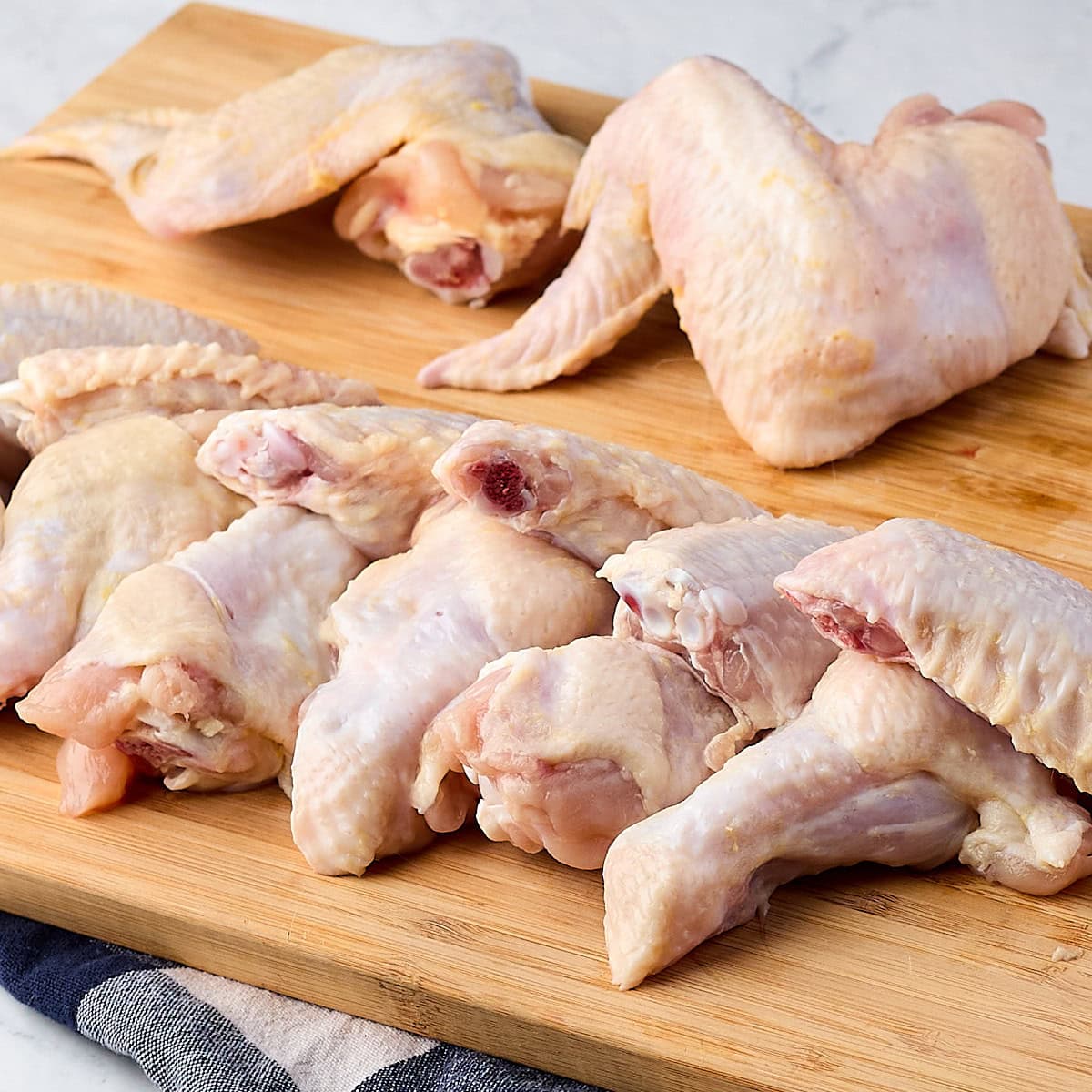
How To Cut Whole Chicken Wings
Want To Save This Recipe For Later?
Equipment
- Chefs Knife
- Cutting Board
Ingredients
- 1 pound whole chicken wings, about 4 to 5
Instructions
- Remove the wings from their packaging and thoroughly dry them with paper towels.
- Place a wing on your cutting board, skin side down. Use your fingers to feel for two distinct joints: one between the drumette and the flat and another between the flat and the wing tip.
- Hold the wing steady and position your knife at the joint between the drumette and the flat. Apply firm pressure to cut through the joint, separating the drumette.
- Find the joint between the flat and the wing tip. Cut through this joint to separate the wing tip from the flat.
- Place drumettes and flats in separate bowls. You can either discard the wing tips or save them for making stock later.
- Use cut chicken wings in these recipes jerk spiced wings, hot honey wings, mango habanero wings, traditional buffalo wings, or garlic parmesan wings