
As the holiday season approaches, the thought of a perfectly roasted turkey gracing your dinner table is enough to make anyone’s mouth water. But before you can begin cooking or preparing, there’s a crucial first step: thawing the turkey. Thawing a turkey may seem like a simple task, but it’s a critical one. No one wants to wake up Thanksgiving morning to a still-frozen turkey. These are a couple of the tried-and-true (as well as safe) methods for thawing turkey to make your holiday feast delicious and safe for everyone to enjoy.
Want To Save This Recipe For Later?
How to Thaw a Turkey
Here are the quick, step-by-step instructions with visuals; you can find the full instructions, including the exact ingredients, in the recipe card below.
Pro-tip: Allow ample time for thawing. A good rule of thumb is to budget 24 hours of thawing time for every 5 pounds of turkey.
Thawing in the refrigerator is the safest and most convenient method, as it keeps the turkey at a safe, consistent temperature while preventing bacterial growth. Download our quick guide to thawing a turkey for easy reference.
Method 1: How to Thaw a Turkey in the Refrigerator
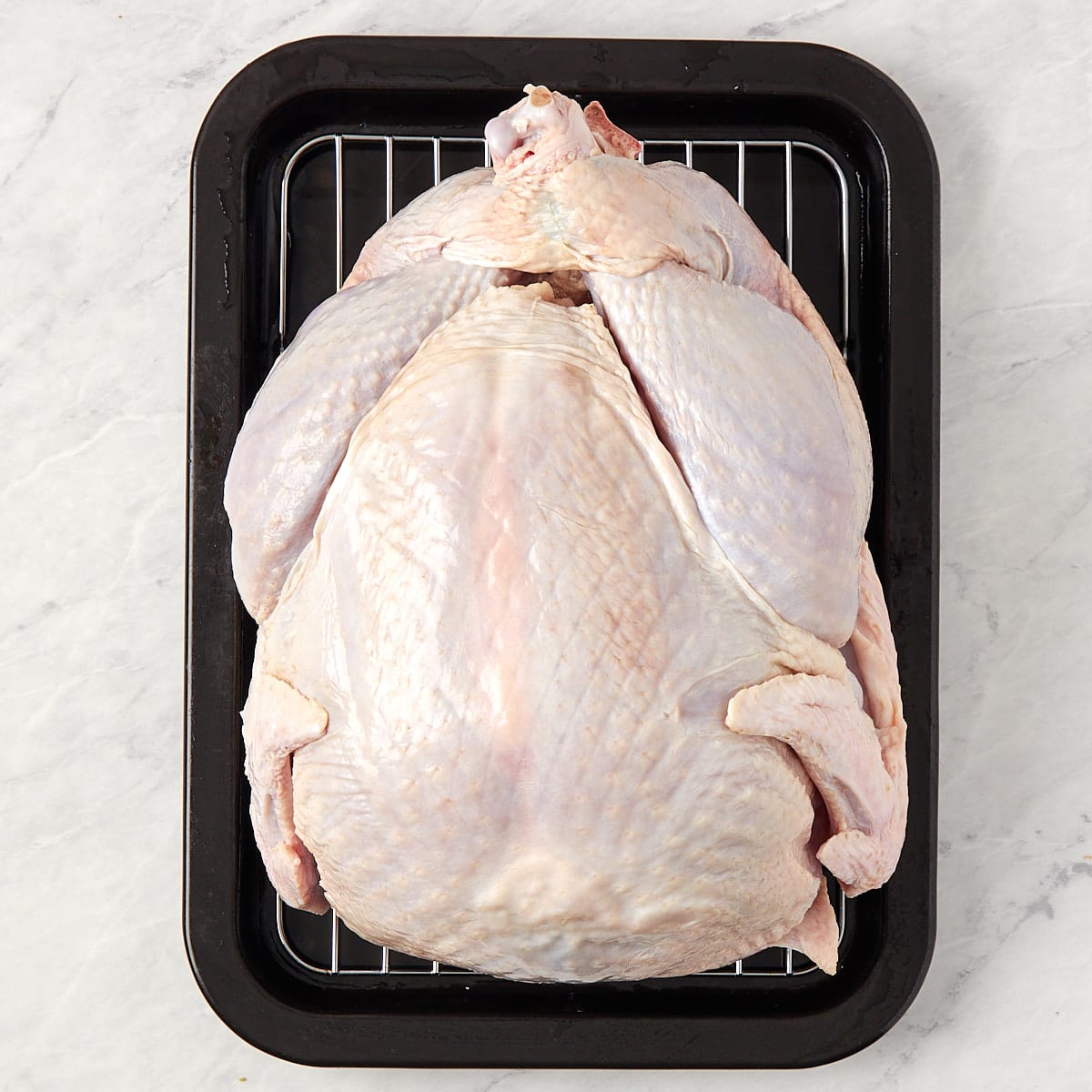
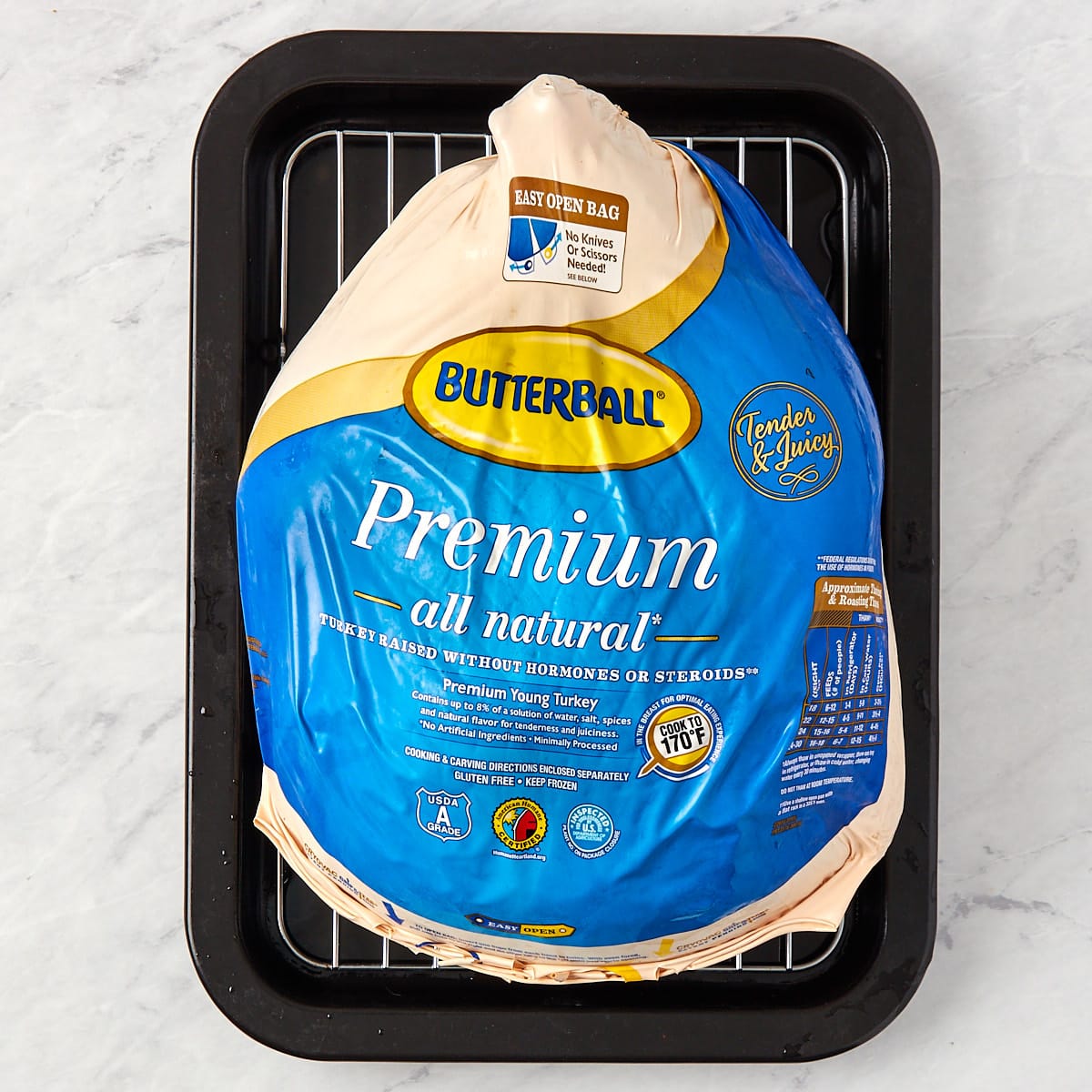
1. Set up a wire rack and tray: Place a wire rack in a rimmed baking sheet or shallow pan. The wire rack will elevate the turkey, allowing air to circulate it and promote even thawing. Keep the turkey in its original packaging or a leak-proof plastic bag, and place it on the wire rack to catch any potential drips. You can also cover the turkey with plastic wrap or aluminum foil to prevent accidentally contaminating other foods in the refrigerator.
2. Refrigerate: Place the turkey in the refrigerator and allow it to thaw for about 3-4 days. The rule of thumb is one day for each 4-5 pounds. Keep the refrigerator temperature at or below 40°F to ensure safe and proper thawing. Periodically check to make sure there are no leaks or excessive moisture accumulation in the pan and adjust the wrapping or wire rack as needed.
3. Cook: Once the turkey is fully thawed, it’s ready to be prepared and cooked according to your desired recipe. It can be stored in the refrigerator for up to 2 days before cooking.
Method 2: How to Thaw a Turkey in Cold Water
1. Container preparation: The turkey should be in a leak-proof plastic bag or wrap. This prevents water from coming into contact with the turkey, which could lead to bacterial growth. Use a clean and sanitized container that can comfortably fit the turkey, such as a large cooler, sink, or clean plastic tub.
2. Cold water bath: Place the wrapped turkey in the container or sink and fill it with cold water. The turkey should be completely submerged. Change the cold water every 30 minutes to help maintain the correct temperature and prevent an increased risk of bacterial growth.
3. Cook: Once the turkey is fully thawed, it’s ready to be prepared and cooked according to your desired recipe. It should be cooked immediately after it has completely thawed.
4. Sanitize: After thawing, clean and sanitize the container, sink, or cooler thoroughly to ensure it’s safe for future use.
How Long to Thaw a Frozen Turkey
The time it takes to thaw a frozen turkey depends on the method you choose:
- Refrigerator Thawing: Thawing a turkey in the refrigerator is the safest and most recommended method. It generally takes 24 hours for every 4-5 pounds of turkey. So, for a 15-pound turkey, it would take approximately 3 days. Make sure to place the turkey on a tray or in a pan to catch any leaks and prevent cross-contamination.
- Cold Water Thawing: This method is quicker than refrigerator thawing. It takes about 30 minutes per pound, so a 15-pound turkey would take approximately 7-8 hours. Change the water every 30 minutes to maintain a cold temperature.
How to Tell When Your Turkey Is Thawed
You can tell when your turkey is thawed by checking its internal temperature and the flexibility of its joints.
- Touch and Flexibility: You can check the turkey’s flexibility to see if it’s thawed. Gently press on the turkey’s breast and legs. The turkey is likely fully thawed if they yield and feel pliable, rather than rigid or stiff. When the turkey is adequately thawed, legs and wings should move loosely in their sockets without resistance.
- Temperature Check: You can also use a food thermometer to check the internal temperature of the turkey. Insert the thermometer into the thickest part of the breast and the innermost part of the thigh. If the temperature reads 32°F or below, the turkey is still partially frozen.
- Check for Ice Crystals: Look at the turkey for any remaining ice crystals. If it’s fully thawed, there should be no visible ice inside the cavities or on the surface of the turkey.
Why Turkey Should Not be Thawed on the Countertop
Thawing a turkey on the countertop is not recommended for food safety reasons. There are several concerns when it comes to countertop thawing:
- Temperature Danger Zone. The countertop method puts the turkey within the “Temperature Danger Zone,” which is between 40°F and 140°F. In this range, bacteria multiply rapidly, increasing the risk of foodborne illness.
- Uneven Thawing. Thawing on the countertop can result in uneven thawing, where the outer layers of the turkey may reach unsafe temperatures while the interior remains frozen.
- Cross-Contamination. As the turkey thaws, liquid may drip from the turkey onto the countertop, posing a risk of cross-contamination with other foods, utensils, or surfaces in the kitchen.
How to Prepare Turkey
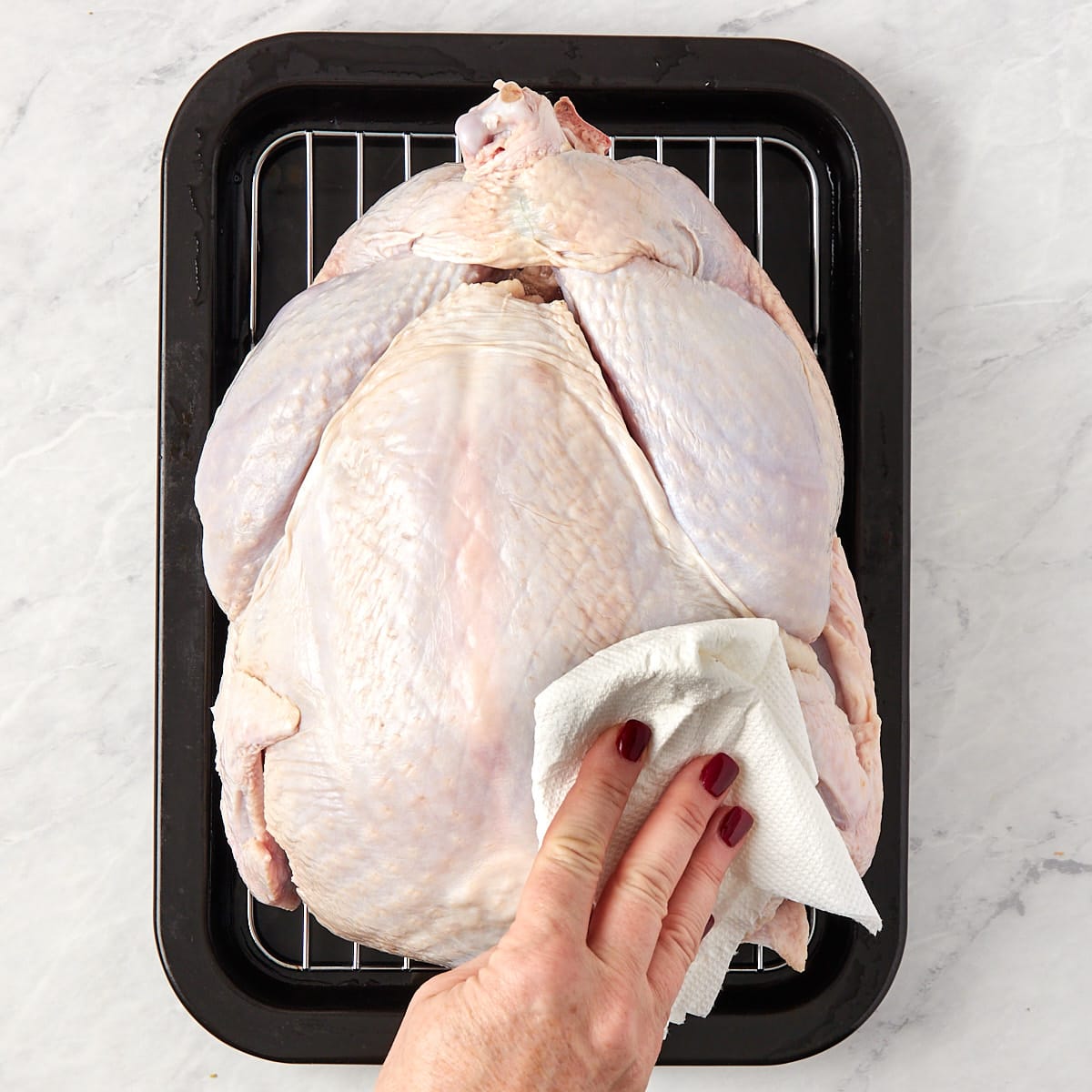
Once your turkey is thawed, then what? Start by carefully removing the packaging and any giblets or neck from the turkey’s cavities (save them to make a tasty turkey gravy). Pat the turkey dry with paper towels, and then it’s ready for seasoning and roasting. Whether you’re planning a traditional roast, a special grilling technique, a flavorful, simple turkey brine, or a unique seasoning blend, preparing your turkey is the exciting next step in creating a delectable centerpiece for your meal.
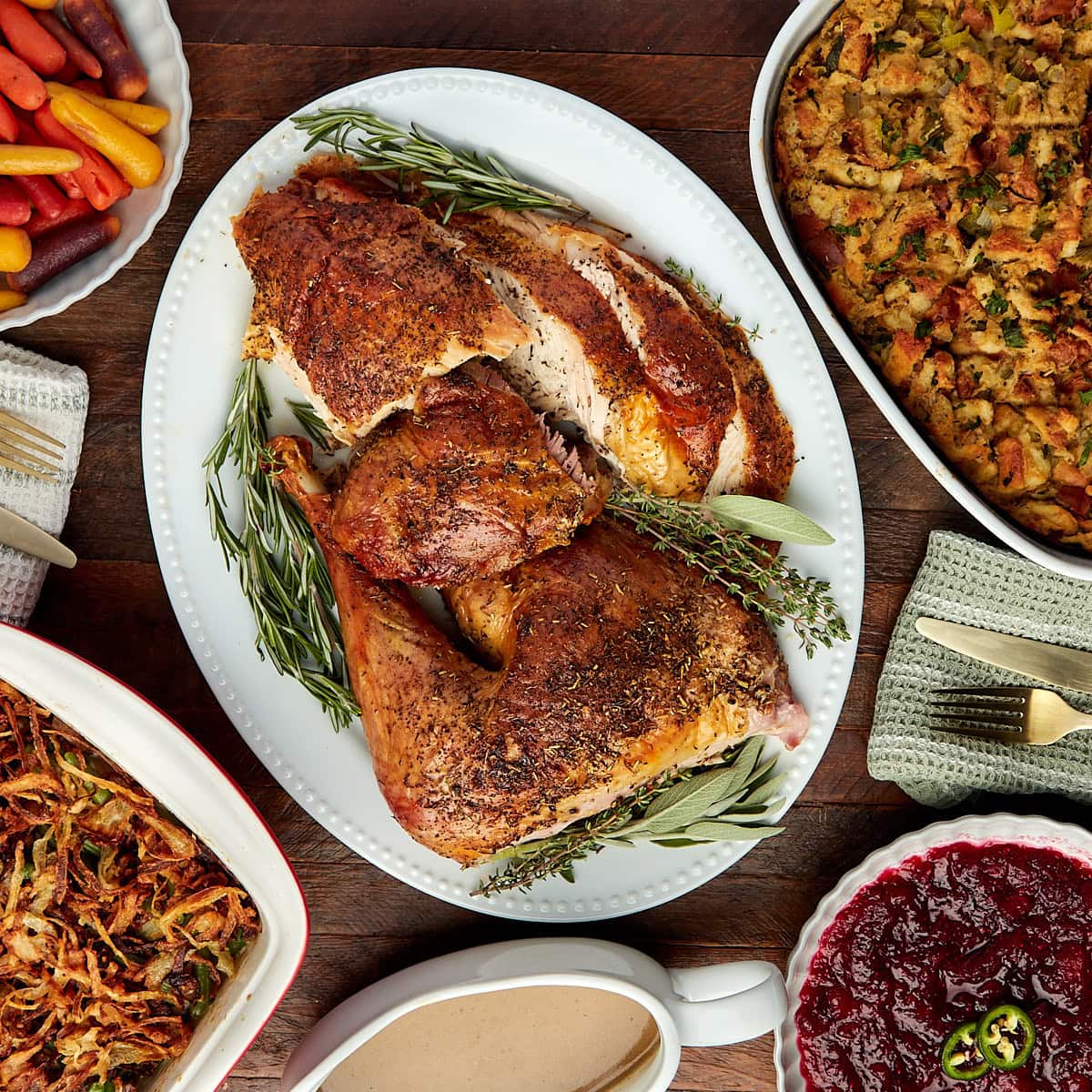
Ready to cook your perfectly thawed turkey? You’ll want to try our dry-brined spatchcock turkey, which cuts cooking time in half while creating incredibly crispy skin, this convection oven turkey recipe that’s budget-friendly and super simple, or make a grilled turkey breast for a smoky flavor perfect for smaller gatherings.
Recipe Tips and Notes
- Maintain a safe and consistent temperature. Food safety during the entire turkey thawing process is crucial to prevent the growth of harmful bacteria that can result in food-borne illnesses. Avoid thawing a frozen turkey in hot water or at room temperature on your kitchen counter, as these methods pose significant risks.
- Sanitize, sanitize, sanitize. After thawing a turkey, it’s essential to sanitize any surfaces that came into contact with the raw turkey, including hands, countertops, cutting boards, utensils, the sink, and faucet, to prevent cross-contamination.
- Don’t wash your turkey. Washing raw turkey can cause cross-contamination, spreading harmful bacteria to other surfaces.
Frequently Asked Questions
Let’s Connect! If you make this recipe or any other recipe on Casual Epicure, please don’t forget to rate the recipe and leave a comment below. It helps others who are considering making our recipes and we love hearing about your cooking experiences. And if you snapped some shots, share them on Instagram, and be sure to tag @casual.epicure so we can feature them in our stories.
How to Thaw a Turkey
Want To Save This Recipe For Later?
Ingredients
- frozen turkey, whole or breast
- cold water, as needed
Instructions
How to Thaw a Turkey in the Refrigerator
- Set up a wire rack in a rimmed baking sheet or a shallow pan. The wire rack will elevate the turkey, allowing air to circulate around it and promote even thawing.
- Keep the turkey in its original packaging or in a leak-proof plastic bag, and place it on the wire rack to catch any potential drips. You can also cover the turkey with plastic wrap or aluminum foil to prevent accidentally contaminating other foods in the refrigerator.
- Place the turkey in the refrigerator and allow it to thaw for about 3-4 days. Allow one day for each 4-5 pounds.
- Keep the refrigerator temperature at or below 40°F to ensure safe and proper thawing.
- Check the turkey periodically to make sure there are no leaks or excessive moisture accumulation in the pan. Adjust the wrapping or the wire rack as needed.
- Once fully thawed, it's ready to be prepared and cooked according to your desired recipe. It can be kept in the refrigerator for up to 2 days prior to cooking.
How to Thaw a Turkey in Cold Water
- The turkey should be in a leak-proof plastic bag or wrap. This prevents water from coming into contact with the turkey, which could lead to bacterial growth.
- Use a clean and sanitized container, like a large cooler, sink, or a clean plastic tub, that can comfortably fit the turkey.
- Place the wrapped turkey in the container or sink and fill it with cold water. The turkey should be completely submerged. Change the cold water every 30 minutes.
- Allow approximately 30 minutes of thawing time per pound of turkey. After the turkey has completely thawed, it must immediately be cooked.
- After thawing, clean and sanitize the container, sink, or cooler thoroughly to ensure it's safe for future use.