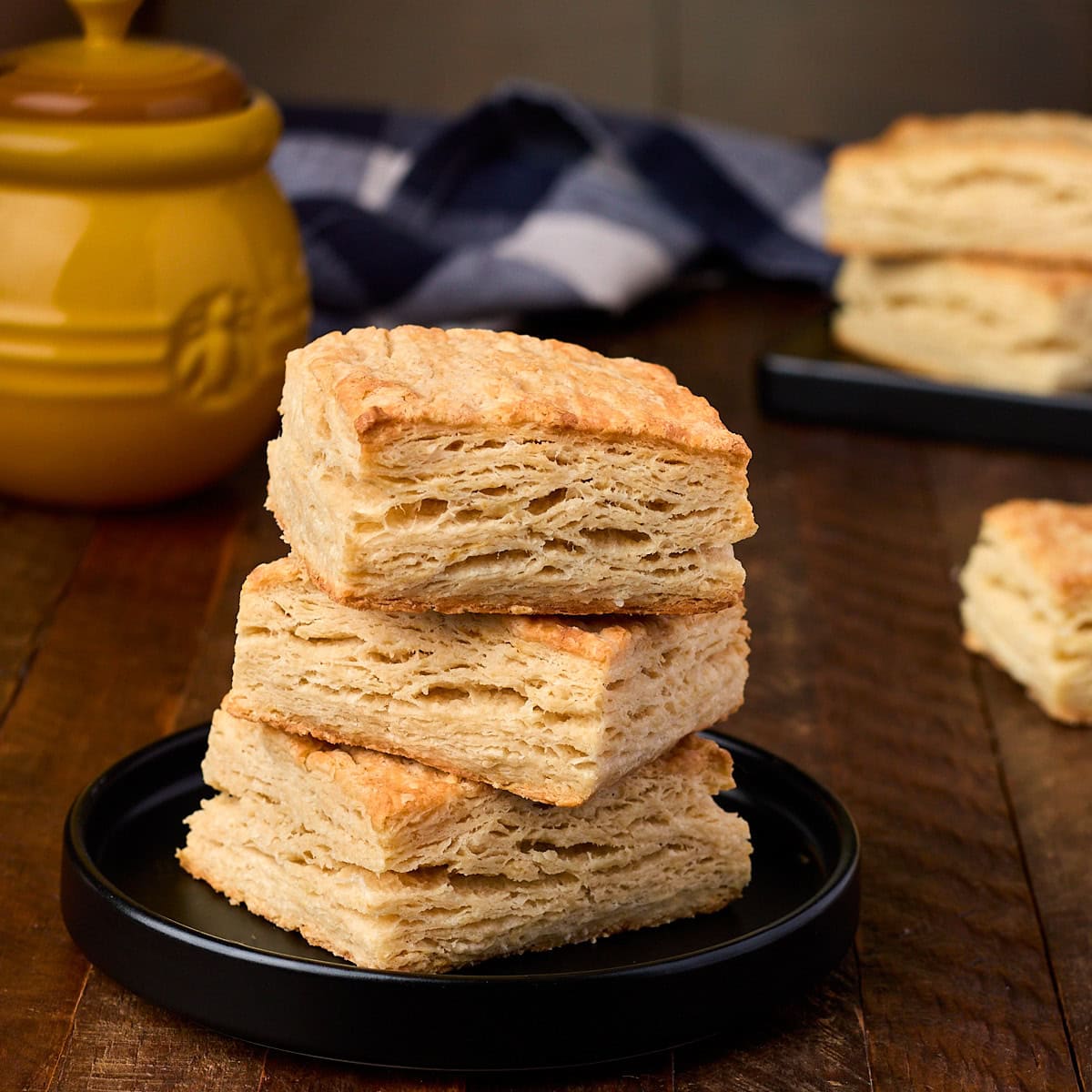

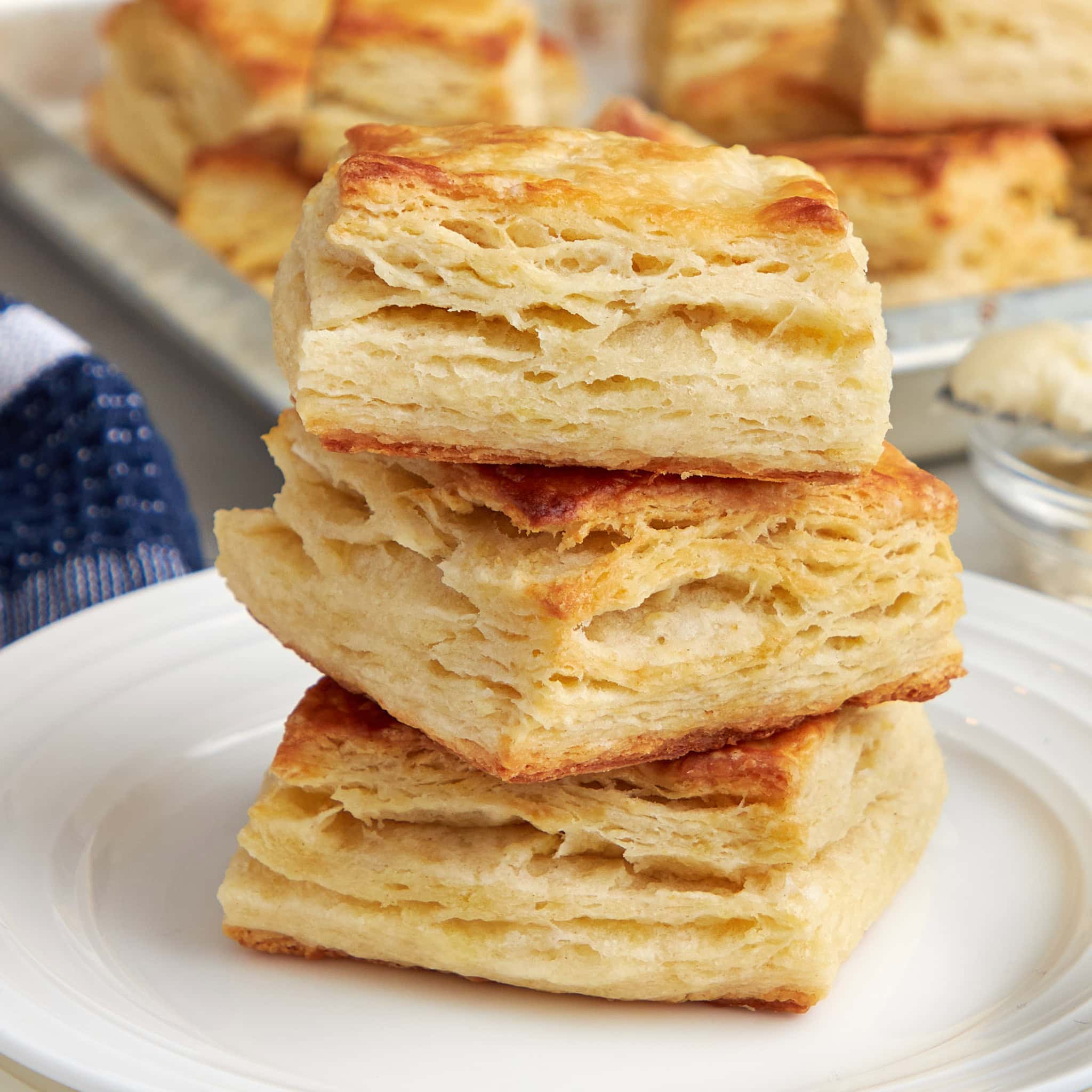
Grating frozen butter by hand, at 7 a.m., before coffee, is not most people’s idea of a good time. These old-fashioned buttermilk biscuits ask you to do it anyway, folding the dough the way a pastry chef would, and the reward is tall, flaky layers instead of the dense hockey puck a rushed biscuit turns into.
Want To Save This Recipe For Later?
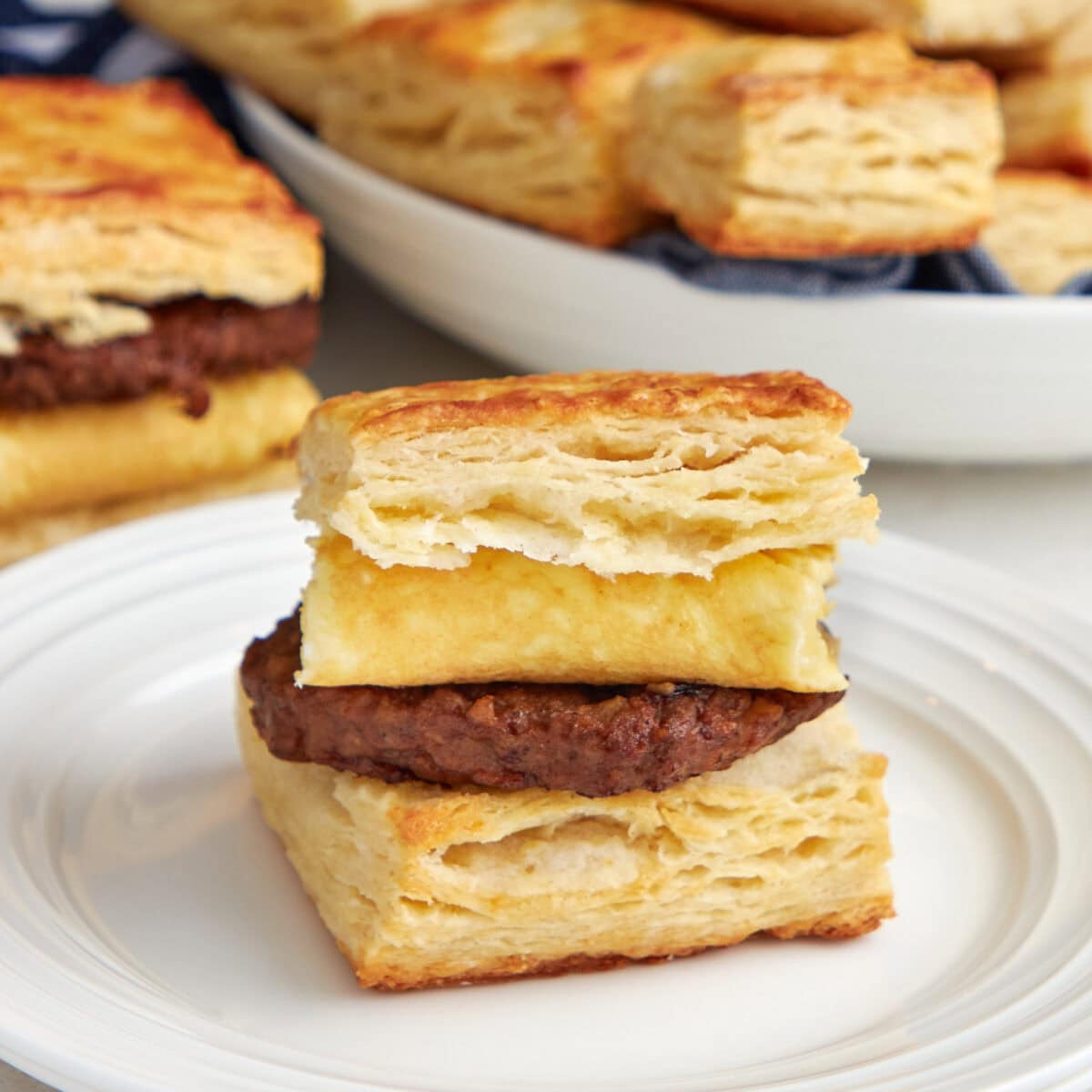
It sounds like more work than it is. The whole batch, start to finish, takes about 35 minutes. They’re a weekend breakfast favorite in our house, especially with a side of sausage gravy, which happens to be one of Jim’s favorites. Or skip the gravy and turn one into a bacon (or sausage), egg, and cheese sandwich for a quick breakfast on the go.
Featured Ingredient: Frozen Grated Butter
Frozen, grated butter turns into flaky layers instead of a dense crumb, just as it does in our rough puff pastry. Lightly coat the frozen stick in flour before grating so it doesn’t stick to the grater, then work quickly through the large holes of a box grater, or use a food processor with a medium shredding disk if you’d rather skip the arm workout. If the butter starts to soften as you go, refreeze it for a few minutes before continuing.
Cold butter is what makes the layers happen. Grated butter goes right back in the freezer the moment it’s ready, and stays there until you’re ready to mix it into the dough. Then, as the biscuits bake, the cold butter melts and releases steam, which puffs the dough into layers.
We use unsalted butter so we can control the salt in the dough ourselves rather than guess at how much is already in the butter. You can use salted butter in a pinch, but reduce the added salt.
a little note from us
August 2026 update: This is one of our favorite breakfast recipes, but everyone deserves a little makeover once in a while, recipes included. We’ve refined the instructions, updated the photos, and added a few more helpful tips.
Other Ingredients and Substitutions
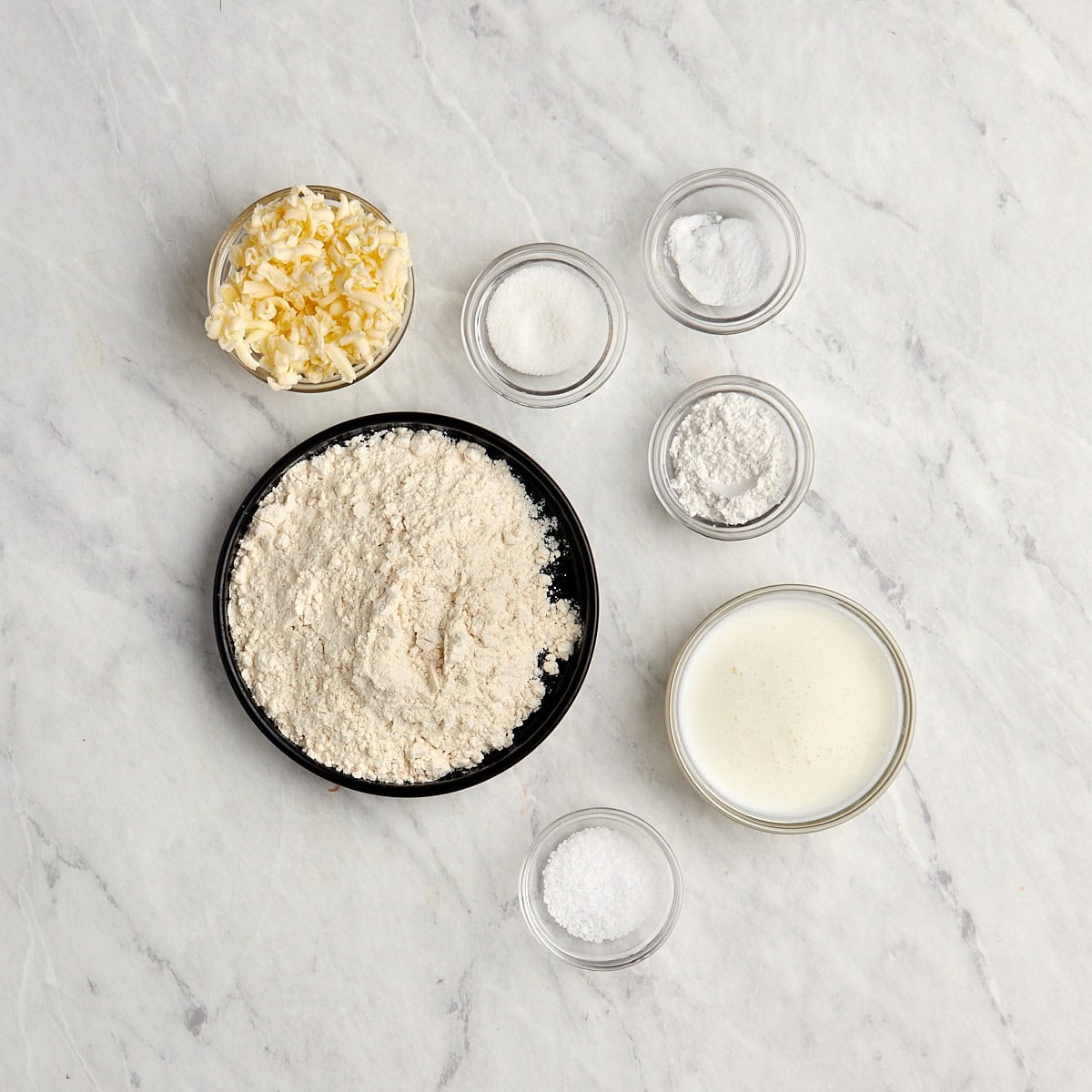
You only need a handful of pantry staple ingredients for the flakiest biscuits.
The complete ingredient list and measurements are listed in the printable recipe below.
- All-Purpose Flour: We use unbleached all-purpose flour. No need to reach for bread flour or cake flour here, since those have more or less protein than all-purpose, which changes how tender or chewy the biscuits turn out. Spoon the flour into your measuring cup and level it off rather than scooping straight from the bag. Scooping packs in extra flour, which can leave the dough too dry to fold and laminate properly.
- Leavening Agents (baking powder and baking soda): These react with the buttermilk to give the biscuits their rise. Old baking powder or soda is one of the most common reasons biscuits come out dense instead of tall, so check the date before you start.
- Granulated Sugar: A small amount here isn’t for sweetness. Sugar helps trap air for a better rise and encourages the tops to brown golden instead of pale.
- Buttermilk: Give it a shake or stir before measuring, since it separates as it sits. Cold buttermilk reacts with the baking soda, helping the biscuits rise and adding a tangy flavor. If you don’t have buttermilk, whole milk with a splash of lemon juice can be used as a substitute.
How to Make Old Fashioned Buttermilk Biscuits
Here are the quick, step-by-step instructions with visuals; you can find the full instructions, including the exact ingredients, in the recipe card below.
Pro-tip: Handle the dough as little as possible once it hits the counter. The more it’s worked, the tougher the biscuits turn out.
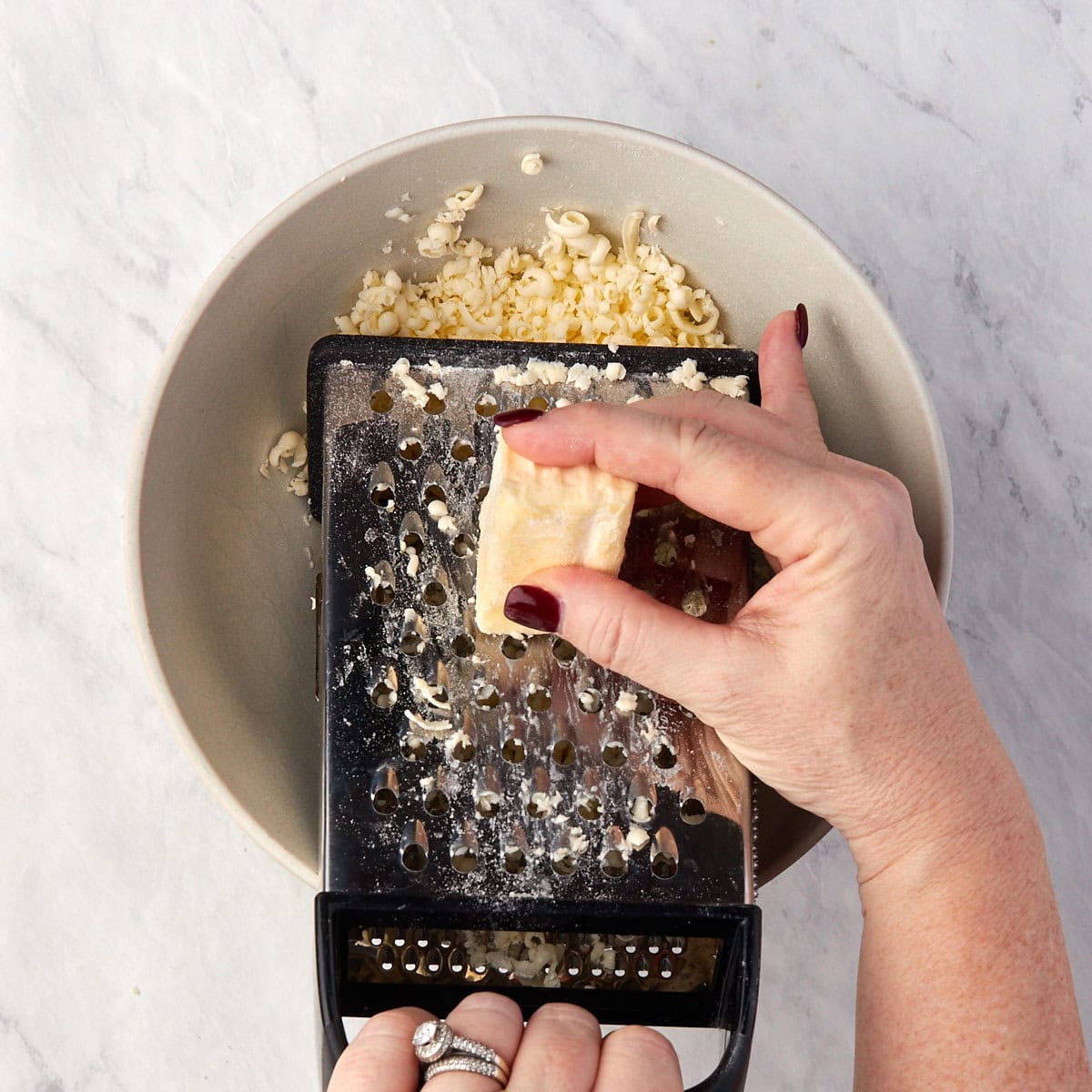
Prepare the Butter: Preheat your oven to 425°F and measure out your ingredients. Lightly coat your stick of frozen butter in flour, then use your box grater to grate the butter quickly with the large holes. If the butter softens, pop it back in the freezer for a few minutes. Or shred it in a food processor with a medium shredding disk for an easier option.
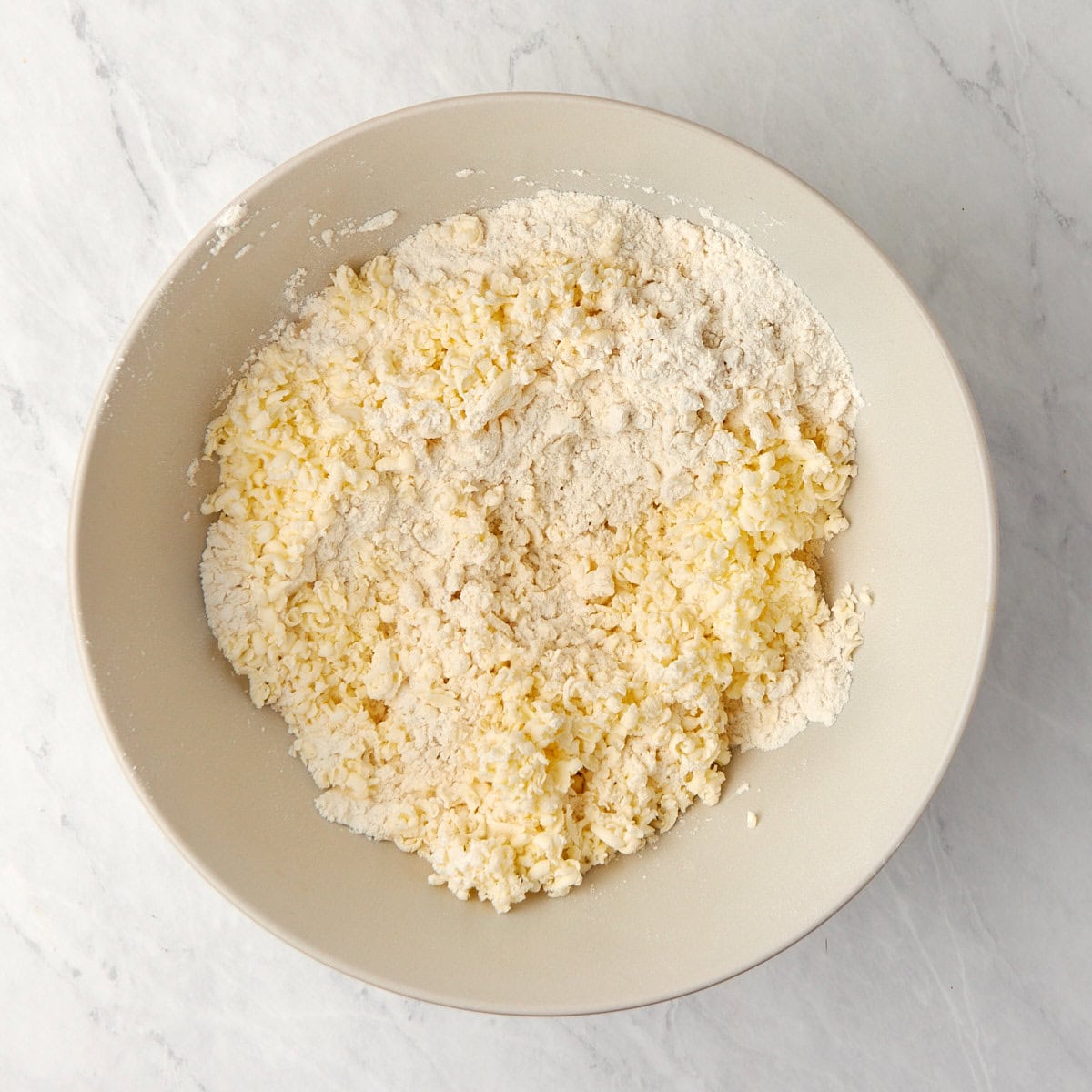
Combine the Dry Ingredients: Once your butter is grated, return it to the freezer until you’re ready to mix. Combine your flour, baking powder, baking soda, salt, and sugar in a large bowl. Toss the frozen, grated butter into the flour mixture, ensuring it’s evenly coated.
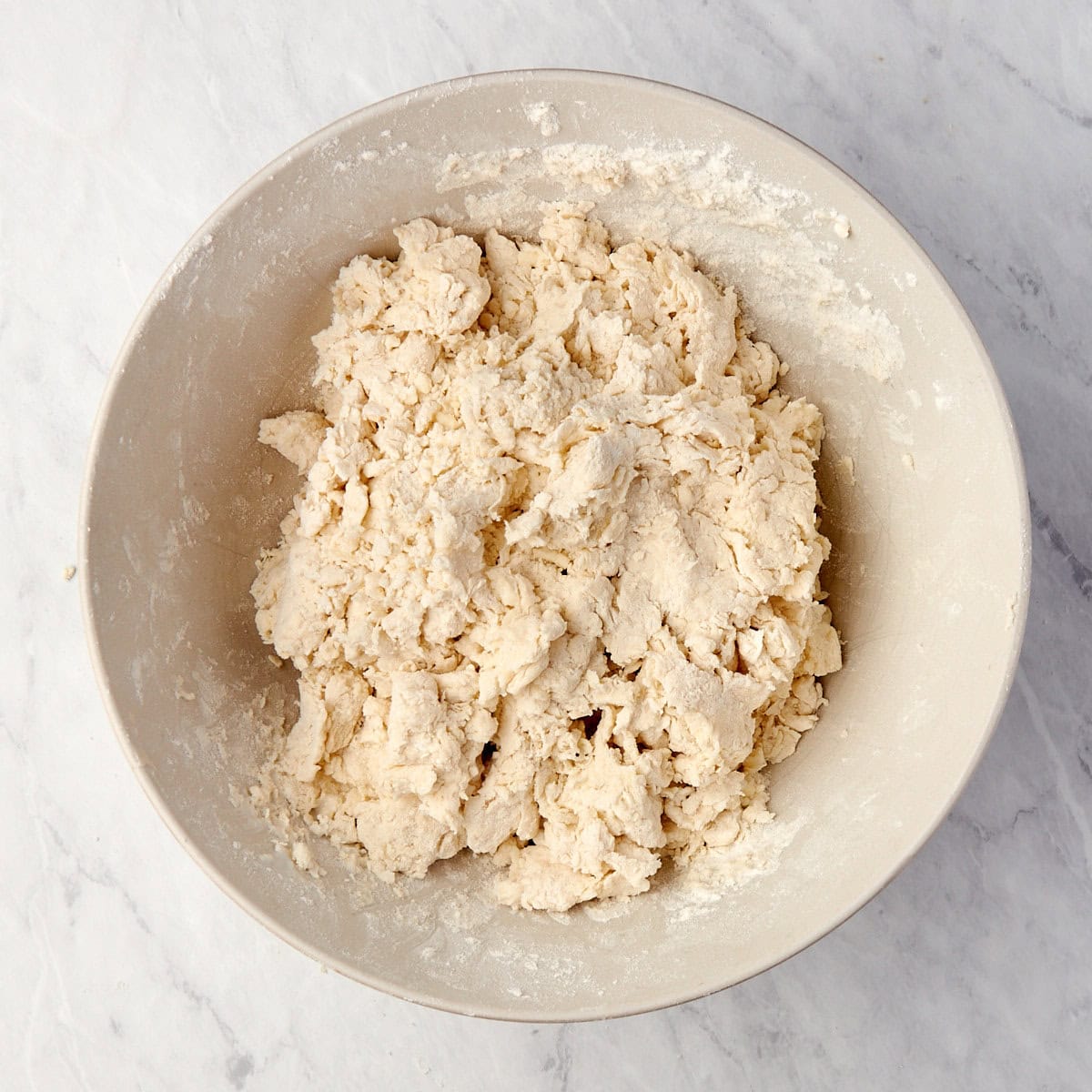
Add the Buttermilk: Make a well in the center of your dry ingredients, pour in the buttermilk, and gently stir with a fork. Your dough will be crumbly and a bit shaggy. Don’t overmix it.
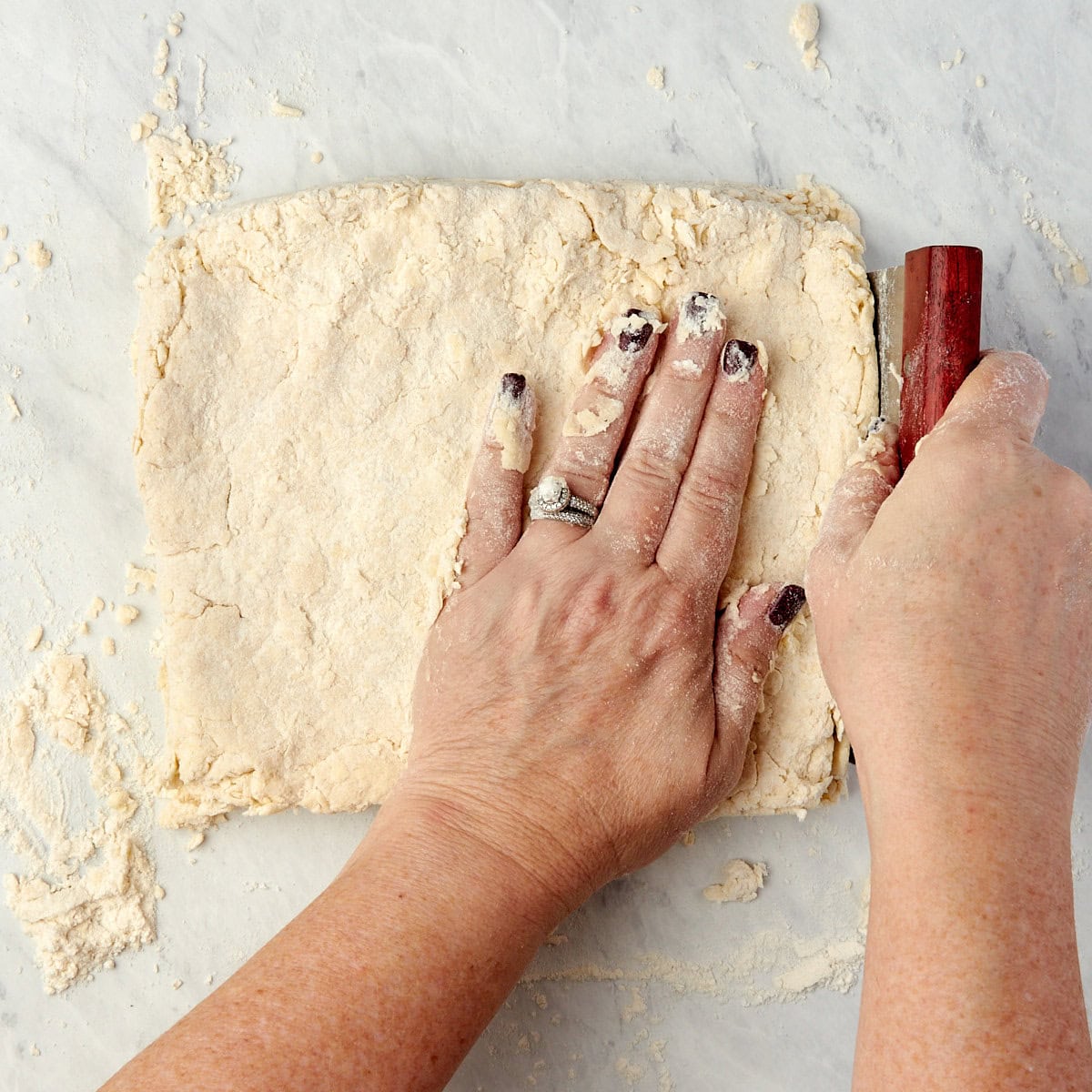
Shape the Dough: Turn the dough onto a lightly floured surface and shape it into a rough 6- to 7-inch square.
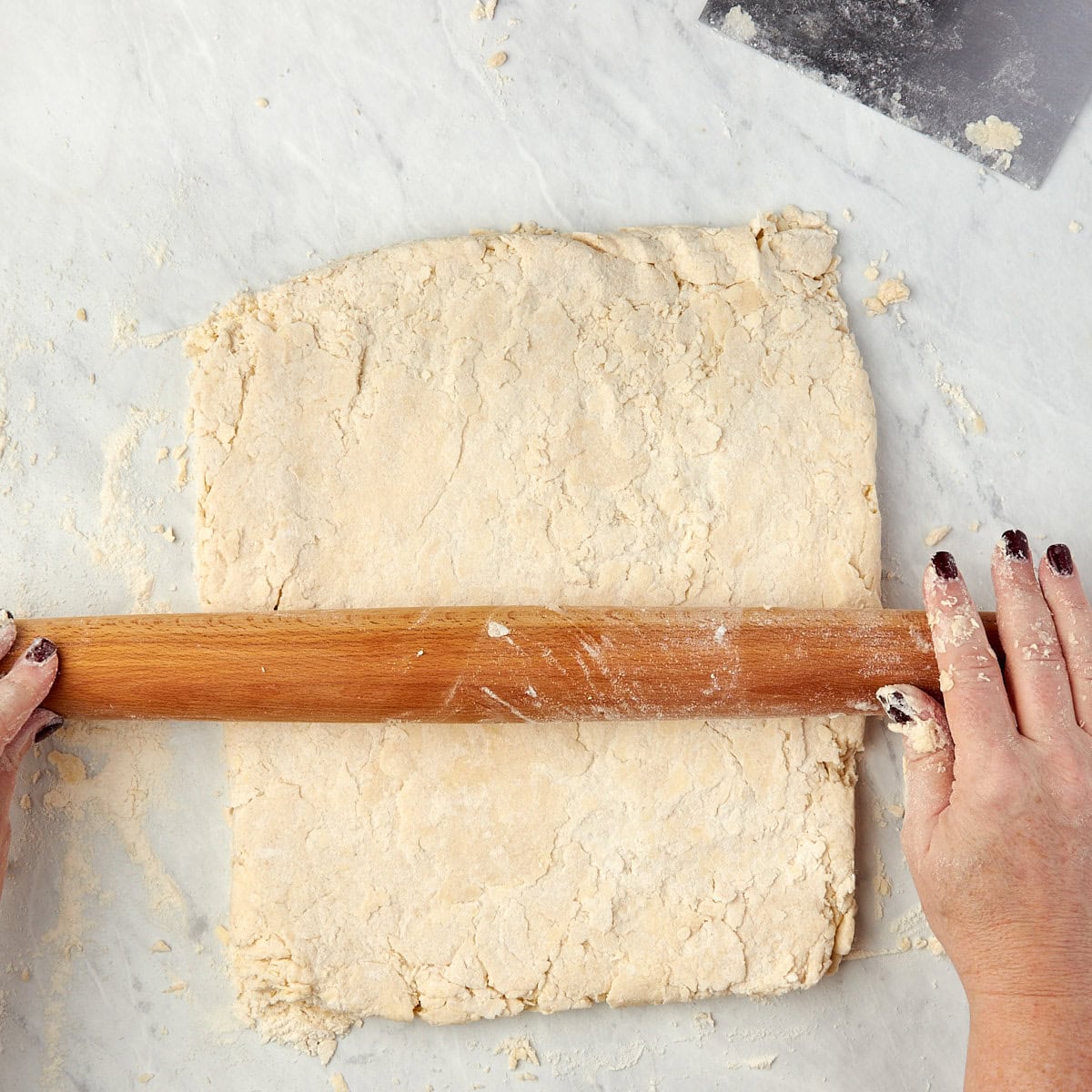
Roll Out the Dough: Using a rolling pin, roll it out into a rectangle (about 9×12 inches). The dough will still be a bit shaggy, which is okay. The first fold might be a little “messy,” but it will come together by the third fold.
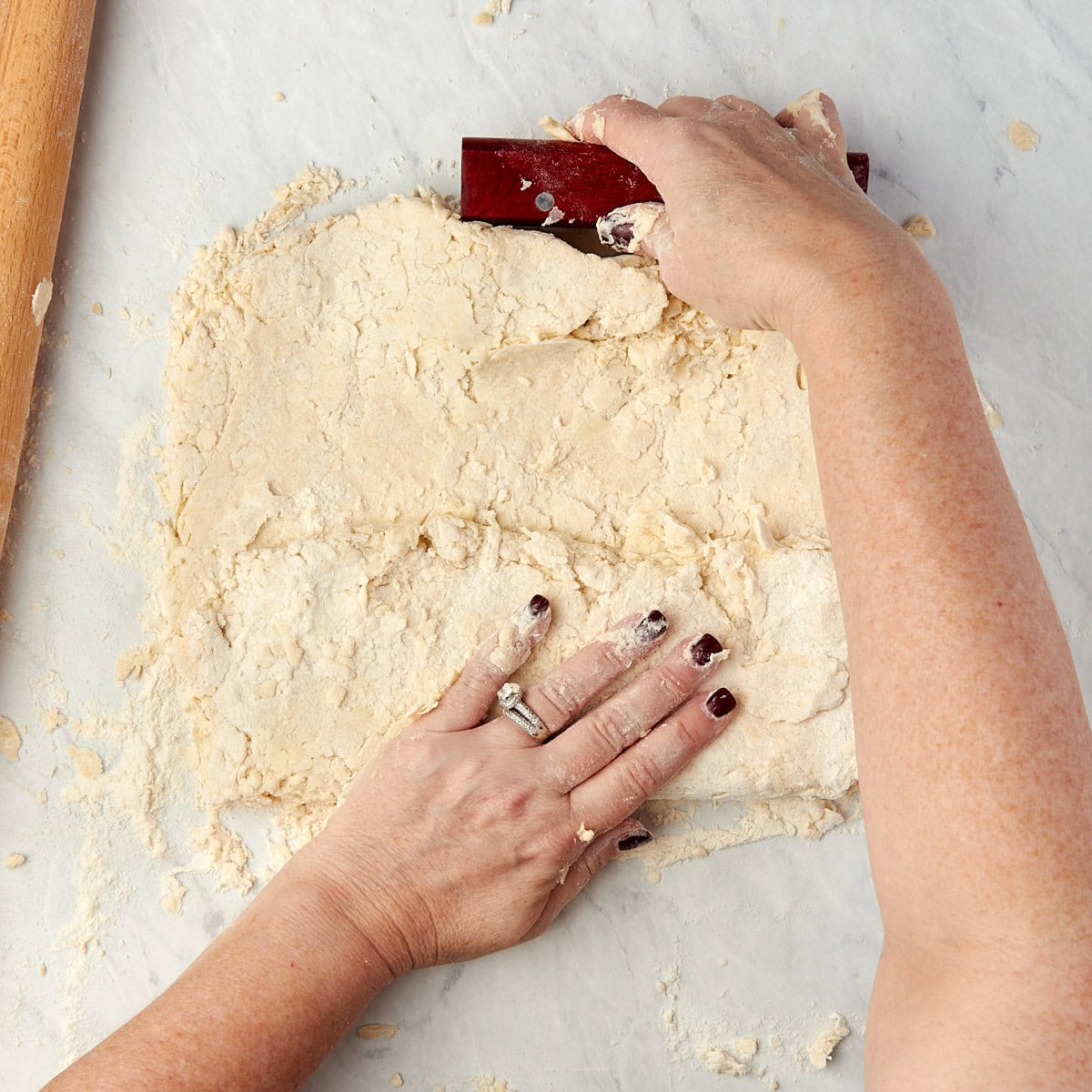
First Fold: With the short side of the dough facing you, fold the bottom third up and the top third down like an envelope. A bench scraper is really useful for folding and shaping the dough.
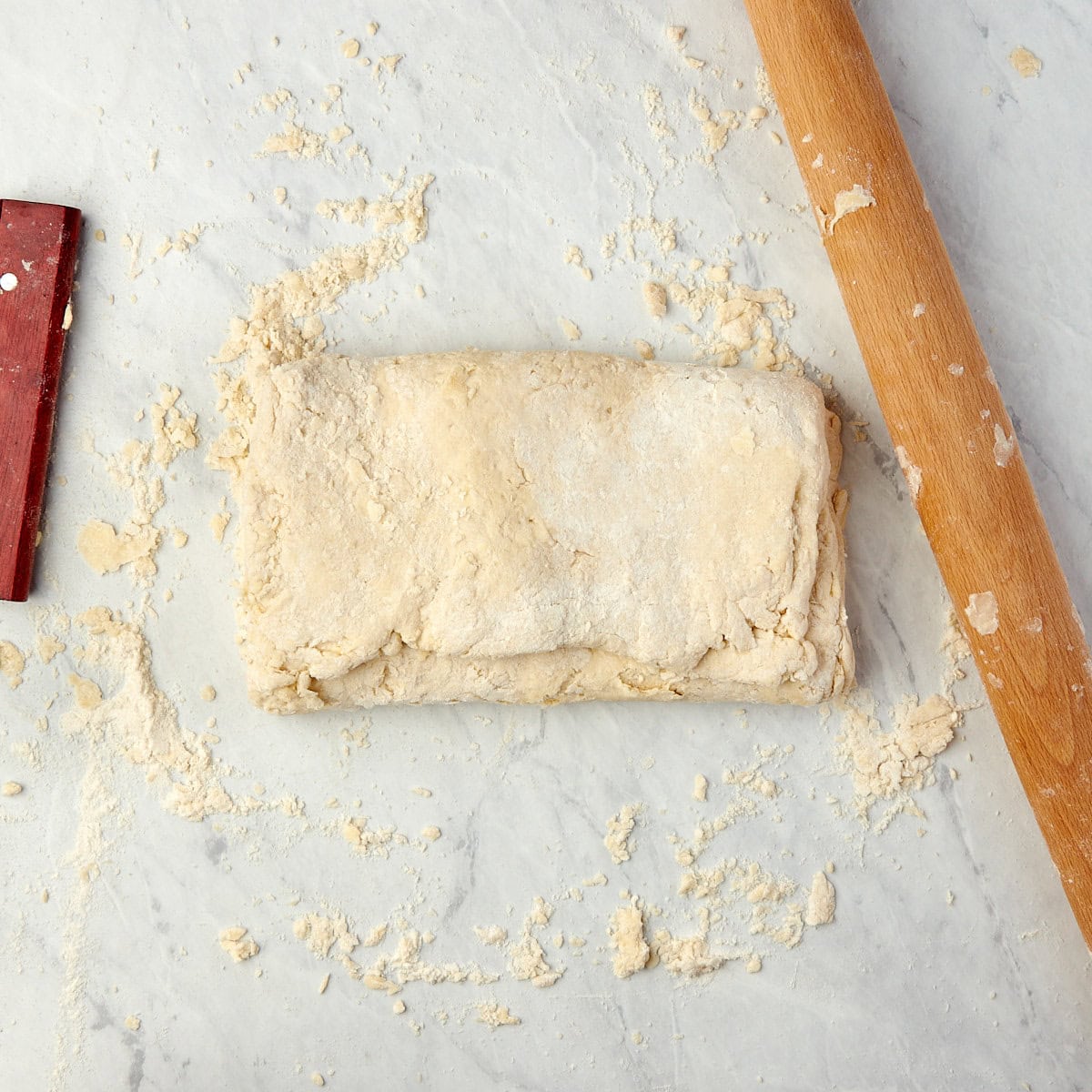
Second and Third Fold: Rotate the dough 90 degrees, roll it out again, and repeat the fold. Do this two more times to create those signature flaky layers.
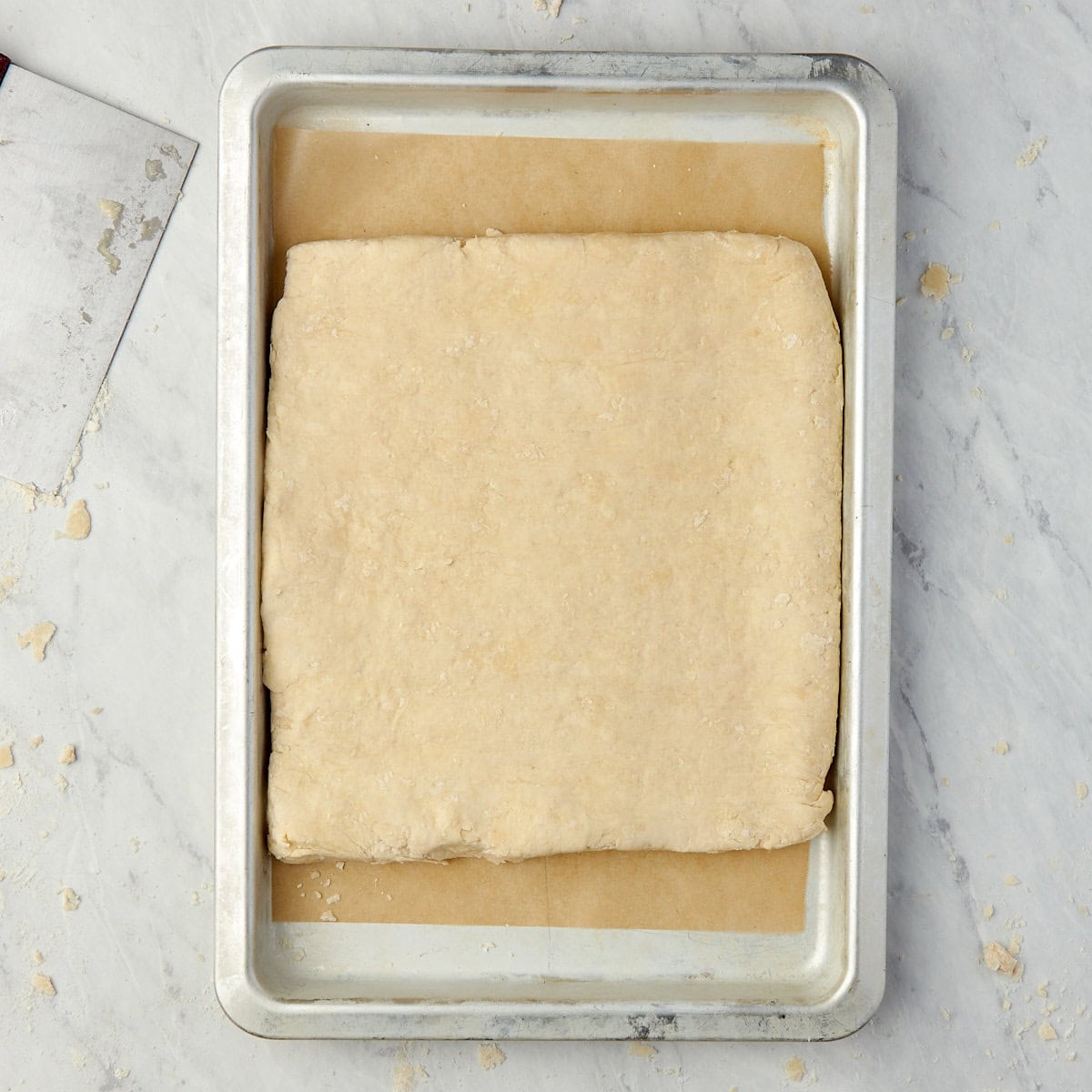
Chill the Dough: Shape the folded dough into an 8-9 inch square. Place on a parchment-lined baking sheet and chill in the freezer for 10 minutes to firm up.
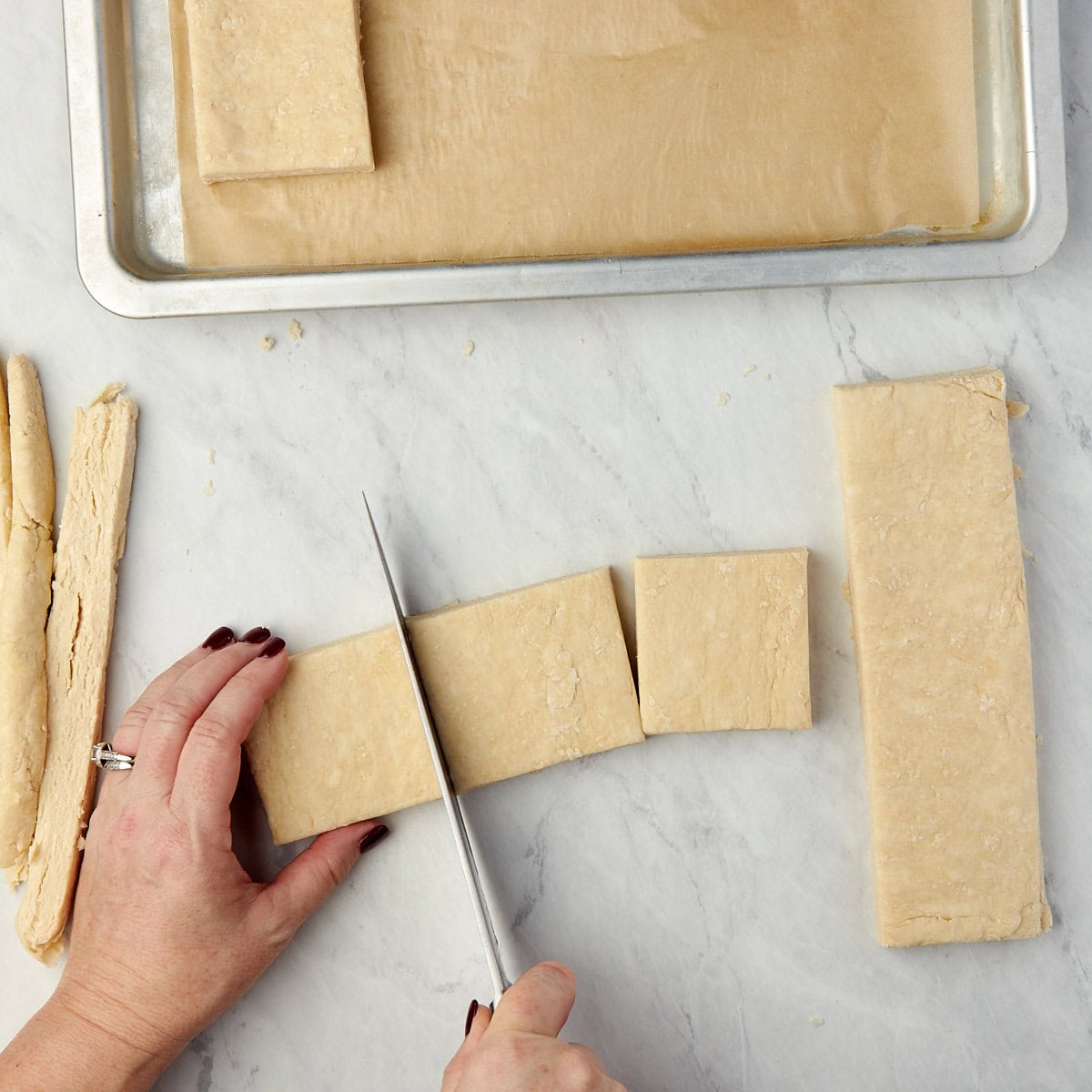
Cut the Biscuits: Use a sharp knife to trim the edges of the chilled dough. Cut into 9 square biscuits, careful not to twist or pull the knife.
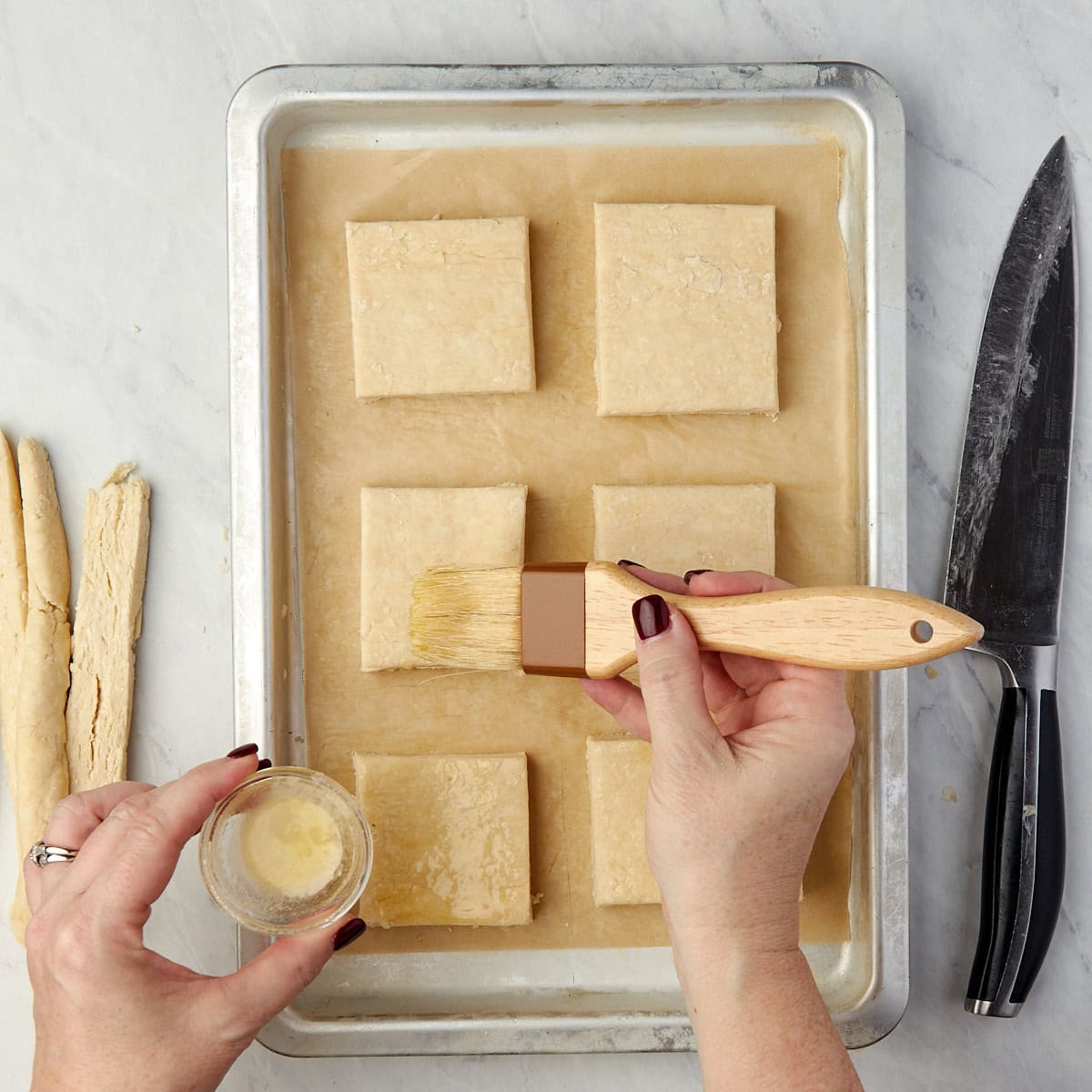
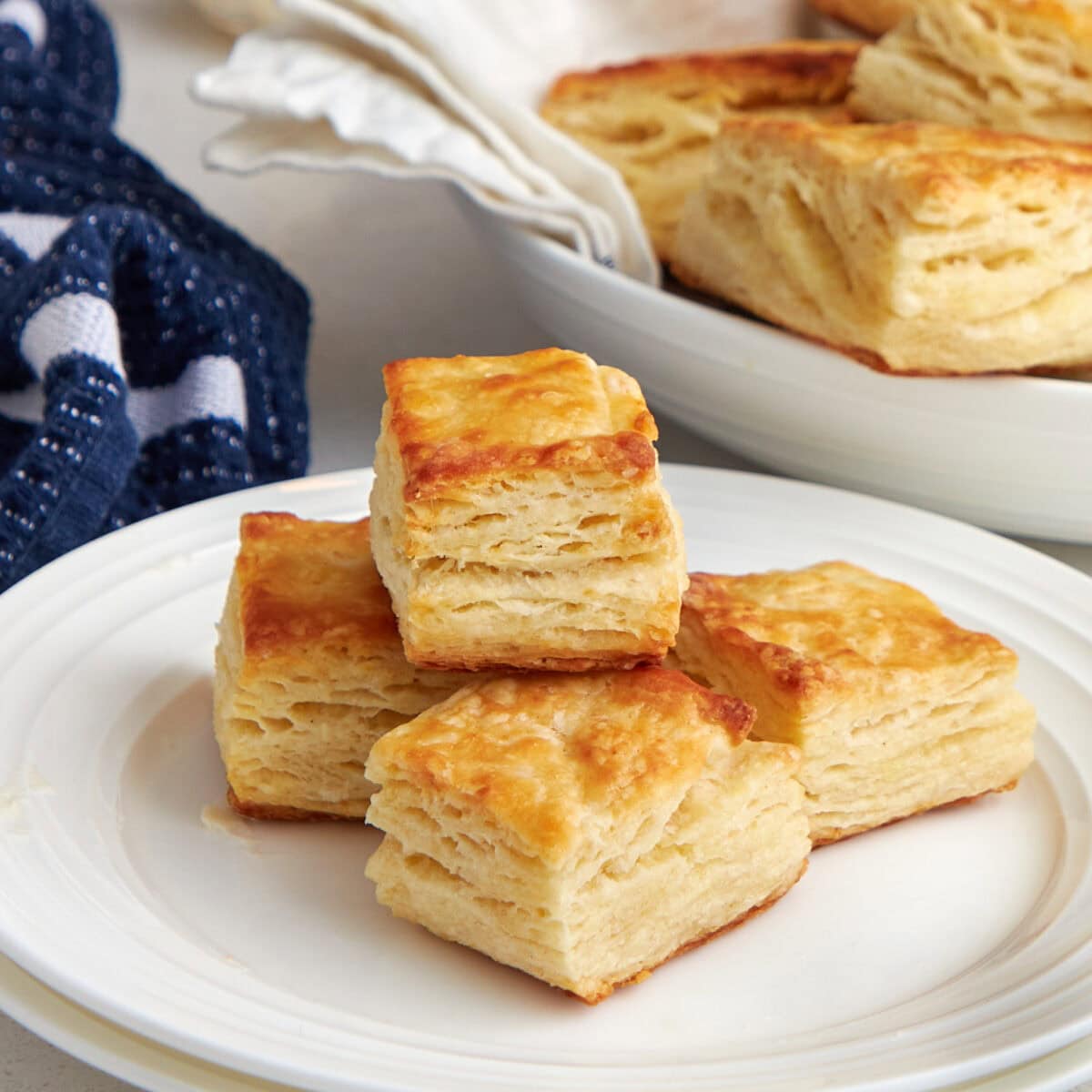
Bake the Biscuits: Arrange them on a parchment-lined baking sheet, about 1 inch apart. Brush the tops with a bit of buttermilk or melted butter, then bake for 15-20 minutes, rotating the pan halfway through. The biscuits are done when the tops are golden brown. Allow them to rest on the baking sheet for about 10 minutes after removing them from the oven.
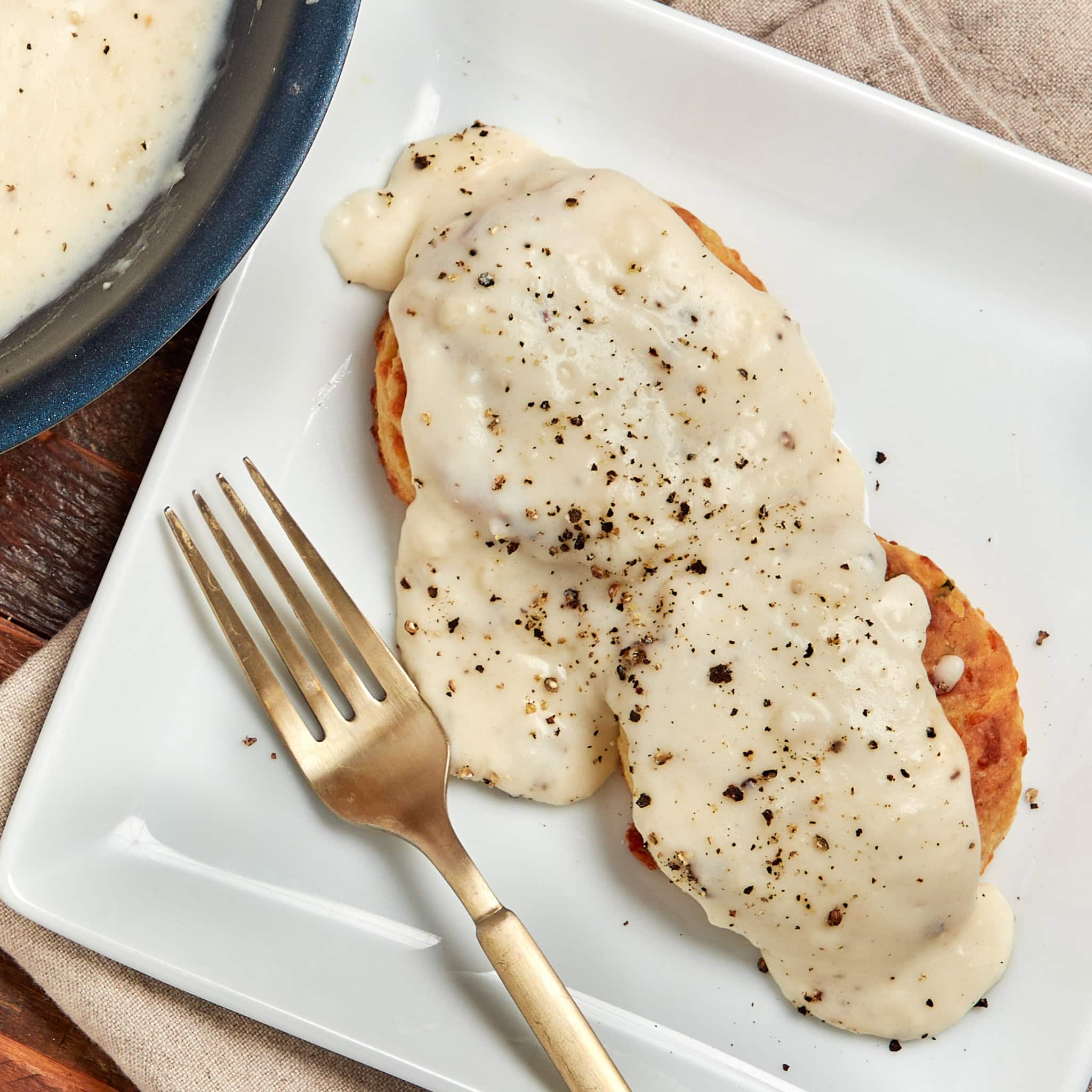
Serve: Enjoy these homemade buttermilk biscuits warm, with our black pepper gravy, our sausage gravy, your favorite jam, or as a delicious biscuit sandwich.
Make-Ahead and Storage
Make-Ahead: You can prepare the biscuit dough up to 24 hours in advance. Shape the dough into squares, place on a parchment-lined baking sheet, cover with plastic wrap, and refrigerate. When ready to bake, brush with melted butter and pop them into a preheated oven. Shred the butter in advance, then keep it covered in a bowl in the freezer for 24 hours.
How to Store: Once cooled, store leftover biscuits in an airtight container at room temperature for up to 2 days. For longer storage, place them in a freezer-safe bag or container and freeze them for up to 3 months.
How to Reheat: Wrap room-temperature biscuits in foil and warm in a 350°F oven for about 10 minutes. For frozen biscuits, thaw overnight in the refrigerator before reheating, or reheat from frozen in a 350°F oven for 15-20 minutes until warm.
Recipe Tips and Notes
- Cut straight down. Use a sharp biscuit cutter or knife, cutting straight down without twisting. This helps ensure proper rising and maintains those flaky layers in your biscuits.
- Customize your biscuits. Add mix-ins like shredded cheddar and fresh chives to the dough before folding, or try my cheddar cheese chive biscuits for a savory twist on this classic recipe.
- Don’t toss the trimmings. Press the scraps back together into a square, then cut into 1-inch mini biscuits, or roll them out, sprinkle with cinnamon sugar, and braid the dough before baking. Both bake right alongside the regular batch, same pan, same time.
Frequently Asked Questions
More Breakfast Recipes to Try
Looking for more filling breakfast recipes? Try these other favorites:
- Puff Pastry Breakfast Tart with Bacon and Eggs – A complete breakfast made with buttery, flaky puff pastry, a cheesy shallot mushroom spread, crispy bacon, and sunny-side-up eggs.
- Fluffy Silver Dollar Buttermilk Pancakes with Blueberries – These pancakes are incredibly easy to make and are bursting with blueberry flavor.
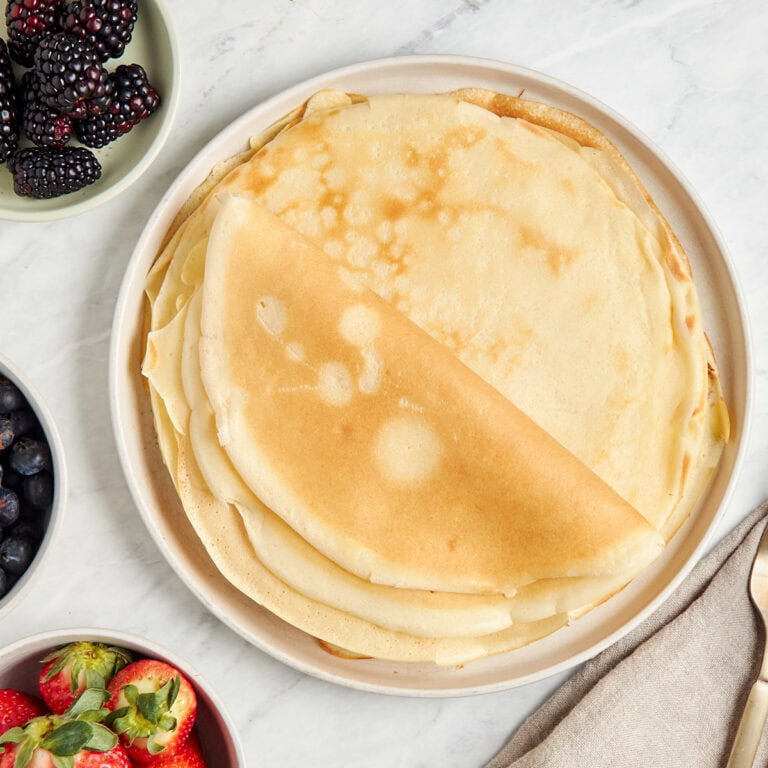
- Classic Crêpes – Thin, buttery crêpes ready in about 40 minutes, perfect for sweet or savory fillings.
Let’s Connect! If you make this recipe or any other recipe on Casual Epicure, please don’t forget to rate the recipe and leave a comment below. It helps others who are considering making our recipes and we love hearing about your cooking experiences. And if you snapped some shots, share them on Instagram, and be sure to tag @casual.epicure so we can feature them in our stories.
Old Fashioned Buttermilk Biscuits
Want To Save This Recipe For Later?
Equipment
- Large Bowl
- Cookie or Baking Sheet
Ingredients
- 14 tablespoons unsalted butter, frozen and shredded
- 3 cups all-purpose flour
- 4 teaspoons baking powder
- ½ teaspoon baking soda
- 1 teaspoon kosher salt
- 2 tablespoons granulated sugar
- 1 ¼ cup buttermilk, plus 2 tablespoons for the top of the biscuits
Instructions
- Preheat oven to 425°F.
- Lightly coat the butter in flour. Grate frozen butter using the large holes of a box grater. Work quickly since the frozen butter will begin to soften as you grate. Refreeze if it gets too soft. A food processor with a medium shredding disk works too.
- Place grated butter back into the freezer until ready for use.
- In a large bowl, combine flour, baking powder, baking soda, salt, and sugar.
- Add the butter to the flour mixture and toss to coat.
- Create a well in the center of the mixture by pushing the mixture toward the sides of the bowl. Pour buttermilk into the well. Mix gently with a fork just until everything is combined. The dough will be crumbly and shaggy, so avoid over-mixing.
- Place the dough on a floured surface and form it into a square about 6 to 7 inches on each side, then roll it into a rectangle about 9 by 12 inches.
- First Turn: Position the rectangle so the short side faces you, then fold the dough into thirds by folding the bottom third up and then the top third down like an envelope.
- Second Turn: Rotate the dough 90 degrees, then gently roll the dough into a rectangle again. Position the rectangle so the short side faces you, and fold the dough into thirds again.
- Third Turn: Rotate the dough 90 degrees, then gently roll the dough into a rectangle again. Position the rectangle so the short side faces you, and fold the dough into thirds again.
- Form the dough into an 8- to 9-inch square, place it on a parchment-lined baking sheet, and place it in the freezer for about 10 minutes or until it is firm.
- With a sharp knife, trim the edges of the dough, then cut out 9 square-shaped biscuits. Do not twist or pull the knife.
- Transfer the biscuits to a baking sheet lined with parchment paper. Place them 1 inch apart from each other and from the edge of the pan. Brush the tops of the biscuits with buttermilk (or melted butter).
- Bake for 15-20 minutes or until the tops are golden brown. Rotate halfway through baking.
- Let them rest for about 10 minutes, then serve with cream gravy, jam, or make into your favorite biscuit sandwich.
Notes